Puttgarden, Germany
Landing Point · DE Germany
Connected Cables
| Cable | Status |
|---|---|
| Fehmarn Bält | Active |
Live Performance
RTT measurements to this landing point from 2026-03-18 through 2026-09-28 - live ICMP round-trip time via our monitoring probes. Recomputed daily. ✓ No anomalies detected in the monitored period.
Measurement sources
| Probe | Location | Samples | Avg |
|---|---|---|---|
| own probe | Minsk BY | 11 | 25.6 ms |
| #6410 own probe | Sao Paulo BR | 7 | 196.0 ms |
| #6427 own probe | Sydney AU | 7 | 258.2 ms |
| own probe | Kyiv UA | 7 | 37.2 ms |
| own probe | Almaty KZ | 4 | 109.7 ms |
| own probe | Tbilisi GE | 4 | 49.7 ms |
| own probe | Jerusalem IL | 4 | 29.2 ms |
| own probe | Odessa UA | 4 | 43.8 ms |
| own probe | Saint Petersburg RU | 3 | 35.2 ms |
| own probe | Moscow RU | 2 | 33.7 ms |
| own probe | Sevastopol UA | 1 | 91.9 ms |
About Puttgarden, Germany
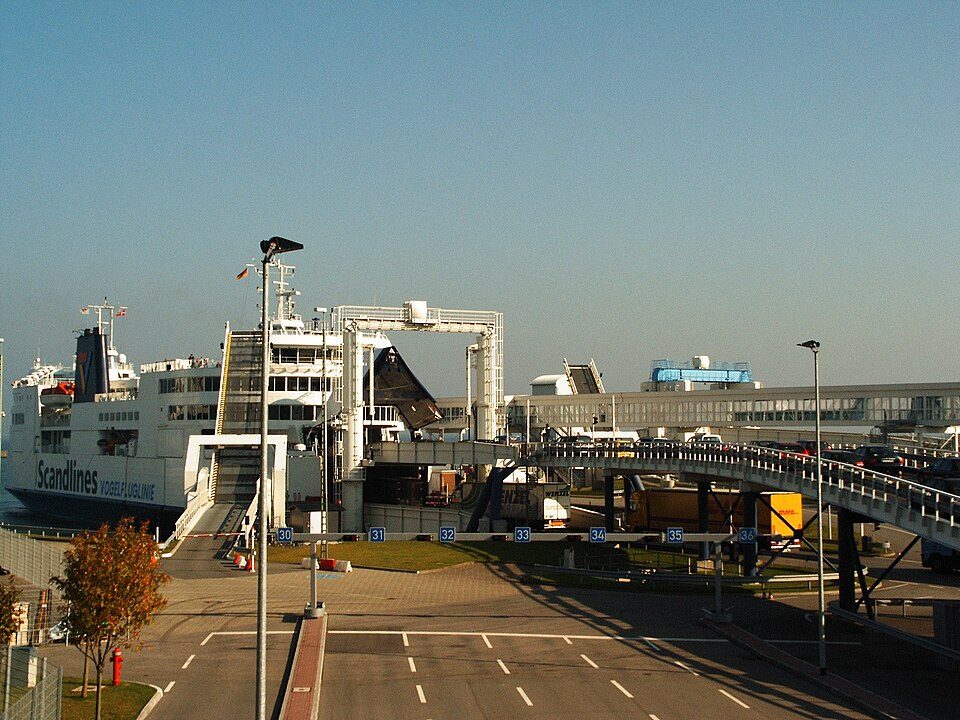
Puttgarden: Submarine Cable Landing Point
Puttgarden is a village and ferry harbour located on the German island of Fehmarn, positioned along the Fehmarnbelt strait that separates Germany from Denmark. This coastal setting places Puttgarden in a natural corridor between the two countries, and it is this same geography that underlies its role in the submarine cable network. One submarine cable lands at Puttgarden, connecting Germany directly to Denmark across the Fehmarnbelt.
The single cable landing here, the Fehmarn Bält, is a short cross-strait system reflecting the modest distance - approximately 18 kilometres - between Fehmarn and the Danish island of Lolland. Though Puttgarden hosts only one cable, it represents a direct bilateral link between Germany and Denmark, forming part of the broader Baltic and Northern European submarine cable picture.
Cables Landing at Puttgarden
The Fehmarn Bält is the sole submarine cable landing at Puttgarden. Stretching approximately 20 kilometres, the cable reached ready-for-service status in 2000, though it carries draft status. It connects Germany and Denmark, crossing the Fehmarnbelt strait between Puttgarden on the German side and a corresponding landing point in Denmark. Its short length reflects the narrow nature of the strait it traverses, making it one of the shorter submarine cable systems landing anywhere in Germany.
Regional Context
Within Germany's nine submarine cable landing points, Puttgarden sits alongside other single-cable locations including Friedrichshafen, Markgrafenheide, and Meersburg, placing it in the lower tier by cable count. Rostock leads among German landing points with three cables, while Konstanz and Wilhelmshaven each host two. Puttgarden ranks in the top 67 percent of German landing points by cable count, reflecting the fact that single-cable landings are common across Germany's submarine infrastructure.
Network Role
Puttgarden functions as a single-cable terminus rather than a multi-cable hub, anchoring one end of the Fehmarn Bält system on German soil. The cable it hosts establishes a direct submarine link between Germany and Denmark, enabling connectivity across the Fehmarnbelt strait along one of Northern Europe's most historically significant cross-border corridors. The short span of the cable underscores the point-to-point, bilateral character of this particular connection rather than any broader intercontinental routing role.
In the regional submarine cable graph, Puttgarden's significance lies in providing a dedicated undersea pathway between Germany and Denmark at one of the narrowest natural crossings between the two countries, complementing the broader set of submarine connections that reach Germany from more distant endpoints elsewhere in the North Sea and Baltic regions.
What next: Puttgarden, Germany in the global directory of cable landing points; see surrounding routes on the interactive submarine cable map or follow live network monitoring.
Other Landing Points in Germany
Landing Point
- CountryDE Germany
- Coordinates54.4961°N 11.2125°E
- Connected Cables1
See Real Cable Routes
View actual submarine cable routing from Puttgarden, Germany - with backbone nodes, distance calculations, and latency estimates
Open Calculator →