Konstanz, Germany
Landing Point · DE Germany
Connected Cables
| Cable | Status |
|---|---|
| Konstanz-Friedrichshafen | Active |
| Konstanz-Meersburg | Active |
Live Performance
RTT measurements to this landing point from 2026-03-14 through 2026-10-06 - live ICMP round-trip time via our monitoring probes. Recomputed daily. ✓ No anomalies detected in the monitored period.
Measurement sources
| Probe | Location | Samples | Avg |
|---|---|---|---|
| own probe | Minsk BY | 131 | 34.1 ms |
| #6427 own probe | Sydney AU | 127 | 265.9 ms |
| own probe | Odessa UA | 53 | 50.5 ms |
| own probe | Sevastopol UA | 44 | 100.8 ms |
| own probe | Kyiv UA | 40 | 35.1 ms |
| #6487 | control probe | 6 | 155.4 ms |
| own probe | Tbilisi GE | 4 | 53.4 ms |
| #6410 own probe | Sao Paulo BR | 3 | 193.2 ms |
| own probe | Almaty KZ | 3 | 88.5 ms |
| own probe | Jerusalem IL | 3 | 20.7 ms |
| #6568 own probe | Singapore SG | 1 | 151.3 ms |
| own probe | Saint Petersburg RU | 1 | 41.9 ms |
About Konstanz, Germany
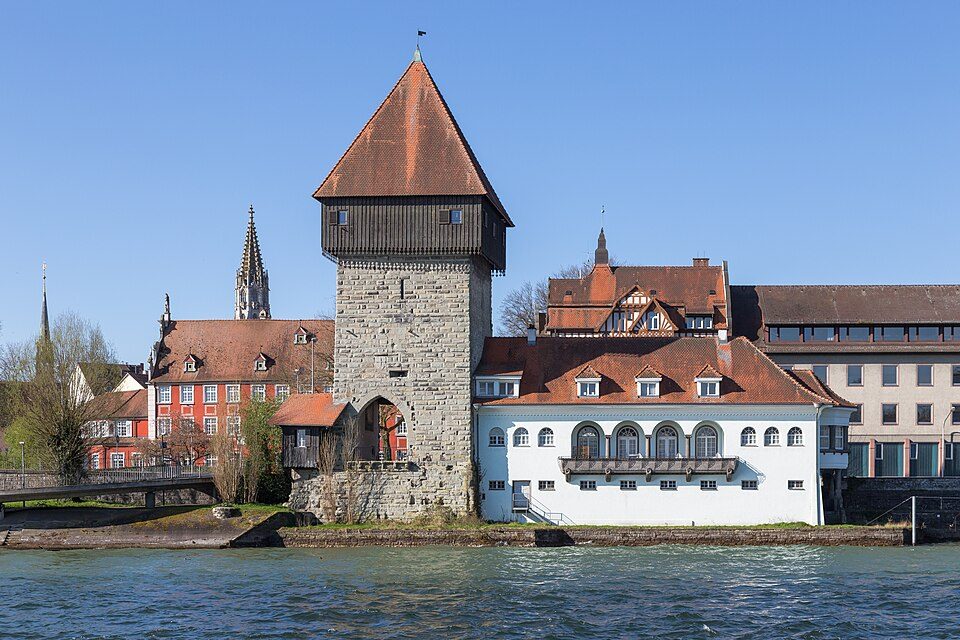
Konstanz: Submarine Cable Landing Point
Konstanz, known in English as Constance, is a city in the Baden-Württemberg state of southern Germany, situated at the western end of Upper Lake Constance. Its position on the lakeshore places it among a small set of German inland-water submarine cable landing points, distinct from the North Sea and Baltic Sea landings that characterise most of Germany's submarine cable infrastructure. Two submarine cables land at Konstanz, connecting it to other points along Lake Constance entirely within Germany.
Both cables landing at Konstanz operate within a domestic, intra-lake corridor. The Konstanz-Friedrichshafen cable and the Konstanz-Meersburg cable link Konstanz to two other lakeside communities, forming a compact regional network across the waters of Upper Lake Constance. This makes Konstanz a regionally focused landing point rather than a gateway to intercontinental or cross-border submarine connectivity.
Cables Landing at Konstanz
Konstanz-Friedrichshafen is a submarine cable with a length of 26 km that reached ready-for-service status in 2007, listed at draft status. It connects Konstanz to Friedrichshafen, both located in Germany on the shores of Lake Constance, running entirely within German territory beneath the lake.
Konstanz-Meersburg is a shorter submarine cable spanning 5 km, which became ready for service in 2010, also listed at draft status. It links Konstanz to Meersburg, another German lakeside community on Upper Lake Constance, again operating entirely within Germany.
Regional Context
Germany hosts 10 submarine cables across 9 landing points, with Rostock leading among domestic landing points at 3 cables. Konstanz, with 2 cables, ranks alongside Wilhelmshaven as one of the more connected German landing points by cable count, ahead of single-cable sites such as Friedrichshafen, Markgrafenheide, Meersburg, and Puttgarden. However, Konstanz is notably different from most German landing points in that its cables serve an inland lake environment rather than open coastal waters.
Network Role
Konstanz functions as a two-cable landing point within the Lake Constance corridor, serving as a local hub connecting to Friedrichshafen and Meersburg across the lake. Both of its cables are domestic in scope, meaning the connectivity enabled here is intra-German rather than international or intercontinental. With cable lengths of 26 km and 5 km respectively, these are among the shortest submarine cables in the German inventory, which averages 1,480 km per cable nationally.
Within the broader German submarine cable graph, Konstanz occupies a specialised position: it is one of very few German landing points oriented entirely toward intra-lake connectivity, making it a distinct node in a national network otherwise dominated by long-distance coastal and transoceanic routes.
What next: Konstanz, Germany in the global directory of cable landing points; see surrounding routes on the interactive submarine cable map or follow live network monitoring.
Incident history
Significant incidents on cables landing here, each with its own report.
Other Landing Points in Germany
Landing Point
- CountryDE Germany
- Coordinates47.6780°N 9.1732°E
- Connected Cables2
See Real Cable Routes
View actual submarine cable routing from Konstanz, Germany - with backbone nodes, distance calculations, and latency estimates
Open Calculator →