Porto Seguro, Brazil
Landing Point · BR Brazil
Connected Cables
| Cable | Status |
|---|---|
| Brazilian Festoon | Active |
Live Performance
RTT measurements to this landing point from 2026-06-03 through 2026-08-30 - live ICMP round-trip time via our monitoring probes. Recomputed daily. ✓ No anomalies detected in the monitored period.
Measurement sources
| Probe | Location | Samples | Avg |
|---|---|---|---|
| #6410 own probe | Sao Paulo BR | 4 | 24.0 ms |
| #6427 own probe | Sydney AU | 4 | 325.4 ms |
| #7062 own probe | Cape Town ZA | 4 | 369.8 ms |
| #6487 | control probe | 3 | 386.5 ms |
| own probe | Balancer IL | 3 | 288.9 ms |
| own probe | Jerusalem IL | 2 | 305.3 ms |
| own probe | Almaty KZ | 1 | 325.9 ms |
About Porto Seguro, Brazil
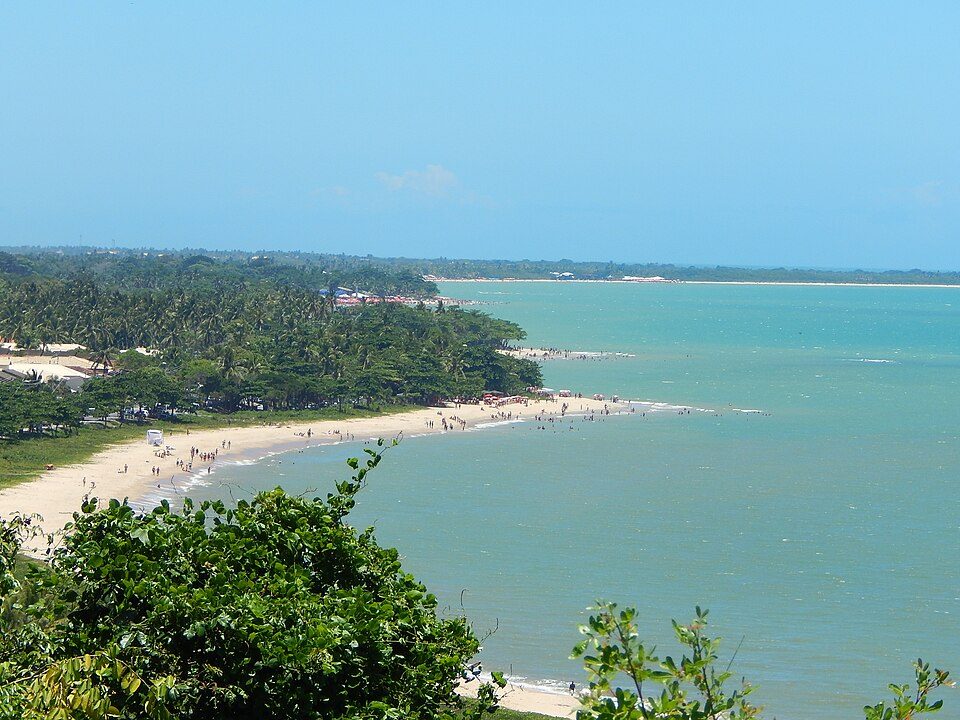
Porto Seguro, Brazil: Submarine Cable Landing Point
Porto Seguro is a city located in the far south of the state of Bahia, on the eastern coast of Brazil. The city sits along Brazil's Atlantic coastline and serves as a submarine cable landing point, hosting one submarine cable that connects it to other points along the Brazilian coast. Its position on the eastern seaboard makes it part of the broader Brazilian coastal cable network.
The single submarine cable landing at Porto Seguro is the Brazilian Festoon, a domestic cable that links multiple landing points within Brazil itself. This cable places Porto Seguro within a coastal corridor designed to extend connectivity along the Brazilian littoral rather than reaching outward to other continents.
Cables Landing at Porto Seguro
The Brazilian Festoon is the sole submarine cable landing at Porto Seguro. Stretching 2,552 kilometres, it reached ready-for-service status in 1996, making it one of the earliest submarine cables to become operational in Brazil. The Brazilian Festoon connects exclusively to other landing points within Brazil, forming an intra-national coastal link rather than an international connection. Its route traces the Brazilian coastline, stitching together domestic endpoints along the country's extensive Atlantic seaboard.
Regional Context
Within Brazil's submarine cable landscape, Porto Seguro sits modestly alongside more heavily connected landing points. Fortaleza leads the country with ten cables, followed by Rio de Janeiro with eight and Santos with five, while Porto Seguro hosts just one cable. Nearby Salvador, also in Bahia, handles three cables, positioning it as the more prominent landing hub within the state. Porto Seguro ranks in the upper 81 percent of Brazil's 74 landing points by cable count, reflecting that while it is not among the country's most connected nodes, it is far from unique in hosting a single cable.
Network Role
Porto Seguro functions as a single-cable terminus on the Brazilian Festoon, contributing one node to the domestic coastal circuit that the cable establishes along Brazil's Atlantic shore. The connection it provides is entirely intra-national, enabling data routing between Brazilian cities without routing traffic through international links. The Brazilian Festoon, at 2,552 kilometres, was among the first submarine cables to reach readiness in Brazil in 1996, and Porto Seguro's participation in that system places it at the early history of the country's submarine cable development.
Within the broader Brazilian submarine cable graph, Porto Seguro represents the type of single-cable coastal node that, taken together with similarly positioned landing points, forms the distributed domestic connectivity layer running parallel to the internationally oriented hubs concentrated at cities such as Fortaleza and Rio de Janeiro.
What next: Porto Seguro, Brazil in the global directory of cable landing points; see surrounding routes on the interactive submarine cable map or follow live network monitoring.
Other Landing Points in Brazil
Landing Point
- CountryBR Brazil
- Coordinates16.4511°S 39.0647°W
- Connected Cables1
See Real Cable Routes
View actual submarine cable routing from Porto Seguro, Brazil - with backbone nodes, distance calculations, and latency estimates
Open Calculator →