Porto Rafti, Greece
Landing Point · GR Greece
Connected Cables
| Cable | Status |
|---|---|
| Vodafone Greece Domestic | Active |
Live Performance
RTT measurements to this landing point from 2026-04-12 through 2026-09-17 - live ICMP round-trip time via our monitoring probes. Recomputed daily. ✓ No anomalies detected in the monitored period.
Measurement sources
| Probe | Location | Samples | Avg |
|---|---|---|---|
| #6427 own probe | Sydney AU | 10 | 281.9 ms |
| own probe | Odessa UA | 10 | 88.4 ms |
| own probe | Jerusalem IL | 8 | 101.7 ms |
| own probe | Sevastopol UA | 8 | 97.7 ms |
| own probe | Balancer IL | 6 | 98.8 ms |
| #6410 own probe | Sao Paulo BR | 4 | 230.3 ms |
| own probe | Almaty KZ | 4 | 110.4 ms |
| own probe | Tbilisi GE | 4 | 81.9 ms |
| own probe | Moscow RU | 3 | 85.4 ms |
| own probe | Minsk BY | 2 | 51.6 ms |
About Porto Rafti, Greece
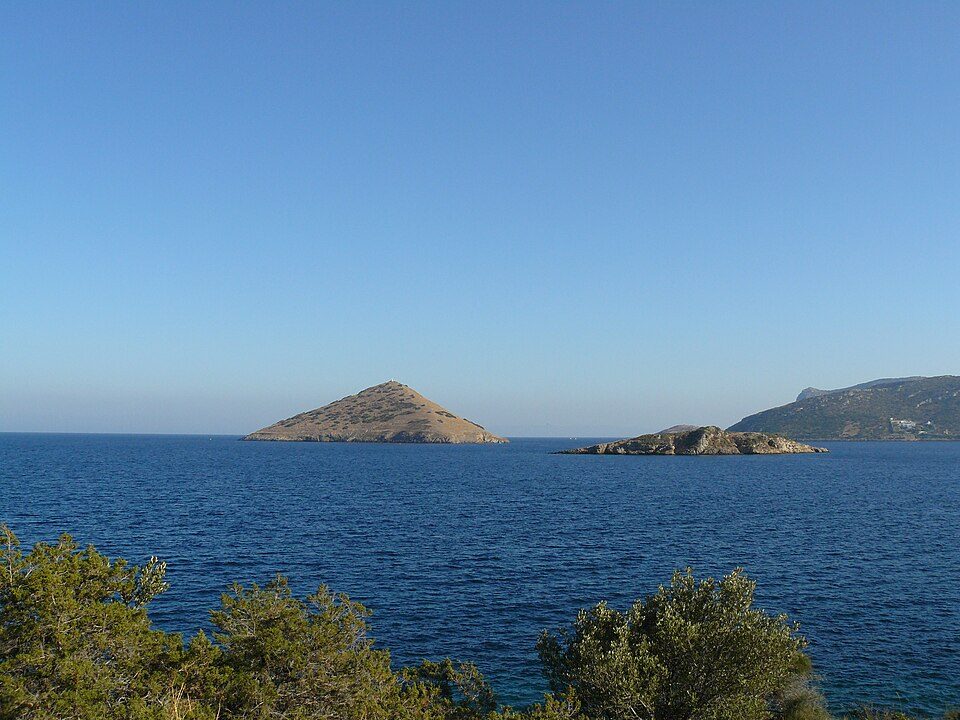
Porto Rafti: Submarine Cable Landing Point
Porto Rafti, officially named Limin Markopoulou, is a seaside resort town situated in East Attica, Greece. As a coastal settlement on the Aegean Sea, it serves as the landing point for one submarine cable, connecting it to Greece's broader domestic telecommunications network. The cable landing here operates within an intra-national corridor, linking different parts of the Greek mainland and island network rather than spanning international waters.
The single cable landing at Porto Rafti is the Vodafone Greece Domestic system, a domestically oriented cable that reflects the pattern seen across several of Greece's 36 submarine cable landing points, where shorter regional links complement the longer international systems that land elsewhere in the country.
Cables Landing at Porto Rafti
The Vodafone Greece Domestic cable is the sole submarine cable landing at Porto Rafti. With a length of 92 km and a Ready for Service (RFS) year of 2008, this system connects locations entirely within Greece, linking Porto Rafti to other domestic endpoints along the Greek coast. At 92 km, it represents a short-haul domestic link designed to provide connectivity between Greek communities rather than bridging international distances. Its RFS date of 2008 places it among the earlier deployments of domestically focused submarine infrastructure within the Greek cable landscape, which has seen its first cable land in 1995.
Regional Context
Within Greece's submarine cable infrastructure, Porto Rafti hosts one cable, placing it in the lower tier of the country's 36 landing points by cable count. Major hubs such as Chania with five cables, Athens with four, and Tympaki with four carry significantly heavier loads of international and regional connectivity, while Porto Rafti functions in a more limited domestic capacity. Nonetheless, Porto Rafti remains a named node within a national submarine cable network that spans 20 cables across 36 landing points.
Network Role
Porto Rafti operates as a single-cable terminus rather than a multi-cable hub. Its connection through the Vodafone Greece Domestic system is oriented entirely toward intra-Greek connectivity, supporting domestic telecommunications rather than intercontinental or even inter-regional international traffic. The 92 km cable length is consistent with the short inter-island or coastal domestic links that characterise several of Greece's smaller landing points, enabling localised network redundancy and community access within East Attica's coastal geography.
In the broader Greek submarine cable graph, Porto Rafti represents one of the domestically focused nodes that, alongside larger hubs like Athens and Chania, helps distribute connectivity within the national network rather than projecting it internationally.
What next: Porto Rafti, Greece in the global directory of cable landing points; see surrounding routes on the interactive submarine cable map or follow live network monitoring.
Other Landing Points in Greece
Landing Point
- CountryGR Greece
- Coordinates37.8882°N 24.0114°E
- Connected Cables1
See Real Cable Routes
View actual submarine cable routing from Porto Rafti, Greece - with backbone nodes, distance calculations, and latency estimates
Open Calculator →