McInnes Island, BC, Canada
Landing Point · CA Canada
1
Connected Cables
CA
Country
52.26°
Latitude
128.72°
Longitude
Ctrl + Scroll to zoom
Connected Cables
| Cable | Status |
|---|---|
| Connected Coast | Active |
Live Performance
34
measurements
9
probes
72
days monitored
124.5
ms avg RTT
0
anomalies
RTT measurements to this landing point from 2026-06-14 through 2026-08-25 - live ICMP round-trip time via our monitoring probes. Recomputed daily. ✓ No anomalies detected in the monitored period.
Measurement sources
| Probe | Location | Samples | Avg |
|---|---|---|---|
| #6487 | control probe | 5 | 188.3 ms |
| #7062 own probe | Cape Town ZA | 5 | 234.0 ms |
| own probe | Minsk BY | 5 | 118.2 ms |
| own probe | Moscow RU | 5 | 121.9 ms |
| #17830 | control probe | 3 | 13.5 ms |
| #50094 | control probe | 3 | 14.8 ms |
| #1012541 | control probe | 3 | 37.4 ms |
| own probe | Saint Petersburg RU | 3 | 138.8 ms |
| own probe | Kyiv UA | 2 | 153.6 ms |
About McInnes Island, BC, Canada
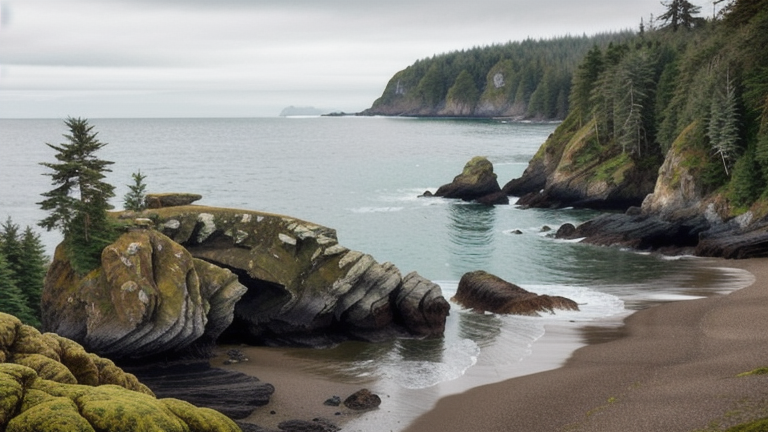
McInnes Island: A Remote Link in Canada's Coastal Connectivity
McInnes Island, located off the rugged coastline of British Columbia, Canada, is home to a single submarine cable landing point. While it may seem unassuming compared to major hubs like Vancouver or Halifax, its role in the Connected Coast cable network highlights its importance in stitching together remote communities along British Columbia's coastline.The Connected Coast Cable
The Connected Coast cable, slated to be ready for service in 2024, is the sole submarine cable landing at McInnes Island. This cable is entirely domestic, connecting 108 landing points across British Columbia without extending to other countries. It serves as a key infrastructure for remote and isolated communities, many of which rely on this network for internet access, communication, and digital services. McInnes Island is part of a chain that includes other landing points such as Addenbroke Island, Bella Bella, and Campbell River, creating a web of connectivity along the province's coastline. What sets McInnes Island apart is its location. Unlike larger urban centers like Vancouver or Prince Rupert, which host multiple cables, McInnes Island is a solitary link in the network. This single connection underscores the cable's design to bring connectivity to places that might otherwise remain disconnected from the broader digital world.Latency Observations
GeoCables' monitoring has provided unique latency measurements for McInnes Island. Across 10 completed checks from various source cities, the average round-trip latency to this landing point is 186 milliseconds, with the best observed latency at 104 milliseconds. These figures demonstrate that even remote locations like McInnes Island can achieve respectable connectivity performance, ensuring reliable communication for the communities it serves.Positioning McInnes Island in Canada's Cable Network
Canada hosts 21 submarine cables across 155 landing points, with McInnes Island ranking in the top 97% of these sites by cable count. While major hubs like Vancouver and Halifax boast multiple cables and international connections, McInnes Island's single cable reflects its role in a domestic network focused on regional connectivity. This is a stark contrast to landing points like Prince Rupert, which also serves as a gateway for international traffic. The Connected Coast cable's design highlights the importance of reaching remote areas, and McInnes Island exemplifies this mission. By linking small coastal communities, the cable fosters digital inclusion and ensures that even isolated locations can access modern communication tools.A Gateway for Remote Communities
McInnes Island's inclusion in the Connected Coast network is a testament to the effort to bring connectivity to British Columbia's remote and dispersed communities. While it may not have the traffic or prominence of larger hubs, its role in enabling communication and access to digital services for nearby regions is undeniable. As the cable becomes operational in 2024, McInnes Island will continue to serve as a key node in this ambitious network, connecting British Columbia's coastline one landing point at a time.What next: McInnes Island, BC, Canada in the global directory of cable landing points; see surrounding routes on the interactive submarine cable map or follow live network monitoring.
Other Landing Points in Canada
CA Addenbroke Island, BC, Canada
51.6032°N 127.8637°W
CA Ahousat, BC, Canada
49.2763°N 126.0563°W
CA Akulivik, QC, Canada
60.8177°N 78.1442°W
CA Alert Bay, BC, Canada
50.5884°N 126.9263°W
CA Aupaluk, QC, Canada
59.3057°N 69.5975°W
CA Aylesford, NS, Canada
45.0895°N 64.9483°W
CA Baie-Comeau, QC, Canada
49.2210°N 68.1525°W
CA Bamfield, BC, Canada
48.8328°N 125.1415°W
CA Bella Bella, BC, Canada
52.1612°N 128.1447°W
CA Bella Coola, BC, Canada
52.3721°N 126.7528°W
CA Bic, QC, Canada
48.3728°N 68.7093°W
CA Blind Channel, BC, Canada
50.4128°N 125.5034°W
Landing Point
- CountryCA Canada
- Coordinates52.2623°N 128.7230°W
- Connected Cables1
See Real Cable Routes
View actual submarine cable routing from McInnes Island, BC, Canada - with backbone nodes, distance calculations, and latency estimates
Open Calculator →
Submarine cables
Land fiber
Live probes