Mazatlán, Mexico
Landing Point · MX Mexico
2
Connected Cables
MX
Country
23.20°
Latitude
106.42°
Longitude
Ctrl + Scroll to zoom
Connected Cables
| Cable | Status |
|---|---|
| Pan-American Crossing (PAC) | Active |
| TMX5 | Active |
Live Performance
32
measurements
8
probes
92
days monitored
184.2
ms avg RTT
0
anomalies
RTT measurements to this landing point from 2026-03-21 through 2026-06-22 - live ICMP round-trip time via our monitoring probes. Recomputed daily. ✓ No anomalies detected in the monitored period.
Measurement sources
| Probe | Location | Samples | Avg |
|---|---|---|---|
| #1014473 own probe | Minsk BY | 7 | 166.3 ms |
| #1014589 own probe | Almaty KZ | 5 | 230.4 ms |
| #1014597 own probe | Tbilisi GE | 5 | 179.1 ms |
| #1014969 own probe | Jerusalem IL | 5 | 188.6 ms |
| #1015523 own probe | Moscow RU | 4 | 183.6 ms |
| #6410 own probe | Sao Paulo BR | 2 | 53.9 ms |
| #6487 own probe | Singapore SG | 2 | 181.4 ms |
| #7062 own probe | Cape Town ZA | 2 | 267.9 ms |
About Mazatlán, Mexico
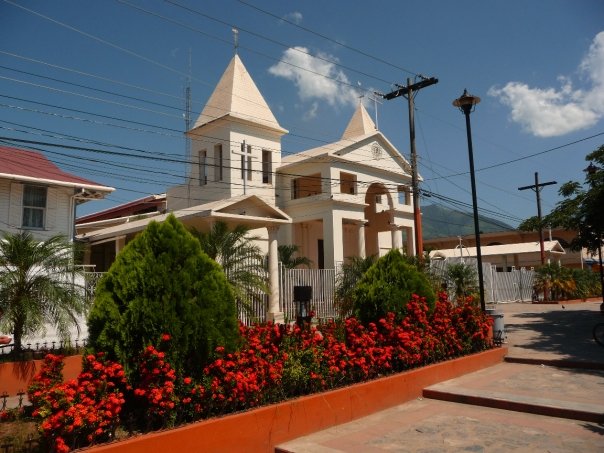
Mazatlán: A Key Link in Mexico’s Submarine Cable Network
Mazatlán, a bustling port city on Mexico’s Pacific coast, is home to two submarine cables that play distinct roles in the country's connectivity landscape. While it may not rival Cancún’s six-cable landing point, Mazatlán stands out for hosting both an international and a domestic cable, making it a versatile node in Mexico's telecommunications infrastructure.The Pan-American Crossing: Connecting Mazatlán to the Americas
The Pan-American Crossing (PAC), operational since 2000, is a 10,000-kilometer international cable that links Mazatlán to Costa Rica, Panama, and the United States. This cable also connects four other landing points: Fort Amador (Panama), Grover Beach (United States), Tijuana (Mexico), and Unqui (Costa Rica). As one of the oldest submarine cables in Mexico, PAC has been instrumental in integrating Mazatlán into the broader digital ecosystem of the Americas. Mazatlán’s inclusion in this international chain ensures reliable connectivity for businesses and residents alike. The cable facilitates data exchanges between Mexico and its neighbors, supporting industries such as tourism, shipping, and agriculture that are central to the city’s economy. GeoCables’ latency measurements reveal an average round-trip time of 184 milliseconds from Mazatlán to eight global source cities, with the best observed latency being an impressive 52 milliseconds. This performance underscores the cable’s efficiency in handling international traffic.TMX5: A Domestic Connection to San José del Cabo
The TMX5 cable, set to launch in 2025, is a shorter 383-kilometer domestic link connecting Mazatlán to San José del Cabo at the southern tip of Baja California. Unlike the PAC, TMX5 focuses exclusively on domestic connectivity, bridging two regions separated by the Gulf of California. This cable will enhance regional communications and provide redundancy for local networks, ensuring stable internet access for communities in both locations. Mazatlán’s dual role as a landing point for both international and domestic cables highlights its strategic position in Mexico’s telecommunications network. Among Mexico’s 14 landing points, Mazatlán ranks in the top tier by cable count, hosting two cables compared to the average of 0.86 cables per landing point. While it trails Cancún’s robust infrastructure, Mazatlán outpaces peers like Ciudad Lázaro Cárdenas, Isla de Cozumel, and La Paz, each of which hosts only one cable.Connectivity in Context
Mazatlán’s submarine cable infrastructure exemplifies Mexico’s growing digital footprint. With 12 cables landing across the country, Mazatlán contributes to a network that spans an average cable length of 5,119 kilometers. The city’s connectivity is not just about numbers; it directly supports the industries and livelihoods of its residents. From enabling international trade to fostering local communications, Mazatlán’s cables ensure the city remains digitally connected to the world. As TMX5 comes online in 2025, Mazatlán’s role in Mexico’s telecommunications landscape will only grow stronger, reinforcing its importance as a hub for both international and domestic data traffic. Whether linking to distant shores or neighboring regions, Mazatlán’s cables keep this vibrant coastal city plugged into the global network.What next: Mazatlán, Mexico in the global directory of cable landing points; see surrounding routes on the interactive submarine cable map or follow live network monitoring.
Other Landing Points in Mexico
MX Cancún, Mexico
21.0957°N 86.7676°W
MX Ciudad Lázaro Cárdenas, Mexico
17.9568°N 102.1943°W
MX Isla de Cozumel, Mexico
20.4286°N 86.8792°W
MX Ixtapa-Zihuatanejo, Mexico
17.6641°N 101.6105°W
MX La Paz, Mexico
24.1026°N 110.3055°W
MX Manzanillo, Mexico
19.0858°N 104.3082°W
MX Playa del Carmen, Mexico
20.6297°N 87.0702°W
MX Rosarito, Mexico
32.3576°N 117.0638°W
MX San José del Cabo, Mexico
23.0770°N 109.7091°W
MX Tijuana, Mexico
32.5309°N 117.0382°W
MX Topolobampo, Mexico
25.6007°N 109.0504°W
MX Tulum, Mexico
20.2126°N 87.4636°W
Landing Point
- CountryMX Mexico
- Coordinates23.1995°N 106.4219°W
- Connected Cables2
See Real Cable Routes
View actual submarine cable routing from Mazatlán, Mexico - with backbone nodes, distance calculations, and latency estimates
Open Calculator →
Submarine cables
🛤 Land fiber
Live probes