Marlas, Greece
Landing Point · GR Greece
1
Connected Cables
GR
Country
37.65°
Latitude
25.02°
Longitude
Ctrl + Scroll to zoom
Connected Cables
| Cable | Status |
|---|---|
| Cyclades A | Active |
Live Performance
38
measurements
9
probes
190
days monitored
164.4
ms avg RTT
0
anomalies
RTT measurements to this landing point from 2026-03-01 through 2026-09-08 - live ICMP round-trip time via our monitoring probes. Recomputed daily. ✓ No anomalies detected in the monitored period.
Measurement sources
| Probe | Location | Samples | Avg |
|---|---|---|---|
| own probe | Jerusalem IL | 7 | 95.7 ms |
| #6410 own probe | Sao Paulo BR | 6 | 263.1 ms |
| #6427 own probe | Sydney AU | 6 | 360.3 ms |
| own probe | Odessa UA | 6 | 79.4 ms |
| own probe | Balancer IL | 6 | 102.7 ms |
| own probe | Minsk BY | 2 | 146.8 ms |
| own probe | Almaty KZ | 2 | 109.5 ms |
| own probe | Tbilisi GE | 2 | 82.0 ms |
| own probe | Kyiv UA | 1 | 66.1 ms |
About Marlas, Greece
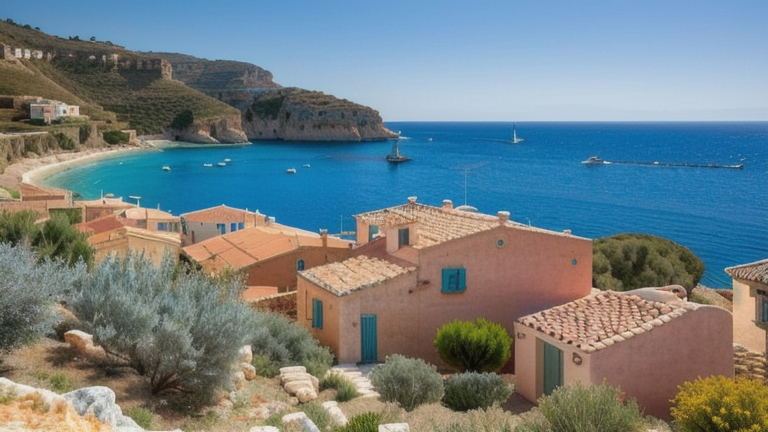
Marlas, Greece: A Quiet Link in the Cyclades
Marlas, a small landing point on the island of Naxos in Greece, plays a modest yet meaningful role in the country's submarine cable network. It hosts a single cable, Cyclades A, which connects Marlas to four other Greek locations: Ermoupoli, Lavrio, Mykonos, and Naousa. While Marlas may not boast the density of cables seen in larger hubs like Athens or Chania, its position within the Cyclades chain ensures reliable regional connectivity.The Cyclades A Cable: Stitching the Islands Together
Cyclades A, which became operational in 2018, spans 222 km and is exclusively domestic, serving only Greece. Its purpose is clear: to link the Cyclades islands to each other and to the mainland. Marlas serves as one of its endpoints, connecting Naxos to the broader network. This cable is part of a strategic effort to ensure that even smaller or less populated islands have access to modern telecommunications infrastructure. Unlike major hubs such as Athens, which hosts four cables and serves as a gateway to international networks, Marlas is purely a domestic connection point. Its role is not to reach beyond Greece but to ensure that Naxos remains digitally tied to its neighboring islands and the mainland. This is particularly important for local businesses, tourism, and administrative services that rely on stable and efficient communication.Regional Context: A Single Cable Among Giants
When compared to other landing points in Greece, Marlas stands out for its simplicity. Larger hubs like Chania and Athens host multiple cables-five and four, respectively-serving as critical nodes for international and domestic traffic. Even nearby Mykonos and Naousa, both part of the Cyclades A chain, host three cables each, offering greater redundancy and capacity. Despite its single cable, Marlas ranks in the top 78% of Greece's 36 landing points by cable count, highlighting the country's extensive network of submarine infrastructure. Greece's average cable length of 2663 km dwarfs the Cyclades A's 222 km, emphasizing the local nature of the connections in this region.Latency Insights: Reliable Connectivity
GeoCables' latency measurements for Marlas reveal a dependable connection. Across 13 completed checks from 10 source cities, the average round-trip latency was 126 ms, with the best observed latency at 51 ms. While these numbers may not rival the ultra-low latencies of major international hubs, they are more than sufficient for the regional needs of Naxos and the Cyclades.Conclusion: Local Connectivity for Local Needs
Marlas may not be a bustling hub of international cables, but its role within the Cyclades A chain is significant for the island of Naxos. By linking Naxos to Ermoupoli, Lavrio, Mykonos, and Naousa, this landing point ensures that the island remains connected to the rest of Greece. For a region where tourism and local businesses depend on reliable communication, Marlas quietly fulfills its purpose, proving that even a single cable can make a difference in stitching together a community.What next: Marlas, Greece in the global directory of cable landing points; see surrounding routes on the interactive submarine cable map or follow live network monitoring.
Other Landing Points in Greece
GR Aethos, Greece
39.6836°N 20.0154°E
GR Agios Sostis, Greece
37.5313°N 25.2071°E
GR Athens, Greece
37.9761°N 23.7363°E
GR Baxedes, Greece
36.4774°N 25.4023°E
GR Chania, Greece
35.5118°N 24.0122°E
GR Corfu, Greece
39.6193°N 19.9195°E
GR Ermoupoli, Greece
37.4395°N 24.9393°E
GR Filizi, Greece
37.1253°N 25.2897°E
GR Heraklion, Greece
35.3384°N 25.1279°E
GR Kalafati, Greece
37.4391°N 25.4196°E
GR Kardamena, Greece
36.7829°N 27.1434°E
GR Kavos, Greece
39.3854°N 20.1129°E
Landing Point
- CountryGR Greece
- Coordinates37.6523°N 25.0192°E
- Connected Cables1
See Real Cable Routes
View actual submarine cable routing from Marlas, Greece - with backbone nodes, distance calculations, and latency estimates
Open Calculator →
Submarine cables
Land fiber
Live probes