Linosa, Italy
Landing Point · IT Italy
2
Connected Cables
IT
Country
35.86°
Latitude
12.86°
Longitude
Ctrl + Scroll to zoom
Connected Cables
| Cable | Status |
|---|---|
| Lic-Lin-Lamp | Active |
| Piano Isole Minori | Active |
Live Performance
70
measurements
11
probes
200
days monitored
748.1
ms avg RTT
0
anomalies
RTT measurements to this landing point from 2026-03-02 through 2026-09-18 - live ICMP round-trip time via our monitoring probes. Recomputed daily. ✓ No anomalies detected in the monitored period.
Measurement sources
| Probe | Location | Samples | Avg |
|---|---|---|---|
| own probe | Minsk BY | 12 | 59.3 ms |
| own probe | Almaty KZ | 11 | 131.1 ms |
| own probe | Tbilisi GE | 11 | 74.1 ms |
| own probe | Jerusalem IL | 7 | 713.5 ms |
| #6427 own probe | Sydney AU | 6 | 2019.6 ms |
| own probe | Sevastopol UA | 6 | 887.7 ms |
| own probe | Odessa UA | 5 | 2169.8 ms |
| own probe | Balancer IL | 4 | 2179.3 ms |
| #6410 own probe | Sao Paulo BR | 3 | 1986.1 ms |
| #6487 | control probe | 3 | 433.7 ms |
| own probe | Moscow RU | 2 | 66.3 ms |
About Linosa, Italy
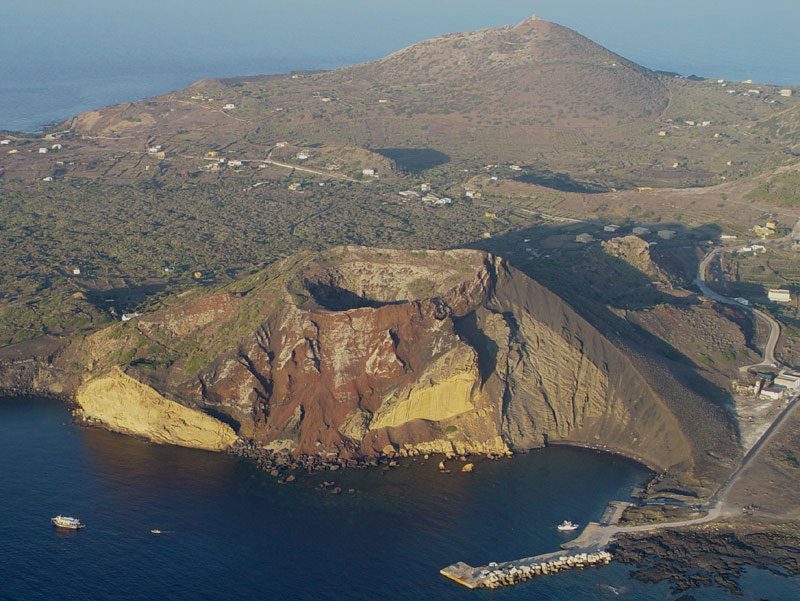
Linosa: A Remote Island with International Connectivity
Linosa, a small volcanic island in the Mediterranean Sea, is part of Italy's Pelagie archipelago. Despite its remote location, Linosa plays a role in Italy's submarine cable network, hosting two cables that connect it to the mainland and neighboring islands. These cables ensure the island remains digitally linked to the rest of the country, supporting local needs and providing reliable communication pathways.The Submarine Cables Landing at Linosa
Linosa is served by two submarine cables: the Piano Isole Minori cable and the Lic-Lin-Lamp cable. The Piano Isole Minori cable, set to become operational in 2024, spans 830 km and connects Linosa to 30 other landing points across Italy, including nearby islands like Lampedusa and Marettimo, as well as mainland locations such as Gaeta and Marsala. This extensive network stitches together Italy's smaller islands, ensuring that even its most isolated communities have access to modern connectivity. The Lic-Lin-Lamp cable, operational since 2000, is shorter at 240 km and connects Linosa to two other points: Lampedusa and Licata. While modest in scope compared to the Piano Isole Minori cable, it has provided consistent connectivity for over two decades, linking Linosa to its closest neighbors and the mainland.Linosa in Context
Italy hosts 37 submarine cables across 55 landing points, making Linosa one of the smaller players in this expansive network. With just two cables, Linosa ranks in the top 93% of Italy's landing points by cable count. However, its role is distinct. Unlike major hubs such as Mazara del Vallo (9 cables) or Genoa (7 cables), Linosa’s connectivity is focused on maintaining links between Italy's smaller islands and the mainland. This regional focus underscores the importance of Linosa as part of a broader strategy to integrate Italy's island communities into the national infrastructure.Latency Measurements: Reliable Performance
GeoCables' latency monitoring reveals that Linosa offers stable connectivity despite its remote location. Across 50 completed checks from nine source cities, the average round-trip latency is 95 milliseconds, with the best observed latency at 52 milliseconds. These measurements demonstrate that Linosa’s cables provide dependable communication speeds, ensuring that residents and businesses on the island can access online services without significant delays.Why Linosa Matters
Linosa’s submarine cables are not just technical infrastructure-they are the island’s connection to the outside world. From supporting tourism to enabling local businesses to stay connected, these cables ensure that Linosa remains part of Italy’s digital economy. While larger hubs like Catania or Bari handle higher volumes of traffic and international connections, Linosa exemplifies how even the smallest landing points contribute to the broader network, ensuring no community is left behind.What next: Linosa, Italy in the global directory of cable landing points; see surrounding routes on the interactive submarine cable map or follow live network monitoring.
Other Landing Points in Italy
IT Alicudi Porto, Italy
38.5359°N 14.3583°E
IT Bari, Italy
41.1255°N 16.8667°E
IT Cagliari, Italy
39.2153°N 9.1093°E
IT Cala d'Oliva, Italy
41.0817°N 8.3361°E
IT Canneto, Italy
38.4884°N 14.9636°E
IT Capraia Isola, Italy
43.0483°N 9.8422°E
IT Carloforte, Italy
39.1455°N 8.3027°E
IT Catania, Italy
37.5116°N 15.0674°E
IT Civitavecchia, Italy
42.0911°N 11.7968°E
IT Crotone, Italy
39.0807°N 17.1272°E
IT Ditella, Italy
38.6425°N 15.0761°E
IT Filicudi Porto, Italy
38.5649°N 14.5767°E
Landing Point
- CountryIT Italy
- Coordinates35.8584°N 12.8608°E
- Connected Cables2
See Real Cable Routes
View actual submarine cable routing from Linosa, Italy - with backbone nodes, distance calculations, and latency estimates
Open Calculator →
Submarine cables
Land fiber
Live probes