Civitavecchia, Italy
Landing Point · IT Italy
2
Connected Cables
IT
Country
42.09°
Latitude
11.80°
Longitude
Ctrl + Scroll to zoom
Connected Cables
| Cable | Status |
|---|---|
| Janna | Active |
| ROMSAR 2 | Active |
Live Performance
83
measurements
12
probes
215
days monitored
552.5
ms avg RTT
0
anomalies
RTT measurements to this landing point from 2026-03-13 through 2026-10-15 - live ICMP round-trip time via our monitoring probes. Recomputed daily. ✓ No anomalies detected in the monitored period.
Measurement sources
| Probe | Location | Samples | Avg |
|---|---|---|---|
| #6427 own probe | Sydney AU | 19 | 801.3 ms |
| own probe | Odessa UA | 19 | 534.8 ms |
| own probe | Kyiv UA | 16 | 480.0 ms |
| own probe | Minsk BY | 10 | 485.8 ms |
| own probe | Tbilisi GE | 4 | 67.3 ms |
| #6568 own probe | Singapore SG | 3 | 2180.3 ms |
| own probe | Almaty KZ | 3 | 128.0 ms |
| own probe | Jerusalem IL | 3 | 72.8 ms |
| own probe | Moscow RU | 3 | 64.3 ms |
| #6487 | control probe | 1 | 169.3 ms |
| own probe | Sevastopol UA | 1 | 96.2 ms |
| own probe | Saint Petersburg RU | 1 | 61.0 ms |
About Civitavecchia, Italy
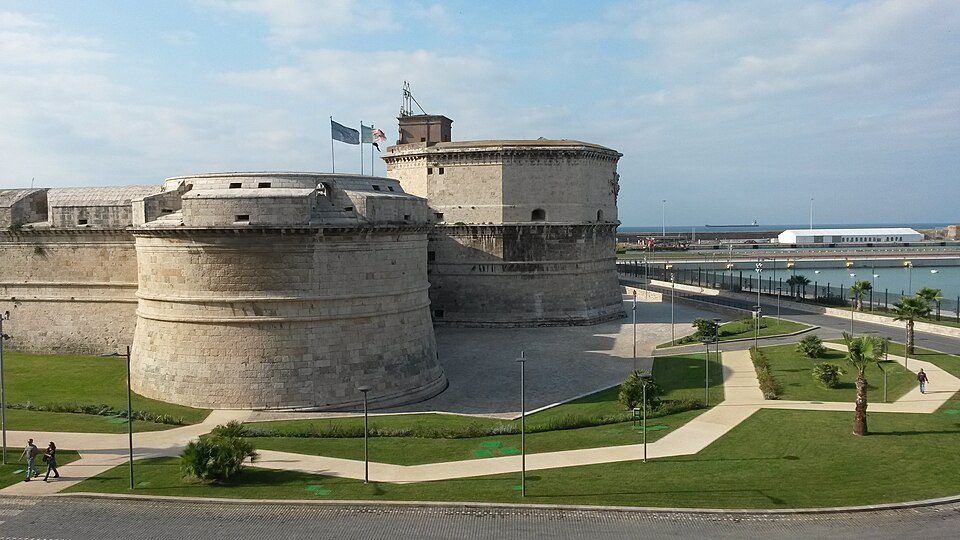
Civitavecchia: A Coastal Gateway with Submarine Connectivity
Civitavecchia, located on the Tyrrhenian Sea just 60 kilometers west-northwest of Rome, serves as a key maritime port for Italy. While its bustling harbor and proximity to the capital make it a natural hub for trade and travel, it also plays a quieter but important role in Italy’s digital infrastructure as a landing point for two submarine cables.The Cables Landing at Civitavecchia
Two submarine cables connect Civitavecchia to Italy’s broader network: the Janna cable and ROMSAR 2. Both are domestic cables, meaning they link various points within Italy rather than extending internationally. The Janna cable, operational since 2005, spans 634 kilometers and ties Civitavecchia to three other landing points: Cagliari, Mazara del Vallo, and Olbia. This cable stitches together key locations across Italy, including Mazara del Vallo, which hosts nine cables and serves as a major hub in the national network. ROMSAR 2, in service since 1996, connects Civitavecchia to Giglio, La Maddalena, and Sassari. While older, this cable remains essential for regional connectivity along Italy’s coastline. Together, these cables ensure that Civitavecchia is well-integrated into Italy's domestic digital infrastructure.Positioning Civitavecchia in Italy's Cable Landscape
Italy is home to 37 submarine cables spread across 55 landing points, with an average cable length of 2763 kilometers. Civitavecchia, hosting two cables, ranks in the top 93% of landing points in terms of cable count. While it does not match the cable density of major hubs like Mazara del Vallo (nine cables) or Genoa (seven cables), its connectivity is sufficient for its role as a regional port city. The cables landing here are shorter than Italy’s average, reflecting their domestic focus. This contrasts with international cables landing at other points, which often extend thousands of kilometers to connect Italy with other continents.Latency and Performance
GeoCables’ monitoring of Civitavecchia’s connectivity shows an average round-trip latency of 86 milliseconds across 23 completed checks from 10 source cities. The best observed latency was 50 milliseconds, indicating reliable performance for domestic traffic. These measurements highlight the efficiency of the cables in supporting local and regional digital needs.A City Anchored in Connectivity
Civitavecchia’s role as a landing point complements its identity as a major port city. While its maritime infrastructure supports physical trade and travel, the submarine cables landing here ensure digital connectivity for the region. Whether linking to Sardinia via the Janna cable or to Giglio and Sassari through ROMSAR 2, these cables are integral to maintaining Italy’s cohesive domestic network. As Italy continues to expand and modernize its submarine cable infrastructure, Civitavecchia remains a steady link in the chain, bridging coastal communities and supporting the digital demands of this historic port city.What next: Civitavecchia, Italy in the global directory of cable landing points; see surrounding routes on the interactive submarine cable map or follow live network monitoring.
Other Landing Points in Italy
IT Alicudi Porto, Italy
38.5359°N 14.3583°E
IT Bari, Italy
41.1255°N 16.8667°E
IT Cagliari, Italy
39.2153°N 9.1093°E
IT Cala d'Oliva, Italy
41.0817°N 8.3361°E
IT Canneto, Italy
38.4884°N 14.9636°E
IT Capraia Isola, Italy
43.0483°N 9.8422°E
IT Carloforte, Italy
39.1455°N 8.3027°E
IT Catania, Italy
37.5116°N 15.0674°E
IT Crotone, Italy
39.0807°N 17.1272°E
IT Ditella, Italy
38.6425°N 15.0761°E
IT Filicudi Porto, Italy
38.5649°N 14.5767°E
IT Fiumicino, Italy
41.7697°N 12.2269°E
Landing Point
- CountryIT Italy
- Coordinates42.0911°N 11.7968°E
- Connected Cables2
See Real Cable Routes
View actual submarine cable routing from Civitavecchia, Italy - with backbone nodes, distance calculations, and latency estimates
Open Calculator →
Submarine cables
Land fiber
Live probes