Labuha, Indonesia
Landing Point · ID Indonesia
Connected Cables
| Cable | Status |
|---|---|
| SMPCS Packet-1 | Active |
Live Performance
RTT measurements to this landing point from 2026-03-16 through 2026-10-04 - live ICMP round-trip time via our monitoring probes. Recomputed daily. ✓ No anomalies detected in the monitored period.
Measurement sources
| Probe | Location | Samples | Avg |
|---|---|---|---|
| own probe | Almaty KZ | 12 | 267.1 ms |
| #6410 own probe | Sao Paulo BR | 7 | 316.3 ms |
| #6427 own probe | Sydney AU | 7 | 173.2 ms |
| #7062 own probe | Cape Town ZA | 7 | 268.1 ms |
| own probe | Tbilisi GE | 6 | 285.3 ms |
| own probe | Minsk BY | 5 | 265.8 ms |
| #6487 | control probe | 4 | 13.8 ms |
| own probe | Jerusalem IL | 4 | 270.5 ms |
| own probe | Sevastopol UA | 2 | 232.6 ms |
| own probe | Moscow RU | 2 | 209.7 ms |
About Labuha, Indonesia
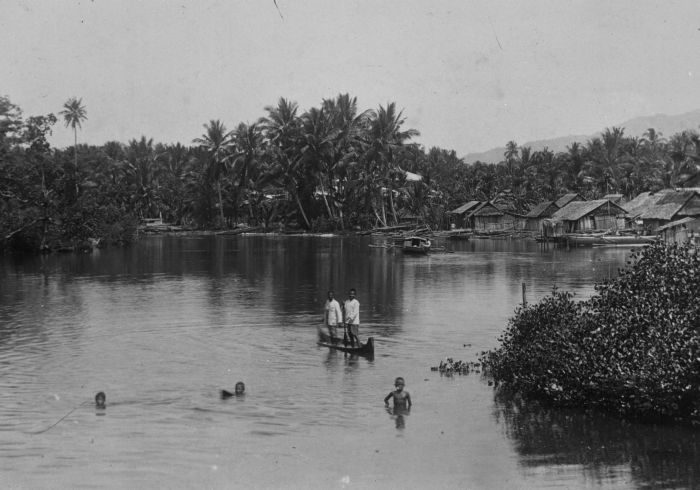
Labuha: Submarine Cable Landing Point
Labuha is a small port town located on Pulau Bacan, an island in the province of North Maluku in eastern Indonesia. As the capital of South Halmahera Regency, it sits within one of Indonesia's more remote island groupings, and its position as a submarine cable landing point reflects the broader national effort to extend connectivity to dispersed island communities. One submarine cable currently lands at Labuha, connecting it into Indonesia's domestic cable network.
The cable landing here, SMPCS Packet-1, operates entirely within Indonesian territory, linking Labuha to other points across the archipelago. This makes the landing point part of an intra-national corridor rather than an intercontinental or international one. For a town with a population of approximately 7,073 recorded at the 2020 Census, the presence of even a single submarine cable connection represents a meaningful extension of fixed network infrastructure to an otherwise island-isolated community.
Cables Landing at Labuha
SMPCS Packet-1 is a domestic Indonesian submarine cable system with a total length of 3,156 kilometres. It reached ready-for-service (RFS) status in 2015 and carries a draft status designation. All other landing points on this cable are located within Indonesia, confirming that SMPCS Packet-1 functions as an intra-archipelago system. The cable connects Labuha to other Indonesian communities and islands, operating entirely within the national submarine cable network without reaching any foreign territory.
Regional Context
Within Indonesia's extensive submarine cable infrastructure - which spans 70 cables across 139 landing points - Labuha ranks among the smaller nodes, hosting a single cable and placing it in the top 62% of Indonesian landing points by cable count. This positions it well behind major hubs such as Batam (20 cables), Jakarta (9 cables), and Manado (8 cables), which serve as the dominant poles of Indonesia's submarine cable geography. Labuha represents the kind of single-cable, regionally focused landing point that extends the national network into the eastern island provinces rather than functioning as a high-capacity transit node.
Network Role
Labuha operates as a single-cable terminus within Indonesia's domestic submarine cable system. Its sole connection, SMPCS Packet-1, ties the island of Pulau Bacan into the broader intra-archipelago network, providing a fixed subsea link where geographic isolation would otherwise limit connectivity to terrestrial or satellite means. The cable's length of 3,156 kilometres - exceeding the Indonesian national average of 2,814 kilometres per cable - underscores the physical distances involved in reaching eastern Indonesian islands like Pulau Bacan.
In the wider Indonesian submarine cable graph, landing points like Labuha play a distributional role, extending the reach of national systems into smaller, peripheral island communities that are geographically distant from the country's major connectivity hubs. The presence of Labuha as a named landing point in this network illustrates the scale of Indonesia's commitment to building submarine infrastructure across its vast island geography.
What next: Labuha, Indonesia in the global directory of cable landing points; see surrounding routes on the interactive submarine cable map or follow live network monitoring.
Other Landing Points in Indonesia
Landing Point
- CountryID Indonesia
- Coordinates0.6268°S 127.4805°E
- Connected Cables1
See Real Cable Routes
View actual submarine cable routing from Labuha, Indonesia - with backbone nodes, distance calculations, and latency estimates
Open Calculator →