Jayapura, Indonesia
Landing Point · ID Indonesia
Connected Cables
| Cable | Status |
|---|---|
| Pukpuk-1 Cable System | Planned |
| SMPCS Packet-2 | Active |
Live Performance
RTT measurements to this landing point from 2026-04-16 through 2026-09-03 - live ICMP round-trip time via our monitoring probes. Recomputed daily. ✓ No anomalies detected in the monitored period.
Measurement sources
| Probe | Location | Samples | Avg |
|---|---|---|---|
| #6427 own probe | Sydney AU | 39 | 103.7 ms |
| own probe | Almaty KZ | 30 | 266.6 ms |
| #6410 own probe | Sao Paulo BR | 21 | 341.6 ms |
| #6487 | control probe | 20 | 27.9 ms |
| own probe | Tbilisi GE | 5 | 305.9 ms |
| #7062 own probe | Cape Town ZA | 1 | 328.1 ms |
| own probe | Minsk BY | 1 | 212.4 ms |
| own probe | Jerusalem IL | 1 | 220.5 ms |
| own probe | Moscow RU | 1 | 206.5 ms |
| own probe | Saint Petersburg RU | 1 | 202.5 ms |
| own probe | Odessa UA | 1 | 202.4 ms |
About Jayapura, Indonesia
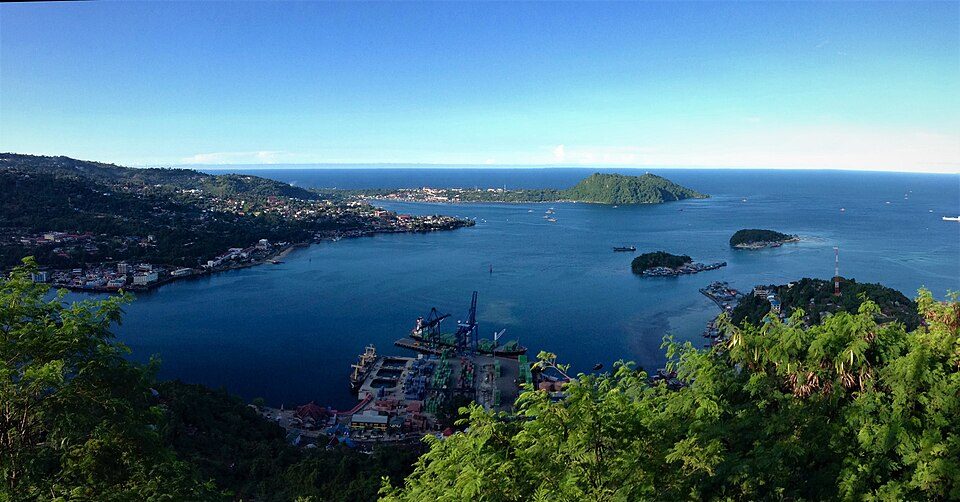
Jayapura, Indonesia: Submarine Cable Landing Point
Jayapura is the capital city of the Indonesian province of Papua, situated on the northern coast of the island of New Guinea, facing the Pacific Ocean and Yos Sudarso Bay. Its eastern border adjoins Papua New Guinea, placing it at a geographically distinctive junction between two nations that share the same landmass. As a submarine cable landing point, Jayapura hosts two cables that together serve both domestic Indonesian connectivity and a direct cross-border link to Papua New Guinea.
The two cables landing at Jayapura position the city as a node serving both inter-island and international corridors. The Kumul Domestic Submarine Cable System connects Jayapura to Papua New Guinea, providing an internationally oriented route, while the SMPCS Packet-2 system links Indonesian landing points along a domestic corridor. Together, these cables reflect Jayapura's role at the far eastern edge of Indonesia's submarine cable network.
Cables Landing at Jayapura
Kumul Domestic Submarine Cable System is a cable spanning 5,457 km that reached ready-for-service status in 2019. In addition to Jayapura, Indonesia, this cable lands in Papua New Guinea, forming a direct submarine link between the two countries that share the island of New Guinea. It represents one of the longer cable systems associated with Jayapura, reflecting the geographic distances involved in connecting the eastern Indonesian provinces to the broader Pacific region.
SMPCS Packet-2 is a domestic Indonesian cable system measuring 3,498 km, with a ready-for-service date of 2015. Its endpoints are entirely within Indonesia, connecting Jayapura to other Indonesian landing points along a route that supports internal national connectivity. This cable complements the internationally oriented Kumul system by reinforcing Jayapura's links within the Indonesian archipelago.
Regional Context
Within Indonesia's extensive submarine cable network - which spans 70 cables across 139 landing points - Jayapura ranks in the top 85% of landing points by cable count, hosting 2 cables. This places it well behind major Indonesian hubs such as Batam (20 cables), Jakarta (9 cables), Tanjung Pakis (9 cables), Manado (8 cables), Dumai (7 cables), and Makassar (6 cables). Jayapura's position reflects its role as a regional landing point serving the easternmost part of Indonesia rather than a primary national gateway.
Network Role
Jayapura functions as a two-cable landing point that serves a dual purpose: one cable supports domestic Indonesian connectivity, while the other provides a direct international link to Papua New Guinea. This combination makes Jayapura more than a simple terminus, as it bridges national and cross-border submarine cable routes at Indonesia's eastern frontier. The SMPCS Packet-2 anchors the city within Indonesia's internal network, and the Kumul Domestic Submarine Cable System extends that reach across an international border.
In the broader regional submarine cable graph, Jayapura represents the easternmost significant landing point in Indonesia, and its direct cable connection to Papua New Guinea distinguishes it from the majority of Indonesian landing points that serve purely domestic or westward-oriented routes.
What next: Jayapura, Indonesia in the global directory of cable landing points; see surrounding routes on the interactive submarine cable map or follow live network monitoring.
Other Landing Points in Indonesia
FAQ
Landing Point
- CountryID Indonesia
- Coordinates2.5916°S 140.6691°E
- Connected Cables2
See Real Cable Routes
View actual submarine cable routing from Jayapura, Indonesia - with backbone nodes, distance calculations, and latency estimates
Open Calculator →