Haifa, Israel
Landing Point · IL Israel
2
Connected Cables
IL
Country
32.81°
Latitude
35.00°
Longitude
Ctrl + Scroll to zoom
Connected Cables
| Cable | Status |
|---|---|
| ANDROMEDA | Planned |
| Israel Coasting 1 (IC-1) | Active |
Live Performance
29
measurements
10
probes
128
days monitored
104.7
ms avg RTT
0
anomalies
RTT measurements to this landing point from 2026-03-24 through 2026-07-30 - live ICMP round-trip time via our monitoring probes. Recomputed daily. ✓ No anomalies detected in the monitored period.
Measurement sources
| Probe | Location | Samples | Avg |
|---|---|---|---|
| own probe | Tbilisi GE | 6 | 111.4 ms |
| own probe | Jerusalem IL | 6 | 5.1 ms |
| own probe | Minsk BY | 3 | 78.5 ms |
| own probe | Almaty KZ | 3 | 154.8 ms |
| own probe | Balancer IL | 3 | 3.6 ms |
| #6410 own probe | Sao Paulo BR | 2 | 265.7 ms |
| #6427 own probe | Sydney AU | 2 | 320.7 ms |
| own probe | Moscow RU | 2 | 101.6 ms |
| own probe | Sevastopol UA | 1 | 147.9 ms |
| own probe | Saint Petersburg RU | 1 | 103.2 ms |
About Haifa, Israel
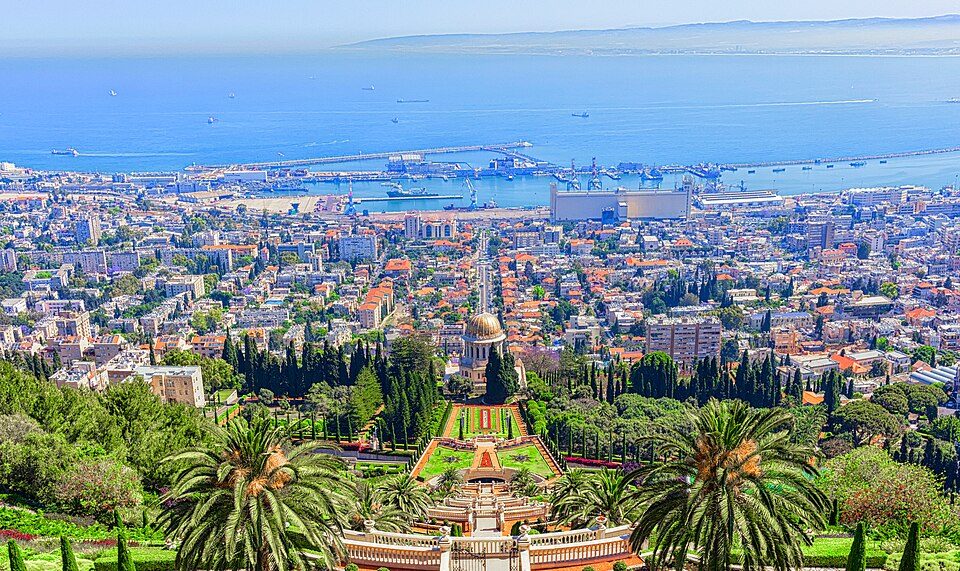
Haifa: A Gateway for International and Domestic Connectivity
Haifa, Israel's third-largest city, is more than just a cultural and historical hub-it is also a key landing point for submarine cables that connect the country to the global digital network. With two cables landing here, Haifa plays a significant role in both domestic and international connectivity.Submarine Cables in Haifa
Two submarine cables land in Haifa: **Israel Coasting 1 (IC-1)** and **ANDROMEDA**. These cables serve distinct purposes, reflecting Haifa's dual role in Israel's cable infrastructure. **Israel Coasting 1 (IC-1)** is a domestic cable that stitches together Israel's coastline, connecting Haifa to six other landing points: Ashkelon, Herzeliyya, Nahariyya, Netanya, Rishon Le’Zion, and Tel Aviv. At 340 km in length, IC-1 has been operational since 2000 and ensures seamless communication between major urban centers along the Mediterranean coast. This cable underpins local connectivity, supporting industries, businesses, and residents in Haifa and its neighboring cities. **ANDROMEDA**, on the other hand, is an international cable linking Haifa to Greece, Italy, and Jordan. This cable expands Israel's digital reach, facilitating data exchange with Europe and the Middle East. Haifa’s position on ANDROMEDA is particularly significant, as it connects the city to three other landing points: Aqaba (Jordan), Chania (Greece), and Genoa (Italy). This international link makes Haifa a strategic node for cross-border communication and trade.Regional Context: Haifa Among Israel’s Landing Points
Israel hosts seven submarine cables across eight landing points, and Haifa ranks in the top 88% by cable count, with two cables. While Tel Aviv leads with four cables, Haifa matches the cable count of Ashkelon, Netanya, and Tirat Carmel, and surpasses Herzeliyya and Nahariyya, which each host just one cable. This distribution highlights Haifa's balanced role in both domestic and international connectivity.Latency Measurements: A Reliable Connection
GeoCables’ monitoring has recorded 21 latency checks to Haifa from 10 source cities, with an average round-trip latency of 103 milliseconds. The best observed latency is an impressive 3 milliseconds, showcasing the efficiency of Haifa’s submarine cable infrastructure. These low latency figures are essential for industries reliant on fast and stable connections, such as software development, financial services, and cloud computing.Haifa: A City Connected to the World
Beyond its role in submarine cable infrastructure, Haifa is a vibrant city with a population of nearly 300,000. It forms part of the Haifa metropolitan area, the third-most populous in Israel. The city is known for its cultural landmarks, including the Baháʼí World Centre, a UNESCO World Heritage Site. Haifa’s connectivity, supported by IC-1 and ANDROMEDA, complements its position as a center for commerce, industry, and tourism. Whether facilitating domestic communication along Israel’s coastline or enabling international data exchange with Europe and the Middle East, Haifa’s submarine cables are integral to the city’s digital landscape. For businesses, residents, and visitors, Haifa is not just a city by the sea-it is a city connected to the world.What next: Haifa, Israel in the global directory of cable landing points; see surrounding routes on the interactive submarine cable map or follow live network monitoring.
Other Landing Points in Israel
Landing Point
- CountryIL Israel
- Coordinates32.8116°N 34.9987°E
- Connected Cables2
See Real Cable Routes
View actual submarine cable routing from Haifa, Israel - with backbone nodes, distance calculations, and latency estimates
Open Calculator →
Submarine cables
Land fiber
Live probes