Fiumicino, Italy
Landing Point · IT Italy
Connected Cables
| Cable | Status |
|---|---|
| Unitirreno | Active |
Live Performance
RTT measurements to this landing point from 2026-03-22 through 2026-09-16 - live ICMP round-trip time via our monitoring probes. Recomputed daily. ✓ No anomalies detected in the monitored period.
Measurement sources
| Probe | Location | Samples | Avg |
|---|---|---|---|
| #6427 own probe | Sydney AU | 24 | 283.2 ms |
| own probe | Odessa UA | 23 | 165.3 ms |
| own probe | Kyiv UA | 23 | 179.1 ms |
| own probe | Minsk BY | 8 | 67.9 ms |
| own probe | Jerusalem IL | 6 | 73.6 ms |
| own probe | Tbilisi GE | 5 | 61.8 ms |
| own probe | Almaty KZ | 4 | 123.1 ms |
| #6487 | control probe | 3 | 1195.6 ms |
| own probe | Sevastopol UA | 2 | 93.5 ms |
| own probe | Moscow RU | 1 | 63.5 ms |
About Fiumicino, Italy
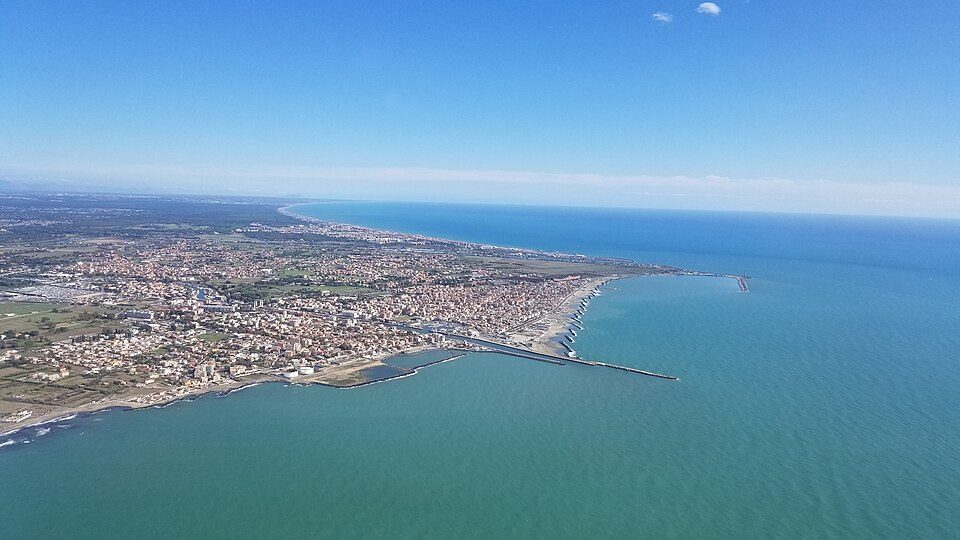
Fiumicino, Italy: Submarine Cable Landing Point
Fiumicino is a town in the Metropolitan City of Rome, in the Lazio region of central Italy. Situated on the Tyrrhenian coast, it serves as a landing point for submarine cable infrastructure connecting Italy's western seaboard. One submarine cable currently lands at Fiumicino, the Unitirreno system, which links multiple points along the Italian peninsula within the Tyrrhenian Sea corridor.
The Unitirreno cable establishes Fiumicino as a node on a domestic Italian submarine route, enabling connectivity between coastal communities along the Tyrrhenian littoral. Although the landing point hosts a single cable, its position near Rome - Italy's capital and most populous metropolitan area - gives it a distinct place within the national submarine cable map.
Cables Landing at Fiumicino
Unitirreno is a submarine cable system spanning 1,156 kilometres, with a ready-for-service date of 2025 (draft status). The cable connects multiple landing points within Italy, making it a domestic inter-city system running along the Tyrrhenian coastline. As an intra-Italian cable, Unitirreno supports regional connectivity between Italian coastal communities rather than providing intercontinental links. Fiumicino represents one of its landing points along this national route.
Regional Context
Within Italy's submarine cable network - which spans 37 cables across 55 landing points - Fiumicino sits among a broad set of landing locations hosting one or two cables. Nearby Civitavecchia, also on the Tyrrhenian coast of central Italy, hosts two cables, while larger hubs such as Mazara del Vallo (9 cables), Genoa (7 cables), and Catania (5 cables) serve as the country's most densely connected landing points. Fiumicino ranks within the top 80 percent of Italian landing points by cable count, reflecting its status as a single-cable terminus rather than a multi-cable hub.
Network Role
Fiumicino functions as a single-cable terminus within the Italian domestic submarine cable network. Through the Unitirreno system, it participates in a Tyrrhenian coastal corridor that ties together landing points along the Italian mainland. The landing point does not currently serve intercontinental routes or connect Italy to other countries, positioning it as a contributor to intra-national cable redundancy and regional connectivity along the western Italian coast.
As Italy continues to expand and modernise its submarine cable infrastructure - with 37 systems already landed across 55 points nationwide - single-cable landing points like Fiumicino contribute to the distribution of that network beyond the country's principal hubs, extending reach into coastal communities that might otherwise rely solely on terrestrial connections.
What next: Fiumicino, Italy in the global directory of cable landing points; see surrounding routes on the interactive submarine cable map or follow live network monitoring.
Other Landing Points in Italy
Landing Point
- CountryIT Italy
- Coordinates41.7697°N 12.2269°E
- Connected Cables1
See Real Cable Routes
View actual submarine cable routing from Fiumicino, Italy - with backbone nodes, distance calculations, and latency estimates
Open Calculator →