Curuá, Brazil
Landing Point · BR Brazil
1
Connected Cables
BR
Country
1.89°
Latitude
55.12°
Longitude
Ctrl + Scroll to zoom
Connected Cables
| Cable | Status |
|---|---|
| Norte Conectado (Infovia 01) | Active |
Live Performance
54
measurements
11
probes
192
days monitored
267.4
ms avg RTT
0
anomalies
RTT measurements to this landing point from 2026-03-23 through 2026-10-02 - live ICMP round-trip time via our monitoring probes. Recomputed daily. ✓ No anomalies detected in the monitored period.
Measurement sources
| Probe | Location | Samples | Avg |
|---|---|---|---|
| own probe | Minsk BY | 10 | 261.9 ms |
| own probe | Almaty KZ | 8 | 306.0 ms |
| #6410 own probe | Sao Paulo BR | 6 | 16.5 ms |
| #6427 own probe | Sydney AU | 6 | 380.2 ms |
| #7062 own probe | Cape Town ZA | 6 | 365.7 ms |
| #64129 | control probe | 5 | 193.6 ms |
| own probe | Tbilisi GE | 4 | 281.2 ms |
| own probe | Jerusalem IL | 4 | 285.3 ms |
| #6487 | control probe | 2 | 371.7 ms |
| own probe | Moscow RU | 2 | 256.0 ms |
| own probe | Sevastopol UA | 1 | 311.5 ms |
About Curuá, Brazil
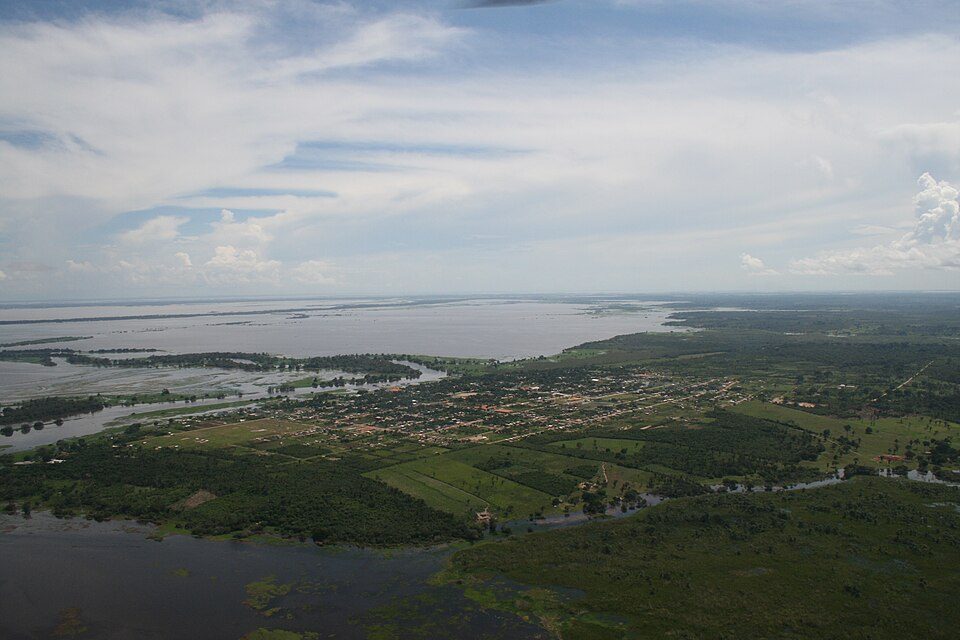
Curuá, Brazil: A New Link in the Amazon's Connectivity Chain
Curuá, a small town nestled in the Brazilian Amazon, is home to a single submarine cable landing point. While it may not boast the bustling activity of major hubs like Fortaleza or Rio de Janeiro, Curuá plays a unique role in the evolving digital landscape of northern Brazil. Its connection to the Norte Conectado (Infovia 01) cable, operational since 2023, is a significant step forward in bringing reliable connectivity to remote regions of the Amazon.The Norte Conectado Cable: Stitching Together the Amazon
At 1,100 kilometers in length, the Norte Conectado (Infovia 01) cable is designed to improve digital access across the Amazon basin. This cable doesn't connect Brazil to international destinations; instead, it serves as a domestic network linking 11 landing points, including Curuá, Manaus, Santarém, and Óbidos. By connecting these towns and cities, the cable supports local and regional communication, ensuring that even remote communities have access to modern digital infrastructure. Curuá's position in this chain is particularly interesting. Unlike larger cities such as Manaus, which hosts multiple cables and serves as a regional hub, Curuá relies solely on the Norte Conectado cable for its submarine connectivity. This makes it a key link in the Amazon's digital chain, connecting smaller towns to larger urban centers and ultimately to Brazil's national network.Connectivity Measurements: Reliable but Remote
GeoCables' latency monitoring reveals that Curuá's connection is functional but distant from major digital hubs. Across 24 completed checks from 10 source cities, the average round-trip latency to Curuá is 279 milliseconds, with the best observed latency at 17 milliseconds. This performance reflects the challenges of connecting remote Amazonian towns to Brazil's broader network, but it also underscores the importance of the Norte Conectado cable in bridging these gaps.Positioning Curuá in Brazil's Cable Landscape
Brazil is a global leader in submarine cable infrastructure, with 22 cables landing across 64 points. Major hubs like Fortaleza (10 cables) and Rio de Janeiro (8 cables) dominate the landscape, serving as gateways for international and domestic connectivity. In contrast, Curuá's single cable places it among the smaller landing points in Brazil, ranking in the top 81% of the country's 74 landing points by cable count. However, Curuá's role is not defined by volume but by necessity. The Norte Conectado cable is tailored to the needs of the Amazon region, where geography and isolation have historically limited connectivity. By hosting this cable, Curuá contributes to a broader effort to integrate the Amazon into Brazil's digital economy, supporting local industries, education, and communication.Conclusion: A Small Town with a Big Role
Curuá may not have the prominence of Brazil's coastal hubs, but its connection to the Norte Conectado cable highlights the importance of regional networks in fostering inclusivity. As the Amazon continues to develop, towns like Curuá are becoming key nodes in a domestic chain that stitches together one of the world's most isolated regions. For residents and businesses in Curuá, this single cable represents a gateway to opportunities that were once out of reach.What next: Curuá, Brazil in the global directory of cable landing points; see surrounding routes on the interactive submarine cable map or follow live network monitoring.
Other Landing Points in Brazil
BR Afuá, Brazil
0.1571°S 50.3883°W
BR Alenquer, Brazil
1.9450°S 54.7360°W
BR Almeirim, Brazil
1.5284°S 52.5778°W
BR Alvarães, Brazil
3.2146°S 64.8121°W
BR Amaturá, Brazil
3.3621°S 68.1972°W
BR Aracajú, Brazil
10.9096°S 37.0748°W
BR Atafona, Brazil
21.6312°S 41.0272°W
BR Atalaia do Norte, Brazil
4.3664°S 70.1932°W
BR Autazes, Brazil
3.5803°S 59.1317°W
BR Auxiliadora, Brazil
6.2496°S 61.8383°W
BR Bagre, Brazil
1.8988°S 50.2091°W
BR Barcelos, Brazil
0.9741°S 62.9258°W
Landing Point
- CountryBR Brazil
- Coordinates1.8903°S 55.1201°W
- Connected Cables1
See Real Cable Routes
View actual submarine cable routing from Curuá, Brazil - with backbone nodes, distance calculations, and latency estimates
Open Calculator →
Submarine cables
Land fiber
Live probes