Coari, Brazil
Landing Point · BR Brazil
Connected Cables
| Cable | Status |
|---|---|
| Projeto Amazônia Conectada (PAC 01) | Active |
Live Performance
RTT measurements to this landing point from 2026-05-12 through 2026-10-11 - live ICMP round-trip time via our monitoring probes. Recomputed daily. ✓ No anomalies detected in the monitored period.
Measurement sources
| Probe | Location | Samples | Avg |
|---|---|---|---|
| #6410 own probe | Sao Paulo BR | 45 | 4.5 ms |
| #7062 own probe | Cape Town ZA | 43 | 354.6 ms |
| #6427 own probe | Sydney AU | 29 | 377.3 ms |
| #6487 | control probe | 20 | 333.0 ms |
| own probe | Minsk BY | 9 | 284.8 ms |
| #6568 own probe | Singapore SG | 1 | 402.2 ms |
| own probe | Almaty KZ | 1 | 314.5 ms |
| own probe | Tbilisi GE | 1 | 293.9 ms |
| own probe | Jerusalem IL | 1 | 284.5 ms |
| own probe | Moscow RU | 1 | 257.1 ms |
| own probe | Rostov RU | 1 | 292.1 ms |
About Coari, Brazil
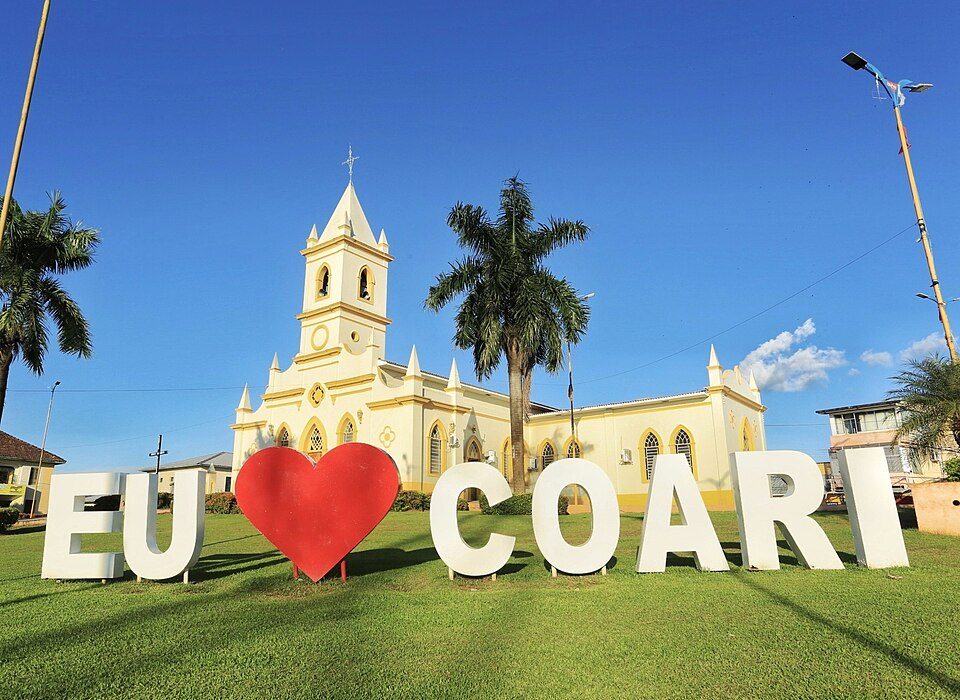
Coari: Submarine Cable Landing Point
Coari is a city in Brazil served by a submarine cable system that runs through inland waterways rather than open ocean, reflecting the unique geography of the Amazon basin. As a landing point, Coari hosts one submarine cable, the Projeto Amazônia Conectada (PAC 01), which connects communities along Brazil's vast river network. The cable represents a domestically focused connectivity corridor, linking Brazilian locations to one another rather than spanning international borders.
The corridor enabled by the Projeto Amazônia Conectada is entirely intra-Brazilian, designed to extend network access into the interior of the country through a riverine submarine cable deployment. This distinguishes Coari from the majority of Brazil's cable landing points, which face outward toward the Atlantic and connect to other continents. Coari's cable infrastructure instead addresses internal geographic barriers posed by the Amazon river system.
Cables Landing at Coari
Projeto Amazônia Conectada (PAC 01) is an 800-kilometre submarine cable system that reached ready-for-service status in 2017, with a draft designation indicating its operational classification at that time. The cable connects multiple landing points within Brazil, routing through the river systems of the Amazon region. All endpoints on this cable are located within Brazil, making it a purely domestic system. Its 800-kilometre length spans a significant stretch of river corridor, bringing connectivity to communities in the Brazilian interior that would otherwise lack access to modern fibre-optic infrastructure.
Regional Context
Within Brazil's broader submarine cable landscape, Coari stands apart from major coastal hubs such as Fortaleza, which hosts ten cables, and Rio de Janeiro, which hosts eight. Compared to Afuá and Alenquer, each of which land two cables, Coari's single cable reflects its role as a more remote point on the Amazônia Conectada system rather than a multi-cable interchange. Its significance lies not in cable volume but in its position as a node within an inland riverine network.
Network Role
Coari functions as a single-cable terminus on the Projeto Amazônia Conectada system, serving as one of the inland landing points through which Brazil's domestic riverine cable extends connectivity into the Amazon interior. The cable's exclusively intra-Brazilian character means Coari contributes to the national connectivity fabric rather than to international traffic exchange. Its 800-kilometre cable, operational since 2017, addresses the challenge of reaching communities separated from Brazil's coastal cable hubs by thousands of kilometres of river and forest.
Within the regional submarine cable graph, Coari represents a category of landing point that is geographically and functionally distinct from Brazil's Atlantic-facing coastal nodes - one defined by riverine geography and domestic network integration rather than intercontinental routing.
What next: Coari, Brazil in the global directory of cable landing points; see surrounding routes on the interactive submarine cable map or follow live network monitoring.
Other Landing Points in Brazil
Landing Point
- CountryBR Brazil
- Coordinates4.0919°S 63.1477°W
- Connected Cables1
See Real Cable Routes
View actual submarine cable routing from Coari, Brazil - with backbone nodes, distance calculations, and latency estimates
Open Calculator →