Chisasibi, QC, Canada
Landing Point · CA Canada
Connected Cables
| Cable | Status |
|---|---|
| EAUFON 1 | Active |
Live Performance
RTT measurements to this landing point from 2026-03-13 through 2026-10-11 - live ICMP round-trip time via our monitoring probes. Recomputed daily. ✓ No anomalies detected in the monitored period.
Measurement sources
| Probe | Location | Samples | Avg |
|---|---|---|---|
| own probe | Minsk BY | 11 | 108.6 ms |
| #6427 own probe | Sydney AU | 7 | 175.9 ms |
| own probe | Moscow RU | 6 | 109.5 ms |
| own probe | Saint Petersburg RU | 6 | 110.9 ms |
| #6487 | control probe | 4 | 176.4 ms |
| own probe | Almaty KZ | 3 | 163.4 ms |
| own probe | Tbilisi GE | 3 | 133.6 ms |
| own probe | Jerusalem IL | 2 | 143.4 ms |
| #6568 own probe | Singapore SG | 1 | 210.4 ms |
| #7062 own probe | Cape Town ZA | 1 | 219.0 ms |
| own probe | Kyiv UA | 1 | 118.6 ms |
About Chisasibi, QC, Canada
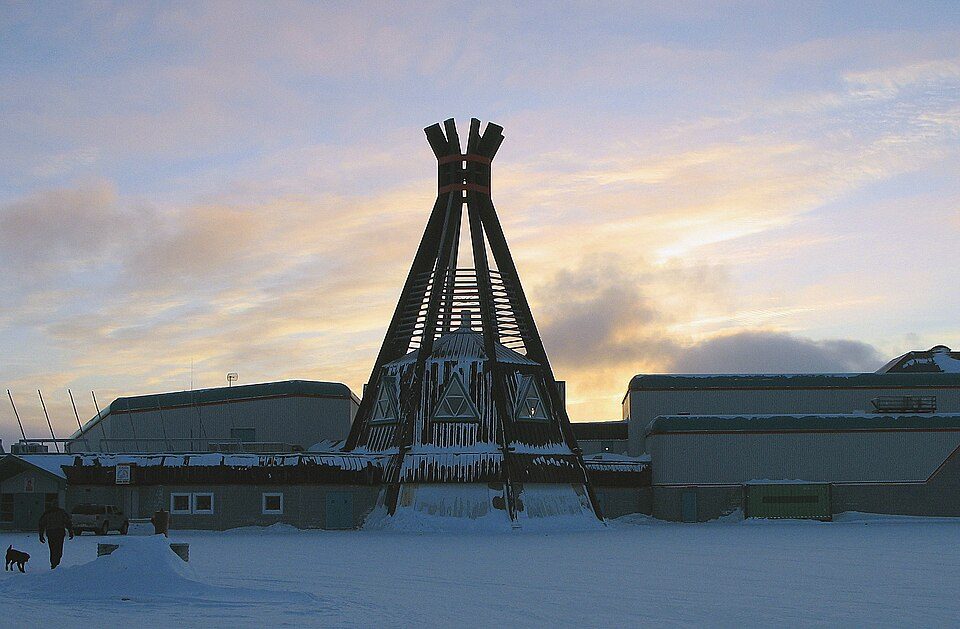
Chisasibi, QC, Canada: Submarine Cable Landing Point
Chisasibi is a Cree village situated on the eastern shore of James Bay in Nord-du-Québec, Canada, positioned on the south shore of La Grande River near its mouth. As a submarine cable landing point, Chisasibi hosts one submarine cable, EAUFON 1, which connects it to other points within Canada. Its location on the remote subarctic coast of James Bay makes it a distinctive landing point within the broader Canadian submarine cable network.
The single cable landing here supports an intra-Canadian corridor, linking Chisasibi to other Canadian communities rather than reaching across international boundaries. This configuration reflects a regional connectivity pattern common to northern and remote communities in Canada, where submarine cables serve as a means of connecting isolated coastal settlements to wider domestic networks.
Cables Landing at Chisasibi, QC, Canada
EAUFON 1 is the sole submarine cable landing at Chisasibi. With a length of 1,175 km, it reached its ready-for-service (RFS) date in 2022, with a draft status noted. The cable connects exclusively to other points within Canada, making it a domestic intra-Canadian system. At 1,175 km, EAUFON 1 is considerably longer than the average submarine cable length of 259 km recorded across Canada's submarine cable infrastructure, indicating that it spans a substantial distance across northern or subarctic waters to reach its Canadian endpoints.
Regional Context
Within Canada's network of 155 submarine cable landing points, Chisasibi ranks in the top 97% by cable count, hosting one cable. Several regional peers in Quebec and British Columbia host two cables each, including Kangiqsujuaq, QC and Puvirnituq, QC, which are also northern Quebec landing points, as well as Prince Rupert, BC and Vancouver, BC on the Pacific coast. Chisasibi shares its single-cable status with Addenbroke Island, BC, also a one-cable landing point in Canada.
Network Role
Chisasibi functions as a single-cable terminus rather than a multi-cable hub, with EAUFON 1 forming the entirety of its submarine cable footprint. The cable's 1,175 km length and its intra-Canadian routing suggest it plays a role in extending submarine connectivity to a remote community on James Bay that would otherwise have limited access to undersea network infrastructure. The 2022 RFS date places it among the more recently commissioned cables in Canada's domestic submarine cable landscape.
In the regional submarine cable graph, Chisasibi's significance lies in representing the extension of submarine cable technology to remote northern communities in Quebec, a pattern also visible at nearby northern Quebec landing points such as Kangiqsujuaq and Puvirnituq.
What next: Chisasibi, QC, Canada in the global directory of cable landing points; see surrounding routes on the interactive submarine cable map or follow live network monitoring.
Other Landing Points in Canada
Landing Point
- CountryCA Canada
- Coordinates53.7736°N 78.8935°W
- Connected Cables1
See Real Cable Routes
View actual submarine cable routing from Chisasibi, QC, Canada - with backbone nodes, distance calculations, and latency estimates
Open Calculator →