Callantsoog, Netherlands
Landing Point · NL Netherlands
Connected Cables
| Cable | Status |
|---|---|
| Iceni | Active |
Live Performance
RTT measurements to this landing point from 2026-04-01 through 2026-08-22 - live ICMP round-trip time via our monitoring probes. Recomputed daily. ✓ No anomalies detected in the monitored period.
Measurement sources
| Probe | Location | Samples | Avg |
|---|---|---|---|
| own probe | Minsk BY | 18 | 57.5 ms |
| #6427 own probe | Sydney AU | 11 | 381.6 ms |
| #6487 | control probe | 9 | 170.8 ms |
| own probe | Saint Petersburg RU | 8 | 61.7 ms |
| own probe | Tbilisi GE | 6 | 75.6 ms |
| own probe | Jerusalem IL | 6 | 83.0 ms |
| own probe | Moscow RU | 6 | 52.5 ms |
| own probe | Kyiv UA | 6 | 50.7 ms |
| own probe | Odessa UA | 5 | 56.5 ms |
| own probe | Almaty KZ | 4 | 111.2 ms |
| own probe | Sevastopol UA | 1 | 83.3 ms |
About Callantsoog, Netherlands
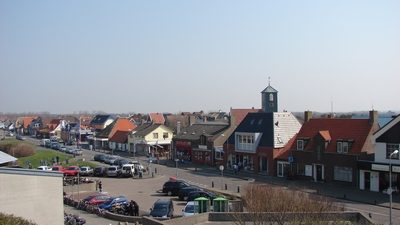
Callantsoog: Submarine Cable Landing Point
Callantsoog is a village on the North Sea coast of the Netherlands, situated in the province of North Holland approximately 18 kilometres south of Den Helder. As a submarine cable landing point, it serves as the Dutch terminus for a cross-North Sea cable connection linking the Netherlands with the United Kingdom. One submarine cable currently lands at Callantsoog, placing it among the smaller landing points in the Netherlands by cable count but still within the upper tier of the country's eight active landing points.
The single cable landing here, Iceni, operates on a bilateral corridor between the Netherlands and the United Kingdom, representing a short but significant cross-North Sea link. This type of corridor has historically underpinned data exchange between two of Europe's largest economies and most active internet exchange ecosystems.
Cables Landing at Callantsoog
Iceni is a submarine cable with a ready-for-service (RFS) date of 2024, currently listed at draft status. It connects the Netherlands and the United Kingdom, making Callantsoog its Dutch landing point. No additional endpoint countries, length specifications, or capacity figures are associated with this cable in the available record. As a recently introduced system, Iceni represents one of the newer cross-North Sea cable routes to enter service in the region.
Regional Context
Within the Netherlands, Callantsoog hosts fewer cables than larger landing points such as Eemshaven, Zandvoort, and Domburg, each of which serves two or more systems. Callantsoog is comparable to Beverwijk, which also hosts a single cable, and ranks in the top 38 percent of the country's eight landing points by cable count. The Netherlands as a whole accommodates eleven submarine cables across eight landing points, with Callantsoog contributing one of those systems.
Network Role
Callantsoog functions as a single-cable terminus, serving exclusively as the Dutch landing point for the Iceni cable on its route to the United Kingdom. This positions it as a dedicated bilateral node rather than a multi-cable hub, channelling cross-North Sea connectivity through a specific coastal location in North Holland. The corridor it supports - between the Netherlands and the United Kingdom - is one of the most established submarine cable routes in Northern Europe.
Within the Dutch submarine cable graph, Callantsoog's role is narrowly defined but geographically distinct, adding a North Holland coastal node to a national network whose other landing points are distributed across Zeeland, South Holland, and the Groningen coast. Its presence broadens the geographic spread of the Netherlands' submarine cable infrastructure along the North Sea shoreline.
What next: Callantsoog, Netherlands in the global directory of cable landing points; see surrounding routes on the interactive submarine cable map or follow live network monitoring.
Other Landing Points in Netherlands
Landing Point
- CountryNL Netherlands
- Coordinates52.8369°N 4.7008°E
- Connected Cables1
See Real Cable Routes
View actual submarine cable routing from Callantsoog, Netherlands - with backbone nodes, distance calculations, and latency estimates
Open Calculator →