The Hague, Netherlands
Landing Point · NL Netherlands
Connected Cables
| Cable | Status |
|---|---|
| IOEMA | Planned |
| IOEMA-1 | Planned |
Live Performance
RTT measurements to this landing point from 2026-04-13 through 2026-10-15 - live ICMP round-trip time via our monitoring probes. Recomputed daily. ✓ No anomalies detected in the monitored period.
Measurement sources
| Probe | Location | Samples | Avg |
|---|---|---|---|
| own probe | Minsk BY | 8 | 67.6 ms |
| #6427 own probe | Sydney AU | 5 | 286.6 ms |
| own probe | Saint Petersburg RU | 4 | 59.8 ms |
| #6487 | control probe | 3 | 171.1 ms |
| own probe | Almaty KZ | 3 | 107.3 ms |
| own probe | Tbilisi GE | 3 | 67.9 ms |
| own probe | Jerusalem IL | 3 | 100.9 ms |
| own probe | Sevastopol UA | 3 | 82.9 ms |
| own probe | Kyiv UA | 3 | 52.0 ms |
| own probe | Odessa UA | 2 | 50.9 ms |
| #6410 own probe | Sao Paulo BR | 1 | 201.4 ms |
| #6568 own probe | Singapore SG | 1 | 156.3 ms |
| own probe | Moscow RU | 1 | 52.6 ms |
About The Hague, Netherlands
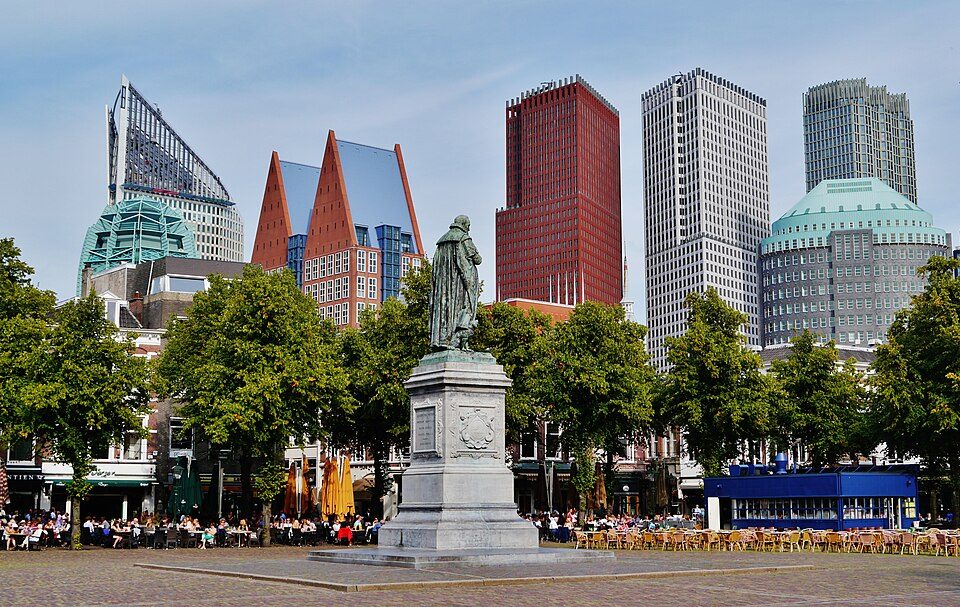
The Hague: Submarine Cable Landing Point
The Hague is located on the western coast of the Netherlands, facing the North Sea, in the province of South Holland. As a North Sea coastal city, it provides direct access to the subsea cable corridor that connects the Netherlands with its northern European neighbours. Two submarine cables land at The Hague, both belonging to the IOEMA system, linking the Netherlands to Denmark, Germany, Norway, and the United Kingdom.
Both cables at this landing point operate within the North Sea and broader northern European regional corridor. The connectivity enabled here is primarily intra-European, spanning the North Sea basin between five countries. With two cables sharing the same multi-country route set, The Hague functions as a dedicated node within this specific cable system rather than a diversified multi-system hub.
Cables Landing at The Hague
IOEMA is a submarine cable with a length of 1,620 km, currently in draft status with a scheduled ready-for-service year of 2028. In addition to The Hague in the Netherlands, IOEMA connects landing points in Denmark, Germany, Norway, and the United Kingdom, forming a North Sea ring or multi-branch system across five countries.
IOEMA-1 is a companion cable to IOEMA, also in draft status, with no confirmed length or RFS date recorded at this time. It connects the same five countries: Denmark, Germany, Netherlands, Norway, and the United Kingdom. As a distinct cable within the same system, IOEMA-1 adds a measure of route diversity to the corridor served by The Hague landing point.
Regional Context
The Netherlands hosts 11 submarine cables across eight landing points. The Hague, with two cables, ranks in the upper half of Dutch landing points by cable count, sitting alongside Domburg and Ijmuiden, which also each host two cables. The most cable-dense Dutch landing points are Eemshaven and Zandvoort, each with three cables, while Beverwijk and Callantsoog each host a single cable.
Network Role
The Hague's two cables - both part of the IOEMA system - position this landing point as a dedicated terminus within a North Sea corridor connecting the Netherlands, Denmark, Germany, Norway, and the United Kingdom. Rather than a multi-system hub serving diverse cable operators, The Hague concentrates its subsea connectivity around a single cable system with two discrete cable variants, both still in the draft phase ahead of their anticipated 2028 deployment.
Within the broader Dutch submarine cable graph, The Hague contributes to the geographic spread of landing infrastructure along the Netherlands' North Sea coastline, adding a southern coastal node to a national network that already extends from Eemshaven in the north to Domburg in the southwest. Its role in the IOEMA system places it on a route that spans five North Sea nations, reinforcing the Netherlands' position as a well-connected point of presence in northern European subsea infrastructure.
What next: The Hague, Netherlands in the global directory of cable landing points; see surrounding routes on the interactive submarine cable map or follow live network monitoring.
Other Landing Points in Netherlands
Landing Point
- CountryNL Netherlands
- Coordinates52.0840°N 4.3174°E
- Connected Cables2
See Real Cable Routes
View actual submarine cable routing from The Hague, Netherlands - with backbone nodes, distance calculations, and latency estimates
Open Calculator →