Sydney, NSW, Australia
Landing Point · AU Australia
Connected Cables
| Cable | Status |
|---|---|
| APX East | Planned |
| Coral Sea Cable System (CS²) | Active |
| Gondwana-1 | Active |
| Hawaiki | Active |
| Hawaiki Nui 1 | Planned |
| Honomoana | Active |
| PIPE Pacific Cable-1 (PPC-1) | Active |
| Sydney-Melbourne-Adelaide-Perth (SMAP) | Active |
| Tabua | Active |
| Tasman Ring Network | Planned |
Live Performance
RTT measurements to this landing point from 2026-03-02 through 2026-10-16 - live ICMP round-trip time via our monitoring probes. Recomputed daily.
Measurement sources
| Probe | Location | Samples | Avg |
|---|---|---|---|
| own probe | Minsk BY | 2402 | 303.3 ms |
| #6427 own probe | Sydney AU | 2401 | 0.2 ms |
| #6487 | control probe | 2241 | 93.0 ms |
| #7018 | control probe | 198 | 28.1 ms |
| #50365 | control probe | 141 | 47.6 ms |
| #7062 own probe | Cape Town ZA | 134 | 430.7 ms |
| #329 | control probe | 132 | 251.8 ms |
| #12721 | control probe | 100 | 177.1 ms |
| #4429 | control probe | 35 | 109.3 ms |
| #1132 | control probe | 30 | 185.2 ms |
| #32 | control probe | 24 | 179.6 ms |
| #6568 own probe | Singapore SG | 19 | 369.1 ms |
| own probe | Almaty KZ | 18 | 363.0 ms |
| own probe | Kyiv UA | 11 | 303.3 ms |
| own probe | Tbilisi GE | 8 | 343.6 ms |
| own probe | Jerusalem IL | 8 | 353.9 ms |
| #6410 own probe | Sao Paulo BR | 7 | 314.5 ms |
| own probe | Sevastopol UA | 7 | 356.7 ms |
| own probe | Moscow RU | 7 | 322.5 ms |
| own probe | Saint Petersburg RU | 7 | 348.8 ms |
About Sydney, NSW, Australia
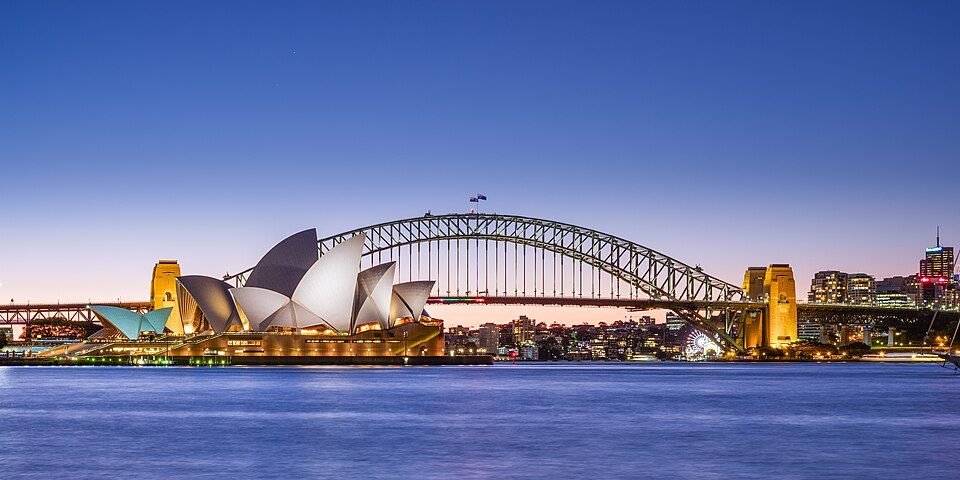
Position in regional infrastructure
Sydney is the largest city in Australia and the country's principal submarine cable hub, with landing facilities at coordinates 33.869697°S, 151.207047°E on the New South Wales coast. The city sits at the convergence point of Australia's trans-Pacific cable infrastructure: cables here reach the United States (US west coast and Hawaii), Asia (Japan, Singapore, Guam), New Zealand, French Polynesia, and the wider Pacific island network. Sydney handles a large fraction of all internet traffic between Australia and the rest of the world - its concentration of cable landings makes it both a critical national asset and a documented chokepoint for Australian connectivity.
Beyond Sydney's role as a trans-Pacific gateway, the city anchors the eastern end of Australia's coastal submarine cable network reaching Melbourne, Adelaide, Perth, and Brisbane via the SMAP system. Cables here also extend northward into Papua New Guinea, the Coral Sea region, and ultimately onward to Pacific island states. Several major announced cables (Tabua, Honomoana, APX East, E2A, Hawaiki Nui 1, Tasman Ring) will land at Sydney in coming years, reinforcing rather than diluting Sydney's hub role.
Submarine cables landing in Sydney
Hawaiki is a 14,000 km submarine cable in service since 2018, owned by BW Digital. From Sydney it reaches Pago Pago (American Samoa), Mangawhai (New Zealand), Neiafu (Tonga), and Hillsboro and Kapolei in the United States - a major trans-Pacific path with Pacific island stopovers.
PIPE Pacific Cable-1 (PPC-1) is a 6,900 km submarine cable in service since 2009, owned by Vocus Communications. From Sydney it reaches Piti (Guam) and Madang (Papua New Guinea) - providing PNG with its main Australasia connection.
Coral Sea Cable System (CS²) is a 4,700 km submarine cable in service since 2020, jointly owned by PNG DataCo Limited and the Solomon Island Submarine Cable Company. From Sydney it reaches Port Moresby (Papua New Guinea) and four Solomon Islands landings (Honiara, Auki, Noro, Taro).
Australia-Japan Cable (AJC) is a 12,700 km submarine cable in service since 2001, owned by an AT&T-led consortium including NTT, Softbank, Telstra, and Verizon. From Sydney (Oxford Falls and Paddington landings) it reaches Guam (Tanguisson Point and Tumon Bay) and Japan (Maruyama and Shima) - a long-running trans-Pacific path.
Gondwana-1 is a 2,151 km submarine cable in service since 2008, owned by OPT (the New Caledonian incumbent). From Sydney it reaches Noumea (New Caledonia) - a dedicated link to the French Pacific territory.
Several cables are planned for Sydney landings in coming years: Honomoana (Google, RFS 2026, 15,215 km, to French Polynesia and US west coast), Tabua (Google, RFS 2026, to Fiji and Hawaii and US west coast), APX East (SUBCO, RFS 2028, to Fiji and Hawaii and US west coast), Hawaiki Nui 1 (BW Digital, RFS 2027, multi-landing Australasia-Asia), Tasman Ring Network (Datagrid New Zealand, RFS 2027, to Melbourne and four New Zealand landings), and SMAP (SUBCO, RFS 2026, Sydney-Melbourne-Adelaide-Perth Australian coastal ring).
Connection topology and redundancy
Sydney's diverse cable portfolio gives Australia strong international redundancy: Hawaiki and AJC both provide Asia/US trans-Pacific paths via different routes; PPC-1 and Coral Sea give PNG and Solomon Islands paths; Gondwana-1 gives a dedicated New Caledonia path. The mix of operators (BW Digital, Vocus, AT&T consortium, OPT, PNG DataCo, etc.) provides operator-level diversity at this single landing.
The planned 2026-2028 deployments (Honomoana, Tabua, APX East, Hawaiki Nui 1, Tasman Ring, SMAP) will dramatically expand Sydney's cable count, with multiple new Google-owned hyperscaler systems among them. This continued infrastructure investment reflects Sydney's structural importance as Australia's primary submarine cable gateway - and concentrates risk: a major disruption at Sydney's beach manholes or shore-end ducts would affect Australia's connection to a substantial fraction of the trans-Pacific cable mesh.
Geography and coordinates
The Sydney submarine cable landing zone is centred at 33.869697°S, 151.207047°E (33°52'10"S, 151°12'25"E), on the New South Wales coast of eastern Australia. Major Sydney landings include Oxford Falls and Paddington (used by AJC and other systems). The deep-water access of the Tasman Sea provides suitable cable approach corridors close to shore, while Sydney's status as a major commercial centre supports the data centre ecosystem that drives the city's bandwidth demand.
Frequently asked questions
What submarine cables land at Sydney, Australia?
Sydney hosts several major in-service cables: Hawaiki (RFS 2018), PPC-1 (RFS 2009), Coral Sea (CS², RFS 2020), Australia-Japan Cable (AJC, RFS 2001), and Gondwana-1 (RFS 2008). Multiple major cables are also planned for Sydney landings in 2026-2028: Honomoana, Tabua, APX East, Hawaiki Nui 1, Tasman Ring Network, and SMAP.
What are the coordinates of the Sydney cable landing?
The principal Sydney cable landing zone is at 33.869697°S, 151.207047°E (33°52'10"S, 151°12'25"E), on the New South Wales coast. Specific landings include Oxford Falls and Paddington for various cable systems.
Which countries connect to Australia through Sydney?
Through Sydney's cables, Australia reaches the United States (Hawaii and US west coast via Hawaiki, AJC, planned Tabua, APX East, Honomoana), Japan (via AJC), New Zealand (via Hawaiki, Tasman Ring), Guam (via PPC-1, AJC), Papua New Guinea (via PPC-1, Coral Sea), the Solomon Islands (via Coral Sea), New Caledonia (via Gondwana-1), American Samoa (via Hawaiki), Tonga (via Hawaiki), Fiji (via planned Tabua, APX East), and French Polynesia (via planned Honomoana).
When was the first submarine cable laid at Sydney?
The earliest currently-in-service Sydney landing in the GeoCables dataset is the Australia-Japan Cable (AJC), in service since 2001. Earlier copper-era and first-generation fibre cables predated AJC but are no longer the principal carriers of Australia's trans-Pacific traffic.
Who operates the cables landing at Sydney?
Sydney's cables are operated by a diverse mix of operators: BW Digital (Hawaiki), Vocus Communications (PPC-1), the AT&T-led AJC consortium, OPT (Gondwana-1), PNG DataCo and Solomon Island Submarine Cable Company (Coral Sea), with announced future cables operated by Google (Honomoana, Tabua), SUBCO (APX East, SMAP), and Datagrid New Zealand (Tasman Ring).
What next: Sydney, NSW, Australia in the global directory of cable landing points; see surrounding routes on the interactive submarine cable map or follow live network monitoring.
Other Landing Points in Australia
FAQ
Landing Point
- CountryAU Australia
- Coordinates33.8697°S 151.2070°E
- Connected Cables10
See Real Cable Routes
View actual submarine cable routing from Sydney, NSW, Australia - with backbone nodes, distance calculations, and latency estimates
Open Calculator →