Songkhla, Thailand
Landing Point · TH Thailand
Connected Cables
| Cable | Status |
|---|---|
| Asia Africa Europe-1 (AAE-1) | Active |
| Asia Pacific Gateway (APG) | Active |
| CAT Submarine Network (CSN) | Active |
| FEA | Planned |
| MViSTA | Planned |
| SEA-H2X | Active |
| Southeast Asia-Japan Cable 2 (SJC2) | Active |
| Thailand Domestic Submarine Cable Network (TDSCN) | Active |
| Thailand-Indonesia-Singapore (TIS) | Active |
| Vietnam-Singapore Cable System (VTS) | Planned |
Live Performance
RTT measurements to this landing point from 2026-03-06 through 2026-10-12 - live ICMP round-trip time via our monitoring probes. Recomputed daily. ✓ No anomalies detected in the monitored period.
Measurement sources
| Probe | Location | Samples | Avg |
|---|---|---|---|
| #1033 | control probe | 131 | 39.0 ms |
| own probe | Almaty KZ | 11 | 272.7 ms |
| own probe | Tbilisi GE | 10 | 222.9 ms |
| #7062 own probe | Cape Town ZA | 6 | 276.3 ms |
| #6410 own probe | Sao Paulo BR | 5 | 377.0 ms |
| #12441 | control probe | 5 | 13.5 ms |
| #33838 | control probe | 5 | 63.2 ms |
| #61097 | control probe | 5 | 56.8 ms |
| own probe | Minsk BY | 4 | 215.4 ms |
| #4429 | control probe | 3 | 39.8 ms |
| #6427 own probe | Sydney AU | 3 | 288.4 ms |
| own probe | Jerusalem IL | 3 | 238.0 ms |
| own probe | Moscow RU | 3 | 214.4 ms |
| #6487 | control probe | 2 | 27.4 ms |
| own probe | Sevastopol UA | 1 | 238.9 ms |
About Songkhla, Thailand
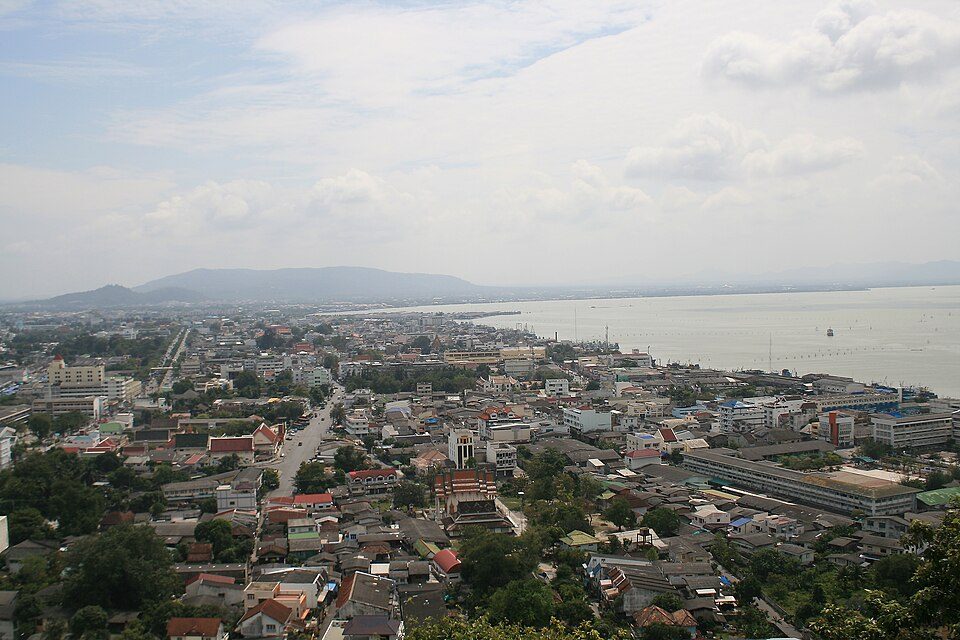
Songkhla, Thailand: Submarine Cable Landing Point
Songkhla is a city in Songkhla Province, located in southern Thailand near the border with Malaysia, approximately 968 kilometres south of Bangkok. Positioned along the southern Thai coastline, Songkhla serves as the country's most cable-dense landing point, with nine submarine cables making landfall here. This concentration makes Songkhla the largest submarine cable hub among Thailand's seven landing points, which together host 16 cables in total.
The cables landing at Songkhla span a wide range of corridors, connecting Thailand to destinations across Southeast Asia, East Asia, South Asia, the Middle East, Africa, and Europe. Among the most extensive systems here are the Asia Africa Europe-1 (AAE-1), a 25,000-kilometre intercontinental cable reaching as far as France and Greece, and the Asia Pacific Gateway (APG), a 10,400-kilometre system linking multiple East and Southeast Asian economies. Together, the nine cables at Songkhla enable both long-haul intercontinental connectivity and shorter intra-regional links, including domestic Thai submarine routes.
Cables Landing at Songkhla
Asia Africa Europe-1 (AAE-1) is a 25,000-kilometre cable that reached ready-for-service status in 2017. In addition to Thailand, it connects Cambodia, China, Djibouti, Egypt, France, and Greece, forming one of the longest intercontinental submarine cable systems passing through this region.
Southeast Asia-Japan Cable 2 (SJC2) spans 10,500 kilometres and became ready for service in 2025. The cable links Thailand with China, Japan, Singapore, South Korea, Taiwan, and Vietnam, providing a major East and Southeast Asian corridor.
Asia Pacific Gateway (APG) measures 10,400 kilometres and entered service in 2016. It connects Songkhla to China, Japan, Malaysia, Singapore, South Korea, and Taiwan, covering much of the Asia-Pacific region.
SEA-H2X is a 6,000-kilometre cable with a ready-for-service date of 2026. It links Thailand with China, Malaysia, the Philippines, and Singapore, extending regional Southeast Asian and South China Sea connectivity.
CAT Submarine Network (CSN) spans 1,240 kilometres and entered service in 2013. Both of its listed endpoints are within Thailand, making it a domestic submarine cable route.
Thailand-Indonesia-Singapore (TIS) is a 968-kilometre cable that became ready for service in 2003. It connects Thailand with Indonesia and Singapore, serving as a shorter regional link within Southeast Asia.
Thailand Domestic Submarine Cable Network (TDSCN) measures 884 kilometres and entered service in 2001. Like CSN, its endpoints are entirely within Thailand, supporting domestic submarine connectivity.
Vietnam-Singapore Cable System (VTS) is scheduled for a 2027 ready-for-service date. It connects Thailand with Malaysia, Singapore, and Vietnam, adding to Songkhla's regional Southeast Asian cable portfolio.
FEA connects Thailand with Egypt, India, Jordan, Malaysia, Saudi Arabia, and Thailand at its other listed endpoints, spanning a corridor that links Southeast Asia with the Indian subcontinent and the Middle East.
Regional Context
Among Thailand's seven submarine cable landing points, Songkhla stands as the most active by cable count, hosting nine of the country's 16 submarine cables. The next closest peer is Satun, which hosts seven cables, followed by Sriracha with four. Landing points at Chumphon, Koh Samui, Phetchaburi, and Rayong each host a single cable, highlighting the degree to which Songkhla and Satun together concentrate the country's submarine cable infrastructure in southern Thailand.
Network Role
Songkhla functions as a multi-cable hub rather than a single-cable terminus, aggregating nine systems that collectively span intercontinental, regional, and domestic corridors. Its cables reach destinations in East Asia - including Japan, China, South Korea, and Taiwan - Southeast Asian neighbours such as Singapore, Vietnam, Malaysia, and the Philippines, and extend westward through South Asia and the Middle East to Egypt, France, and Greece. Two of its cables, CSN and TDSCN, serve entirely domestic Thai routes, complementing the outward-facing international systems.
The breadth of directions served by Songkhla's cable portfolio - westward toward the Indian Ocean and Europe, northward into the South China Sea, and southward into the Strait of Malacca - positions this single landing point as the node through which a substantial share of Thailand's international submarine cable capacity is routed.
What next: Songkhla, Thailand in the global directory of cable landing points; see surrounding routes on the interactive submarine cable map or follow live network monitoring.
Incident history
Significant incidents on cables landing here, each with its own report.
- Asia Pacific Gateway (APG) cable: latency up to 2.3× normal, 17 Apr 2026 (resolved)
- Asia Pacific Gateway (APG) cable: latency up to 2.5× normal, 17 Apr 2026 (resolved)
Other Landing Points in Thailand
FAQ
Landing Point
- CountryTH Thailand
- Coordinates7.1988°N 100.5951°E
- Connected Cables10
See Real Cable Routes
View actual submarine cable routing from Songkhla, Thailand - with backbone nodes, distance calculations, and latency estimates
Open Calculator →