Chumphon, Thailand
Landing Point · TH Thailand
Connected Cables
| Cable | Status |
|---|---|
| Thailand Domestic Submarine Cable Network (TDSCN) | Active |
Live Performance
RTT measurements to this landing point from 2026-03-21 through 2026-09-16 - live ICMP round-trip time via our monitoring probes. Recomputed daily. ✓ No anomalies detected in the monitored period.
Measurement sources
| Probe | Location | Samples | Avg |
|---|---|---|---|
| own probe | Almaty KZ | 12 | 277.5 ms |
| own probe | Tbilisi GE | 12 | 226.4 ms |
| #6410 own probe | Sao Paulo BR | 7 | 366.2 ms |
| #7062 own probe | Cape Town ZA | 7 | 279.5 ms |
| own probe | Minsk BY | 6 | 216.8 ms |
| own probe | Jerusalem IL | 6 | 235.4 ms |
| #6487 | control probe | 5 | 218.6 ms |
| #61097 | control probe | 4 | 59.0 ms |
| #1010180 | control probe | 4 | 21.0 ms |
| own probe | Moscow RU | 4 | 212.9 ms |
| #28717 | control probe | 3 | 16.3 ms |
| own probe | Rostov RU | 3 | 238.9 ms |
| #62837 | control probe | 1 | 16.7 ms |
| own probe | Sevastopol UA | 1 | 243.8 ms |
| own probe | Saint Petersburg RU | 1 | 210.0 ms |
About Chumphon, Thailand
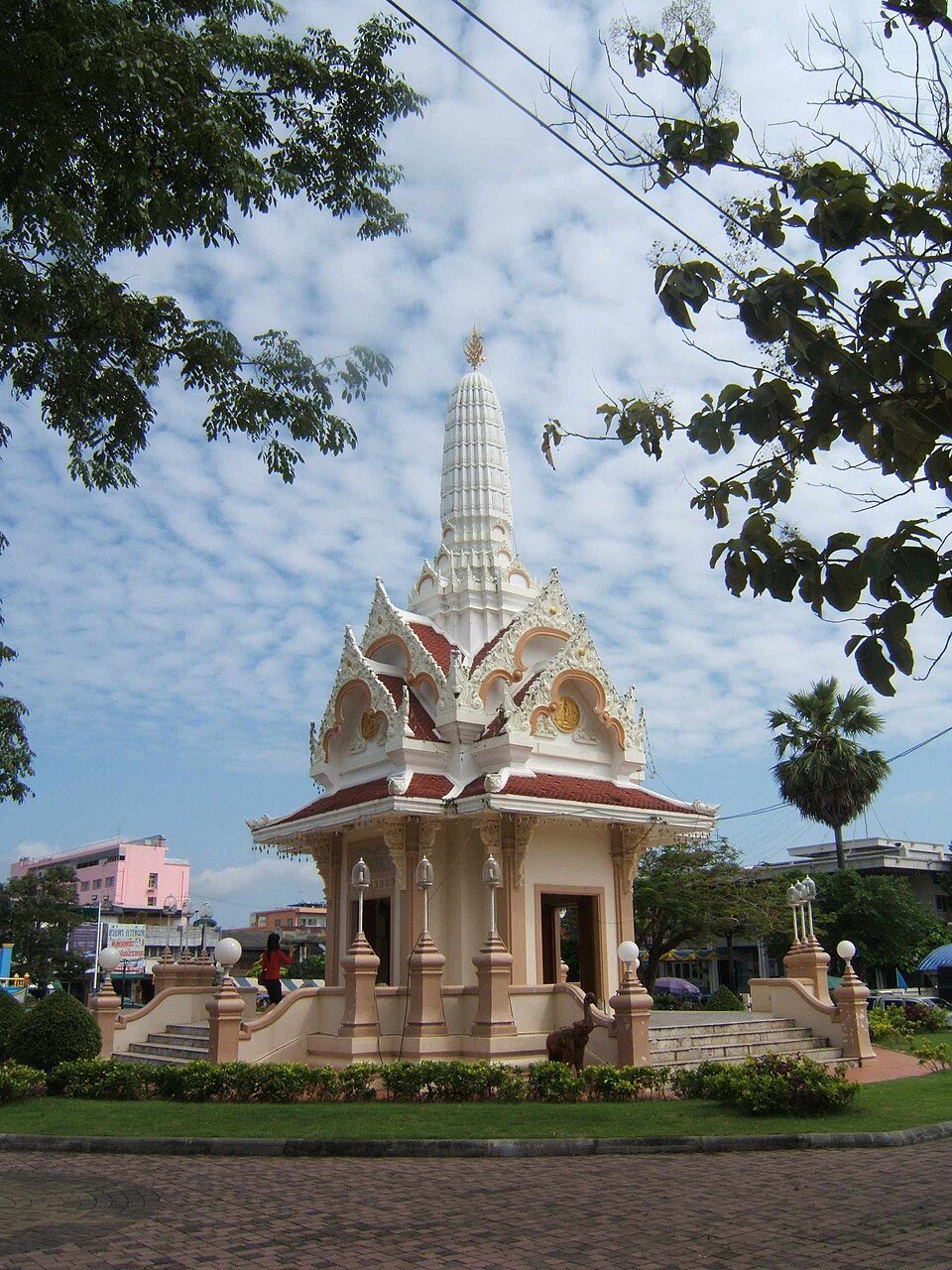
Chumphon, Thailand: Submarine Cable Landing Point
Chumphon is a town in southern Thailand, serving as the capital of Chumphon Province approximately 463 kilometres south of Bangkok. As a coastal location on the Gulf of Thailand side of the southern peninsula, it hosts submarine cable infrastructure connecting it to Thailand's domestic maritime network. One submarine cable lands at Chumphon, the Thailand Domestic Submarine Cable Network (TDSCN), which links multiple points within Thailand itself rather than extending to foreign territories.
The single cable landing at Chumphon places it within a domestic connectivity corridor rather than an international one. The TDSCN is entirely intra-national in scope, meaning Chumphon functions as a node within Thailand's own submarine cable infrastructure, supporting connectivity between Thai coastal and island communities along the country's extensive coastline.
Cables Landing at Chumphon
The Thailand Domestic Submarine Cable Network (TDSCN) is the sole submarine cable landing at Chumphon. The cable has a total length of 884 kilometres and reached ready-for-service (RFS) status in 2001, with its current status described as draft. All other endpoints on this cable are located within Thailand, making it an entirely domestic system. The TDSCN connects multiple Thai landing points along the country's coastlines, and Chumphon represents one terminus or intermediate landing point within that national network.
Regional Context
Among Thailand's seven submarine cable landing points, Chumphon ranks in the middle tier, hosting one cable alongside peers such as Koh Samui, Phetchaburi, and Rayong, each of which also hosts a single cable. By contrast, Songkhla leads the country with nine cables, followed by Satun with seven and Sriracha with four. Chumphon's position reflects its role as a domestic network node rather than a major international gateway.
Network Role
Chumphon functions as a single-cable landing point within Thailand's domestic submarine cable graph. Its connection via the TDSCN links it to other Thai coastal locations, enabling intra-national data routing along a 884-kilometre domestic cable system that reached service in 2001. It does not serve as a hub for international submarine cable traffic, and no intercontinental or regional cross-border connectivity is associated with this landing point based on available cable data.
Within Thailand's broader submarine cable landscape - which spans 16 cables across seven landing points with an average cable length of over 8,000 kilometres - Chumphon represents the domestic dimension of that infrastructure, demonstrating that submarine cables serve not only international connectivity but also the internal networking needs of a geographically distributed coastal nation.
What next: Chumphon, Thailand in the global directory of cable landing points; see surrounding routes on the interactive submarine cable map or follow live network monitoring.
Other Landing Points in Thailand
Landing Point
- CountryTH Thailand
- Coordinates10.4977°N 99.1781°E
- Connected Cables1
See Real Cable Routes
View actual submarine cable routing from Chumphon, Thailand - with backbone nodes, distance calculations, and latency estimates
Open Calculator →