Siargao Island, Philippines
Landing Point · PH Philippines
1
Connected Cables
PH
Country
9.86°
Latitude
126.05°
Longitude
Ctrl + Scroll to zoom
Connected Cables
| Cable | Status |
|---|---|
| Philippine Domestic Submarine Cable Network (PDSCN) | Active |
Live Performance
63
measurements
14
probes
149
days monitored
195.9
ms avg RTT
0
anomalies
RTT measurements to this landing point from 2026-04-16 through 2026-09-13 - live ICMP round-trip time via our monitoring probes. Recomputed daily. ✓ No anomalies detected in the monitored period.
Measurement sources
| Probe | Location | Samples | Avg |
|---|---|---|---|
| own probe | Almaty KZ | 9 | 306.5 ms |
| #6410 own probe | Sao Paulo BR | 7 | 336.2 ms |
| #6427 own probe | Sydney AU | 7 | 162.9 ms |
| #7062 own probe | Cape Town ZA | 6 | 305.1 ms |
| #19092 | control probe | 6 | 59.2 ms |
| #61654 | control probe | 6 | 33.3 ms |
| #6487 | control probe | 5 | 47.4 ms |
| own probe | Tbilisi GE | 4 | 263.6 ms |
| #61349 | control probe | 3 | 55.4 ms |
| #64631 | control probe | 3 | 127.9 ms |
| own probe | Minsk BY | 3 | 242.3 ms |
| own probe | Jerusalem IL | 2 | 311.7 ms |
| own probe | Sevastopol UA | 1 | 274.9 ms |
| own probe | Moscow RU | 1 | 237.3 ms |
About Siargao Island, Philippines
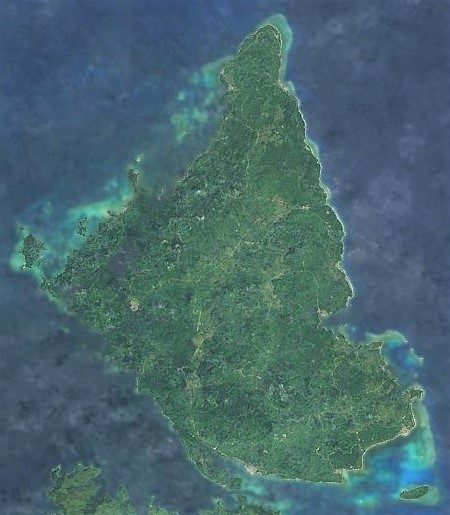
Siargao Island: A Surfing Paradise Connected to the Philippines
Siargao Island, often celebrated as the surfing capital of the Philippines, is now riding a different kind of wave - the digital one. This tear-drop shaped island in the Philippine Sea, known for its stunning beaches and world-class surf breaks, became part of the Philippine Domestic Submarine Cable Network (PDSCN) in 2023. While Siargao’s reputation is built on its natural beauty, its connection to the national cable network is quietly transforming the way the island interacts with the rest of the country.How Connectivity Reaches Siargao Island
Siargao hosts just one submarine cable, the PDSCN, a 2,500-kilometer domestic network that stitches together 33 landing points across the Philippines. Unlike major hubs such as Batangas, Davao, or Boracay, which host multiple cables and serve as critical nodes in the country’s connectivity infrastructure, Siargao plays a more modest role. Its single cable connection places it among the top 55% of landing points in the Philippines by cable count. The PDSCN connects Siargao to other regional landing points such as Cagayan de Oro and Boracay, ensuring the island is part of a larger chain that spans the archipelago. While the cable does not provide international connectivity directly, it links Siargao to national hubs that do, enabling residents and businesses to access global networks.Why This Connection Matters
Siargao’s inclusion in the PDSCN is significant for an island known for its relative isolation. With a land area of 437 square kilometers and a coastline dotted with reefs and sandy beaches, Siargao has long been a destination for surfers and travelers seeking a tropical escape. However, its remote location - 196 kilometers southeast of Tacloban - has historically posed challenges for communication and economic development. The arrival of the PDSCN is changing that. Local businesses, including resorts and surf schools, now have improved access to digital tools for marketing and bookings. Residents can connect more easily with family members across the country, and students can access online learning resources. While Siargao remains a small player in the Philippines’ cable infrastructure, its single connection is enough to bring modern connectivity to this idyllic island.Latency Measurements: A Reliable Link
GeoCables’ monitoring of Siargao’s PDSCN connection reveals an average round-trip latency of 257 milliseconds, with the best observed latency at 48 milliseconds. These numbers indicate a stable and reliable link, sufficient for most everyday internet activities, from video calls to streaming. For an island that has historically relied on slower and less consistent forms of communication, this is a notable improvement.Siargao in Context
Siargao’s single cable connection contrasts sharply with larger hubs like Batangas and Davao, which host four cables each. These hubs serve as critical junctions for international and domestic traffic, while Siargao’s role is more localized. However, this smaller footprint aligns well with the island’s needs. Siargao doesn’t need to compete with larger cities; its connection is sufficient to support its tourism-driven economy and growing local community. As Siargao continues to attract visitors from around the world, its integration into the Philippine Domestic Submarine Cable Network ensures that the island stays connected - not just to the waves, but to the digital world as well.What next: Siargao Island, Philippines in the global directory of cable landing points; see surrounding routes on the interactive submarine cable map or follow live network monitoring.
Other Landing Points in Philippines
PH Allen, Philippines
12.5014°N 124.2823°E
PH Baclayon, Philippines
9.6226°N 123.9135°E
PH Bacolod, Philippines
10.6407°N 122.9690°E
PH Bacong, Philippines
9.2463°N 123.2950°E
PH Baler, Philippines
15.7615°N 121.5602°E
PH Ballesteros, Philippines
18.4094°N 121.5140°E
PH Batangas, Philippines
13.7656°N 121.0649°E
PH Bauang, Philippines
16.5140°N 120.3556°E
PH Boac, Philippines
13.4291°N 121.8847°E
PH Bogo, Philippines
11.0459°N 124.0077°E
PH Boracay, Philippines
11.9492°N 121.9448°E
PH Buenavista, Philippines
8.9689°N 125.4207°E
Landing Point
- CountryPH Philippines
- Coordinates9.8552°N 126.0525°E
- Connected Cables1
See Real Cable Routes
View actual submarine cable routing from Siargao Island, Philippines - with backbone nodes, distance calculations, and latency estimates
Open Calculator →
Submarine cables
Land fiber
Live probes