Bogo, Philippines
Landing Point · PH Philippines
Connected Cables
| Cable | Status |
|---|---|
| Converge Domestic Submarine Cable Network (CDSCN) | Active |
Live Performance
RTT measurements to this landing point from 2026-03-04 through 2026-09-11 - live ICMP round-trip time via our monitoring probes. Recomputed daily. ✓ No anomalies detected in the monitored period.
Measurement sources
| Probe | Location | Samples | Avg |
|---|---|---|---|
| own probe | Almaty KZ | 12 | 318.4 ms |
| #6410 own probe | Sao Paulo BR | 7 | 334.6 ms |
| #6427 own probe | Sydney AU | 7 | 160.5 ms |
| #7062 own probe | Cape Town ZA | 6 | 306.9 ms |
| own probe | Minsk BY | 6 | 279.5 ms |
| own probe | Tbilisi GE | 6 | 321.3 ms |
| #6487 | control probe | 5 | 104.2 ms |
| #1002398 | control probe | 4 | 111.4 ms |
| #1006475 | control probe | 4 | 46.6 ms |
| #51974 | control probe | 3 | 28.0 ms |
| #1011902 | control probe | 1 | 37.7 ms |
| own probe | Jerusalem IL | 1 | 301.5 ms |
About Bogo, Philippines
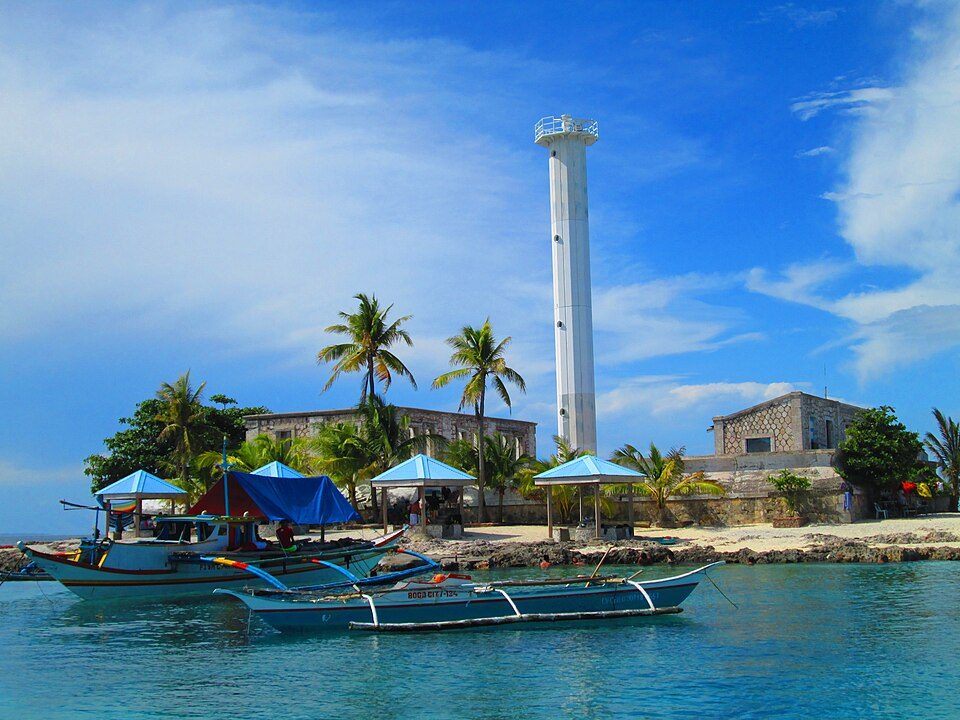
Bogo, Philippines: Submarine Cable Landing Point
Bogo is a component city in the province of Cebu, in the central Philippines. As an island nation composed of over 7,000 islands, the Philippines relies extensively on submarine cable infrastructure to maintain connectivity between its many populated centers, and Bogo is one of 71 designated submarine cable landing points across the country. One submarine cable lands at Bogo, connecting this Cebu city to the broader domestic cable network that links Philippine islands to one another.
The single cable serving Bogo operates entirely within the Philippines, making this landing point part of an inter-island connectivity corridor rather than an intercontinental or international link. This domestic orientation reflects a pattern seen across a significant portion of Philippine landing points, where intra-archipelago routes serve communities that would otherwise depend solely on terrestrial or wireless alternatives for high-capacity data transport.
Cables Landing at Bogo
The Converge Domestic Submarine Cable Network (CDSCN) is the sole submarine cable landing at Bogo. The system spans approximately 1,300 km and reached ready-for-service (RFS) status in 2021, with its status recorded as draft. All other landing points on the CDSCN are also located within the Philippines, confirming the cable's role as a purely domestic network designed to interconnect Philippine islands and cities across the archipelago.
Regional Context
Within the Philippines' 71 submarine cable landing points, Bogo hosts one cable, placing it in the top 55 percent of all Philippine landing points by cable count. Major hubs such as Batangas, Cagayan de Oro, Davao, and Taytay each host four cables, while Baler and Boracay each host three, reflecting the concentration of international and multi-route capacity at a smaller number of locations. Bogo's profile is representative of the many Philippine landing points that serve focused, localized roles within the archipelago's cable graph.
Network Role
Bogo functions as a single-cable terminus on the Converge Domestic Submarine Cable Network, enabling the city of Bogo and the surrounding Cebu province area to connect through a dedicated submarine route to other points within the Philippine island chain. With a cable length of 1,300 km and an RFS year of 2021, the CDSCN represents a relatively recent addition to the country's domestic submarine infrastructure, extending fiber-based capacity to landing points that complement the Philippines' older and longer international systems.
In the broader Philippine submarine cable graph, which encompasses 26 cables across 71 landing points with an average cable length of nearly 5,000 km, Bogo occupies a modest but defined position as a domestic inter-island node - one that contributes to distributing submarine cable reach beyond the high-density hubs and into cities across the central Philippines.
What next: Bogo, Philippines in the global directory of cable landing points; see surrounding routes on the interactive submarine cable map or follow live network monitoring.
Other Landing Points in Philippines
Landing Point
- CountryPH Philippines
- Coordinates11.0459°N 124.0077°E
- Connected Cables1
See Real Cable Routes
View actual submarine cable routing from Bogo, Philippines - with backbone nodes, distance calculations, and latency estimates
Open Calculator →