Saida, Lebanon
Landing Point · LB Lebanon
1
Connected Cables
LB
Country
33.45°
Latitude
35.39°
Longitude
Ctrl + Scroll to zoom
Connected Cables
| Cable | Status |
|---|---|
| BERYTAR | Active |
Live Performance
129
measurements
10
probes
221
days monitored
142.8
ms avg RTT
0
anomalies
RTT measurements to this landing point from 2026-03-11 through 2026-10-18 - live ICMP round-trip time via our monitoring probes. Recomputed daily. ✓ No anomalies detected in the monitored period.
Measurement sources
| Probe | Location | Samples | Avg |
|---|---|---|---|
| #65128 | control probe | 63 | 94.9 ms |
| own probe | Tbilisi GE | 14 | 133.4 ms |
| own probe | Jerusalem IL | 12 | 158.5 ms |
| #6410 own probe | Sao Paulo BR | 9 | 268.9 ms |
| #6427 own probe | Sydney AU | 9 | 348.7 ms |
| own probe | Balancer IL | 8 | 151.0 ms |
| own probe | Minsk BY | 5 | 97.3 ms |
| own probe | Almaty KZ | 5 | 155.7 ms |
| own probe | Sevastopol UA | 2 | 145.4 ms |
| own probe | Moscow RU | 2 | 178.0 ms |
About Saida, Lebanon
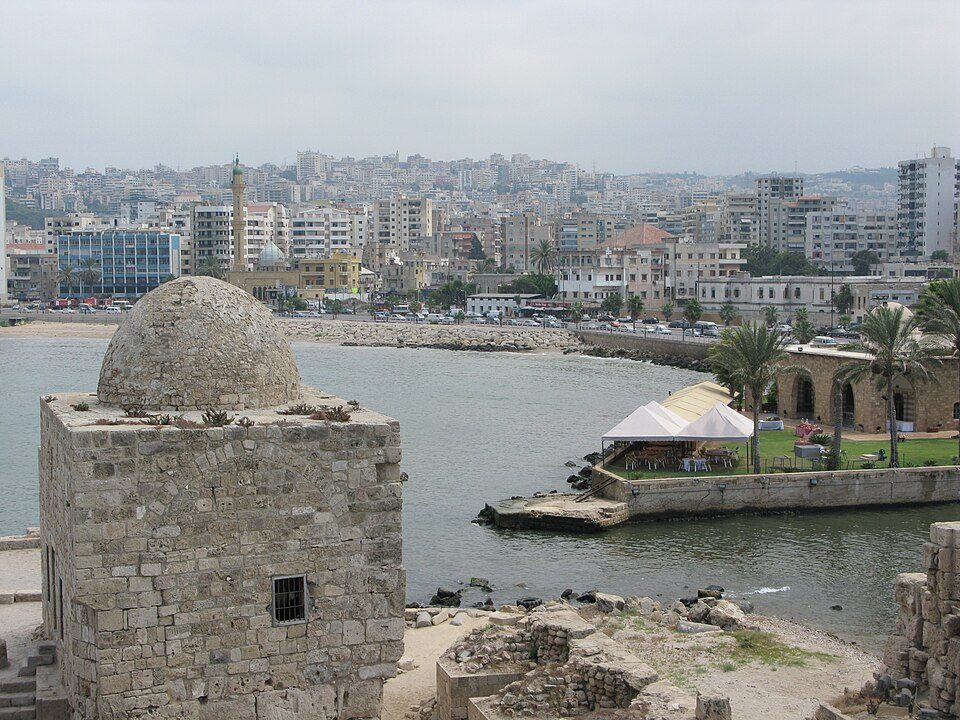
Saida: A Mediterranean Gateway with Submarine Connectivity
Saida, known historically as Sidon, is a coastal city in southern Lebanon with a rich heritage and a strategic position on the Mediterranean. While its ancient history and bustling urban life make it a notable regional hub, its role in modern connectivity is defined by the single submarine cable landing here: BERYTAR.The BERYTAR Cable: Linking Lebanon and Syria
The BERYTAR cable, operational since 1997, is a relatively short 134-kilometer submarine link connecting Lebanon and Syria. Saida serves as one of its landing points, alongside Beirut, Tripoli, and Tartous. This cable forms part of a domestic and regional chain, enabling communication between Lebanon's major coastal cities and extending connectivity to Syria. Though Saida hosts only one cable, it plays an integral role in Lebanon's overall submarine cable infrastructure. The country has four landing points-Beirut, Tripoli, Jdaide, and Saida-with a total of four cables. In this network, Saida ranks in the top 50% of landing points by cable count, highlighting its importance despite its smaller scale compared to Beirut, which hosts three cables.Saida’s Position in Lebanon’s Connectivity Landscape
Saida’s location, approximately 40 kilometers south of Beirut and 40 kilometers north of Tyre, places it at the heart of southern Lebanon’s coastal corridor. While Beirut and Tripoli have more cables and larger networks, Saida’s connection through BERYTAR ensures that it remains part of Lebanon's digital fabric. This cable facilitates regional data transfer, linking Saida to Beirut and Tripoli to the north and Tartous in Syria to the east. The connectivity provided by BERYTAR is essential for Saida’s integration into Lebanon’s telecommunications network. Local data traffic in Saida likely routes through the cable to Beirut, which serves as the primary hub for international connectivity. From Beirut, data flows onward to global destinations via other submarine cables.Latency Insights: Saida’s Performance
GeoCables’ proprietary latency measurements provide a unique perspective on Saida’s connectivity performance. Across 49 completed checks from 10 source cities, the average round-trip latency to Saida is 159 milliseconds, with the best observed latency at 81 milliseconds. These figures suggest that Saida offers a stable and reasonably efficient connection for regional data traffic, contributing to the city’s role as a reliable node in Lebanon’s network.Saida’s Broader Significance
Beyond its role in connectivity, Saida is a city of historical and economic importance. As the capital of the South Governorate and the third-largest city in Lebanon, it serves as a regional center for commerce and culture. Its proximity to other major cities like Beirut ensures that it remains well-integrated into Lebanon’s broader economic and social systems. While Saida’s submarine cable infrastructure may not rival the scale of Beirut or Tripoli, its connection via the BERYTAR cable underscores its importance in linking southern Lebanon to the rest of the country and to neighboring Syria. In the tapestry of Lebanon’s digital future, Saida holds its own as a key thread.What next: Saida, Lebanon in the global directory of cable landing points; see surrounding routes on the interactive submarine cable map or follow live network monitoring.
Our measurements to Saida
Traceroutes from our own measurement points over the last 30 days: usual delay and number of network hops on the way to Saida.
- From RIPE Atlas probes: 88 ms, 14 hops, 13 traces
Last trace: 2026-10-18. Live network map
Other Landing Points in Lebanon
Landing Point
- CountryLB Lebanon
- Coordinates33.4502°N 35.3863°E
- Connected Cables1
See Real Cable Routes
View actual submarine cable routing from Saida, Lebanon - with backbone nodes, distance calculations, and latency estimates
Open Calculator →
Submarine cables
Land fiber
Live probes