Port Hedland, WA, Australia
Landing Point · AU Australia
Connected Cables
| Cable | Status |
|---|---|
| North-West Cable System | Active |
Live Performance
RTT measurements to this landing point from 2026-04-12 through 2026-09-15 - live ICMP round-trip time via our monitoring probes. Recomputed daily. ✓ No anomalies detected in the monitored period.
Measurement sources
| Probe | Location | Samples | Avg |
|---|---|---|---|
| #6410 own probe | Sao Paulo BR | 23 | 350.3 ms |
| #6427 own probe | Sydney AU | 23 | 74.8 ms |
| #6487 | control probe | 20 | 33.4 ms |
| own probe | Almaty KZ | 10 | 330.7 ms |
| own probe | Minsk BY | 9 | 307.1 ms |
| #7062 own probe | Cape Town ZA | 3 | 398.2 ms |
| own probe | Tbilisi GE | 3 | 290.1 ms |
| own probe | Jerusalem IL | 2 | 304.6 ms |
| own probe | Sevastopol UA | 2 | 294.9 ms |
About Port Hedland, WA, Australia
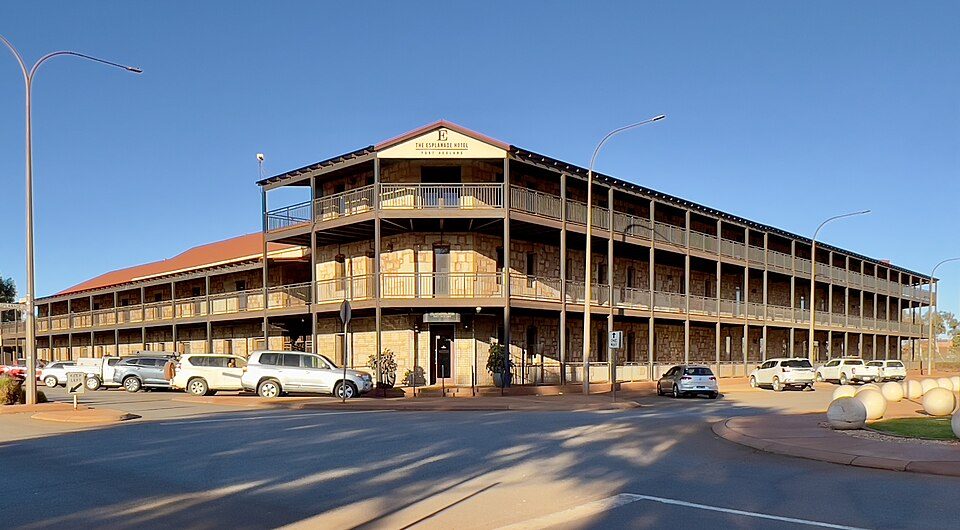
Port Hedland, WA, Australia: Submarine Cable Landing Point
Port Hedland is a coastal town in the Pilbara region of Western Australia, situated along the Indian Ocean coastline of northwestern Australia. As a submarine cable landing point, it connects to one undersea cable system, the North-West Cable System, which provides domestic connectivity along Australia's western and northwestern coast. The cable operates entirely within Australian territory, making Port Hedland a node in Australia's internal submarine cable network rather than a gateway to overseas destinations.
The North-West Cable System links together multiple points within Australia, enabling regional connectivity across the country's remote northwestern corridor. Port Hedland's role as a landing point reflects the logistical challenges of serving Australia's vast and sparsely populated northwest, where terrestrial alternatives are limited and submarine cables offer a practical means of delivering telecommunications capacity to coastal communities and industrial centres.
Cables Landing at Port Hedland, WA, Australia
North-West Cable System is a 2,100-kilometre domestic submarine cable that reached ready-for-service status in 2016. All endpoints on this cable are located within Australia, confirming its function as an intra-national system connecting communities and infrastructure along Australia's northwestern coastline. Port Hedland is one of the cable's landing points along this domestic route.
Regional Context
Within Australia's submarine cable landscape, Port Hedland ranks among the smaller landing points by cable count. Sydney leads the country with ten cables, followed by Darwin and Perth each hosting five, while Alexandria and Melbourne each serve three. Port Hedland, with a single cable, sits in the top 63 percent of Australia's 27 landing points, reflecting the fact that most of the country's 31 submarine cables are concentrated in a handful of major east-coast and southwestern cities. Port Hedland's cable is domestically oriented, distinguishing it from larger hubs that handle international traffic.
Network Role
Port Hedland functions as a single-cable terminus within Australia's domestic submarine cable network. Its connection via the North-West Cable System contributes to regional connectivity across the Pilbara and broader northwestern Australia, a vast geographic area where the submarine link supplements the region's telecommunications options. The cable's entirely domestic character means Port Hedland does not serve as a gateway to international submarine routes.
Within the broader Australian submarine cable graph, Port Hedland represents the pattern of targeted domestic investment in underserved coastal regions. Its presence as a landing point, even with a single cable, demonstrates that submarine infrastructure in Australia extends meaningfully beyond the major population centres of the east and southwest coasts.
What next: Port Hedland, WA, Australia in the global directory of cable landing points; see surrounding routes on the interactive submarine cable map or follow live network monitoring.
Incident history
Significant incidents on cables landing here, each with its own report.
Other Landing Points in Australia
Landing Point
- CountryAU Australia
- Coordinates20.3135°S 118.5772°E
- Connected Cables1
See Real Cable Routes
View actual submarine cable routing from Port Hedland, WA, Australia - with backbone nodes, distance calculations, and latency estimates
Open Calculator →