Muscat, Oman
Landing Point · OM Oman
Connected Cables
| Cable | Status |
|---|---|
| Dhivaru | Planned |
| SeaMeWe-6 | Active |
Live Performance
RTT measurements to this landing point from 2026-03-10 through 2026-10-04 - live ICMP round-trip time via our monitoring probes. Recomputed daily. ✓ No anomalies detected in the monitored period.
Measurement sources
| Probe | Location | Samples | Avg |
|---|---|---|---|
| own probe | Tbilisi GE | 13 | 227.7 ms |
| own probe | Jerusalem IL | 11 | 162.3 ms |
| #6410 own probe | Sao Paulo BR | 9 | 300.4 ms |
| #6427 own probe | Sydney AU | 9 | 189.2 ms |
| own probe | Balancer IL | 7 | 162.3 ms |
| own probe | Almaty KZ | 5 | 205.7 ms |
| own probe | Minsk BY | 4 | 159.4 ms |
| own probe | Moscow RU | 1 | 151.4 ms |
About Muscat, Oman
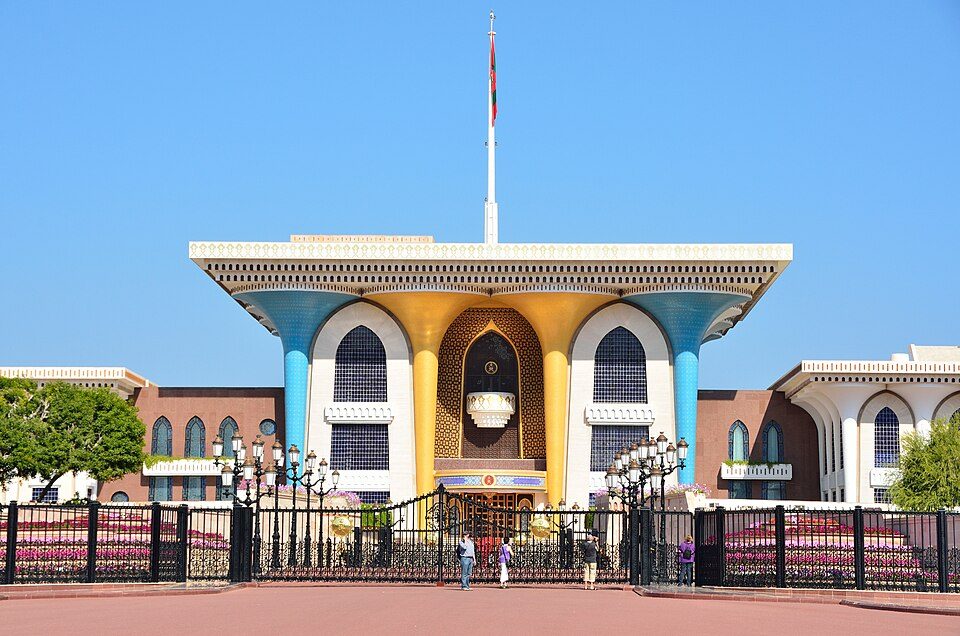
Muscat, Oman is a submarine cable landing point in Oman (coordinates 23.5841°, 58.4078°). It serves 2 submarine cable systems, making it a multi-cable landing site in Oman's international connectivity infrastructure.
Muscat is the capital and most populous city of Oman. It is the seat of the Governorate of Muscat. According to the National Centre for Statistics and Information (NCSI), the population of the Muscat Governorate in 2022 was 1.72 million. The metropolitan area includes six provinces, called wilayat, and spans approximately 6,500 km2 (2,500 sq mi). Known since the early 1st century CE as a leading port for trade between the west and the east, Muscat was ruled successively by various indigenous tribes, as well as by foreign powers such as the Persians, the Portuguese Empire and the Ottoman Empire. In the 18th century, Muscat was a regional military power: its influence extended as far as East Africa and Zanzibar. As an important port town in the Gulf of Oman, Muscat attracted foreign traders and settlers such as the Persians, the Balochs and the Sindhis. Beginning in 1970, after the accession of Qaboos bin Said as the Sultan of Oman, Muscat experienced rapid infrastructural development; it developed a vibrant economy and became a multi-ethnic society. The Globalization and World Cities Research Network classifies Muscat as a Beta-level Global City. Wikipedia
Connected submarine cables
| Cable | RFS | Length | Owners |
|---|---|---|---|
| SeaMeWe-6 | 2026 | 21,700 km | Bahrain Telecommunications Company (Batelco), Bangladesh Submarine Cable Company Limited (BSCCL), Bharti Airtel, … |
| Dhivaru | - | -1 km |
Operators landing at Muscat, Oman
Cables landing at Muscat, Oman are operated by 17 distinct consortium partners and carriers, including Bahrain Telecommunications Company (Batelco), Bangladesh Submarine Cable Company Limited (BSCCL), Bharti Airtel, China Unicom, Dhiraagu, Djibouti Telecom, Google, Microsoft, Mobily, Orange, and 7 others. Each cable is typically jointly owned by a consortium of tier-one carriers and hyperscale operators who share construction costs and capacity; the operator mix reflects both regional incumbents and global players with interest in the routes served by this landing point.
Connectivity profile
From Muscat, Oman, international traffic can reach 15 countries through 2 cable systems. Destinations include Bahrain, Bangladesh, Christmas Island, Djibouti, Egypt, France, India, Malaysia and 7 more.
Monitoring status
No monitoring incidents were recorded on cables serving Muscat, Oman in the past 90 days - all connected systems remained within normal latency thresholds. Our monitoring network continuously samples latency from external probes to targets reachable via these cables.
About the cables
- SeaMeWe-6 (2026) - SEA-ME-WE 6 is the sixth submarine cable in a series that has been laying fibre between Southeast Asia, the Middle East, and Western Europe since 1985. The original SEA-ME-WE (just SEA-ME-WE, no number) was commissioned in 1985 as one of the earliest long-haul submarine cables in the modern sense. SEA-ME-WE 2 followed in 1994, SEA-ME-WE 3 in 1999, SEA-ME-WE 4 in 2005, SEA-ME-WE 5 in 2016. Read more →
- Dhivaru - Dhivaru is a cross-regional submarine cable connecting Christmas Island, Maldives, Oman. Its 3 landing points at Flying Fish Cove, Hithadhoo, Muscat bridge the networks of Indian Ocean, Middle East, providing an important path for international data traffic. Read more →
What next: Muscat, Oman in the global directory of cable landing points; see surrounding routes on the interactive submarine cable map or follow live network monitoring.
Other Landing Points in Oman
Landing Point
- CountryOM Oman
- Coordinates23.5841°N 58.4078°E
- Connected Cables2
See Real Cable Routes
View actual submarine cable routing from Muscat, Oman - with backbone nodes, distance calculations, and latency estimates
Open Calculator →