Melilla, Spain
Landing Point · ES Spain
Connected Cables
| Cable | Status |
|---|---|
| Almería-Melilla (ALME) | Active |
| Roquetas-Melilla (CAM) | Active |
Live Performance
RTT measurements to this landing point from 2026-03-10 through 2026-09-20 - live ICMP round-trip time via our monitoring probes. Recomputed daily. ✓ No anomalies detected in the monitored period.
Measurement sources
| Probe | Location | Samples | Avg |
|---|---|---|---|
| own probe | Minsk BY | 9 | 68.8 ms |
| #6427 own probe | Sydney AU | 5 | 265.9 ms |
| own probe | Odessa UA | 5 | 58.2 ms |
| #6487 | control probe | 4 | 182.4 ms |
| own probe | Almaty KZ | 4 | 115.0 ms |
| own probe | Tbilisi GE | 4 | 74.3 ms |
| own probe | Kyiv UA | 4 | 56.6 ms |
| own probe | Jerusalem IL | 3 | 82.7 ms |
| #26072 | control probe | 2 | 19.4 ms |
| #33970 | control probe | 2 | 17.1 ms |
| #7062 own probe | Cape Town ZA | 1 | 177.6 ms |
| #23686 | control probe | 1 | 40.6 ms |
| #34429 | control probe | 1 | 20.2 ms |
| own probe | Sevastopol UA | 1 | 93.6 ms |
| own probe | Moscow RU | 1 | 63.1 ms |
About Melilla, Spain
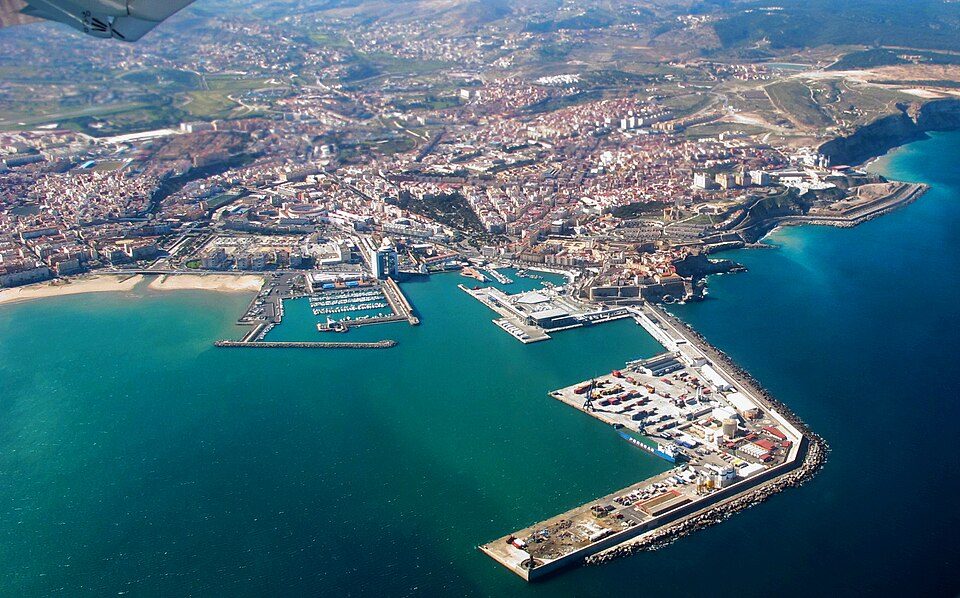
Melilla, Spain: Submarine Cable Landing Point
Melilla is a Spanish autonomous city located on the North African coast, bordering Morocco and facing the Mediterranean Sea. Despite its small area of 12.3 square kilometres, this enclave on the eastern side of Cape Three Forks hosts submarine cable infrastructure that connects it directly to mainland Spain across the Mediterranean. Two submarine cables land at Melilla, linking the city to the Iberian Peninsula and providing it with dedicated undersea connectivity.
Both cables landing at Melilla form a regional corridor between this North African enclave and the Spanish mainland. The Almería-Melilla cable and the Roquetas-Melilla cable each span less than 200 kilometres, reflecting the relatively short crossing between Melilla and the southern coast of mainland Spain. Together, they represent a focused, intra-national connection rather than a broader intercontinental or inter-regional network.
Cables Landing at Melilla, Spain
Almería-Melilla (ALME) is a 198-kilometre submarine cable that reached ready-for-service status in 1990. It connects Melilla to Almería on the Spanish mainland, making it an entirely domestic cable linking two Spanish territories across the Mediterranean. With a ready-for-service year of 1990, it is one of the earliest submarine cables recorded in the Spanish network, and its draft status reflects its foundational role in establishing undersea connectivity for the enclave.
Roquetas-Melilla (CAM) is a 181-kilometre submarine cable with a ready-for-service year of 2014. It connects Melilla to Roquetas de Mar on the southern Spanish mainland, again forming an entirely domestic link between Spain's North African territory and the Iberian Peninsula. At 181 kilometres, it is slightly shorter than the Almería-Melilla cable, and its more recent deployment represents a later addition to Melilla's undersea connectivity.
Regional Context
Within Spain's broader submarine cable landscape, Melilla sits among 46 landing points that collectively host 34 cables across the country. Compared to regional peers such as Barcelona, Bilbao, Valencia, and the Canary Islands locations of Alta Vista, Granadilla de Abona, and Santa Cruz de La Palma - each of which serves three cables - Melilla's two cables place it in the lower tier of Spanish landing points by cable count. Its profile is shaped by its specific geographic role as an enclave requiring domestic links rather than a hub for international traffic.
Network Role
Melilla functions as a two-cable terminus dedicated entirely to domestic Spanish connectivity, linking the North African enclave to the Iberian Peninsula via two separate routes to Andalusia. The presence of both the Almería-Melilla and Roquetas-Melilla cables provides a degree of path diversity for the enclave's undersea connections, with landings on the mainland at two distinct points along the southern Spanish coast.
Within the regional submarine cable graph, Melilla represents a specialised node whose connectivity is oriented entirely inward to national territory, distinguishing it from Spain's other landing points that participate in international or intercontinental cable systems. Its two domestic cables reflect the particular geographic circumstances of a small Spanish territory separated from the mainland by the Mediterranean Sea.
What next: Melilla, Spain in the global directory of cable landing points; see surrounding routes on the interactive submarine cable map or follow live network monitoring.
Other Landing Points in Spain
Landing Point
- CountryES Spain
- Coordinates35.2923°N 2.9381°W
- Connected Cables2
See Real Cable Routes
View actual submarine cable routing from Melilla, Spain - with backbone nodes, distance calculations, and latency estimates
Open Calculator →