Liloy, Philippines
Landing Point · PH Philippines
Connected Cables
| Cable | Status |
|---|---|
| Philippine Domestic Submarine Cable Network (PDSCN) | Active |
Live Performance
RTT measurements to this landing point from 2026-03-27 through 2026-09-21 - live ICMP round-trip time via our monitoring probes. Recomputed daily. ✓ No anomalies detected in the monitored period.
Measurement sources
| Probe | Location | Samples | Avg |
|---|---|---|---|
| own probe | Almaty KZ | 8 | 315.7 ms |
| #6427 own probe | Sydney AU | 6 | 211.4 ms |
| #6410 own probe | Sao Paulo BR | 5 | 329.7 ms |
| #6887 | control probe | 5 | 0.1 ms |
| #7062 own probe | Cape Town ZA | 5 | 299.9 ms |
| #62759 | control probe | 5 | 44.2 ms |
| #1002398 | control probe | 5 | 107.8 ms |
| own probe | Tbilisi GE | 4 | 284.2 ms |
| #6487 | control probe | 3 | 47.1 ms |
| own probe | Jerusalem IL | 3 | 319.3 ms |
| own probe | Minsk BY | 2 | 284.5 ms |
| own probe | Sevastopol UA | 1 | 298.4 ms |
| own probe | Moscow RU | 1 | 245.7 ms |
About Liloy, Philippines
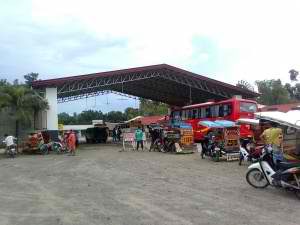
Liloy, Philippines: Submarine Cable Landing Point
Liloy is a municipality in the province of Zamboanga del Norte, in the western portion of Mindanao, Philippines. As a coastal community, it serves as a landing point for submarine cable infrastructure connecting it to the broader Philippine national network. One submarine cable lands at Liloy, linking it to other parts of the Philippine archipelago through a domestically oriented cable corridor.
The single cable landing at Liloy is the Philippine Domestic Submarine Cable Network (PDSCN), a system designed to interconnect points within the Philippines rather than extend to international destinations. This makes Liloy part of an intra-archipelago connectivity framework, addressing the geographic challenge of linking the many islands and coastal communities that make up the Philippine island chain.
Cables Landing at Liloy
The Philippine Domestic Submarine Cable Network (PDSCN) is a 2,500-kilometre system with a recorded ready-for-service (RFS) year of 2023, currently at draft status. All endpoints on this cable are located within the Philippines, confirming its role as a purely domestic submarine cable. The PDSCN connects multiple landing points across the Philippine archipelago, and Liloy represents one node in this national network.
Regional Context
Within the Philippines, submarine cable infrastructure is spread across 71 landing points, with Liloy hosting one cable and ranking in the top 55 percent of those landing points by cable count. Several Philippine landing points serve as more concentrated hubs: Batangas, Cagayan de Oro, Davao, and Taytay each host four cables, while Baler and Boracay each host three. Liloy occupies a more modest position in this national landscape, functioning as a single-cable terminus rather than a multi-cable hub.
Network Role
Liloy's landing point enables domestic submarine connectivity for the Zamboanga del Norte area of Mindanao through the PDSCN, which spans 2,500 kilometres across Philippine waters. As a single-cable terminus, its role is focused rather than expansive - it provides a submarine link into the national cable network without the redundancy that comes from hosting multiple systems. The PDSCN's draft status as of 2023 places Liloy among the more recently established landing points in the country, which recorded its first submarine cable landing in 1997.
Within the Philippine submarine cable graph, Liloy represents the kind of landing point that extends domestic connectivity into provincial coastal communities, ensuring that municipalities in Zamboanga del Norte are incorporated into the same national cable infrastructure that serves larger urban centres elsewhere in the archipelago.
What next: Liloy, Philippines in the global directory of cable landing points; see surrounding routes on the interactive submarine cable map or follow live network monitoring.
Other Landing Points in Philippines
Landing Point
- CountryPH Philippines
- Coordinates8.0739°N 122.6785°E
- Connected Cables1
See Real Cable Routes
View actual submarine cable routing from Liloy, Philippines - with backbone nodes, distance calculations, and latency estimates
Open Calculator →