Legazpi City, Philippines
Landing Point · PH Philippines
Connected Cables
| Cable | Status |
|---|---|
| PLDT Domestic Fiber Optic Network (DFON) | Active |
Live Performance
RTT measurements to this landing point from 2026-04-14 through 2026-10-02 - live ICMP round-trip time via our monitoring probes. Recomputed daily. ✓ No anomalies detected in the monitored period.
Measurement sources
| Probe | Location | Samples | Avg |
|---|---|---|---|
| own probe | Almaty KZ | 11 | 322.7 ms |
| #6410 own probe | Sao Paulo BR | 8 | 333.2 ms |
| #6427 own probe | Sydney AU | 8 | 260.1 ms |
| #7062 own probe | Cape Town ZA | 8 | 301.8 ms |
| #65433 | control probe | 6 | 54.4 ms |
| own probe | Tbilisi GE | 6 | 293.9 ms |
| #6487 | control probe | 4 | 48.4 ms |
| own probe | Minsk BY | 4 | 257.1 ms |
| own probe | Jerusalem IL | 4 | 324.9 ms |
| #53161 | control probe | 3 | 44.8 ms |
| own probe | Moscow RU | 3 | 271.1 ms |
| #64843 | control probe | 2 | 39.2 ms |
| #1013973 | control probe | 2 | 60.4 ms |
| own probe | Sevastopol UA | 2 | 275.1 ms |
| #1015468 | control probe | 2 | 58.8 ms |
| #1006477 | control probe | 1 | 37.8 ms |
About Legazpi City, Philippines
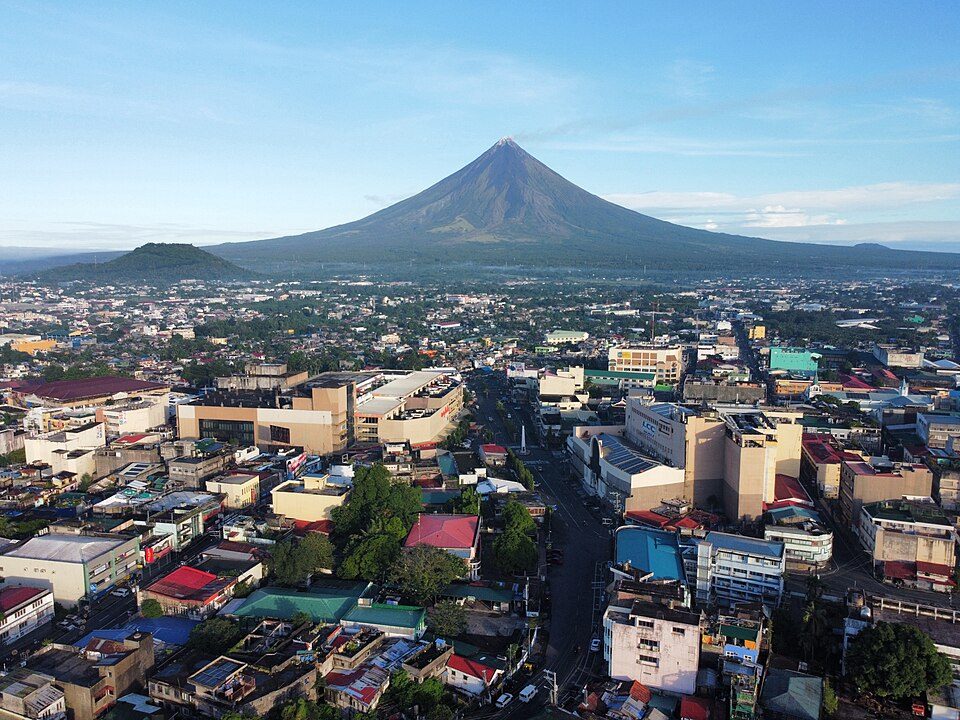
Legazpi City, Philippines: Submarine Cable Landing Point
Legazpi City is the capital of Albay province and sits on the western shore of Albay Gulf in the Philippines, approximately 560 km southeast of Manila. It serves as the principal gateway to the Bicol Region and is one of 71 submarine cable landing points distributed across the Philippine archipelago. One submarine cable makes landfall here, connecting Legazpi City into the country's domestic fiber optic infrastructure.
The cable landing at Legazpi City supports an intra-national corridor, linking this Bicol Region hub to other points within the Philippines rather than to international destinations. The PLDT Domestic Fiber Optic Network is the sole submarine system present, positioning Legazpi City as a regional node within the Philippine domestic cable grid.
Cables Landing at Legazpi City
PLDT Domestic Fiber Optic Network (DFON) is a domestic submarine cable system with a total length of 11,100 km, ready for service in 1997. All landing points on this cable are located within the Philippines, making it a purely intra-national network. As one of the first submarine cable systems to enter service in the Philippines - with its RFS year matching the earliest recorded for the country - DFON represents a foundational layer of the Philippine domestic submarine cable infrastructure. Legazpi City is one of the network's landing points, connecting the Bicol Region into this broad domestic system.
Regional Context
Within the Philippines' 71 submarine cable landing points, Legazpi City hosts one cable, placing it in the top 55% of landing points by cable count. Several other Philippine landing points - including Batangas, Cagayan de Oro, Davao, and Taytay - each host four cables, while Baler and Boracay each host three. Legazpi City's single-cable profile is modest by comparison, reflecting its role as a domestic connectivity node rather than a major international gateway.
Network Role
Legazpi City functions as a single-cable terminus on the PLDT Domestic Fiber Optic Network, enabling submarine connectivity between the Bicol Region and other Philippine locations served by that system. Its role is domestic in scope: the DFON connects points entirely within the Philippine archipelago, and Legazpi City contributes to the intra-island reach of that network across an 11,100 km route.
Within the broader Philippine submarine cable graph, Legazpi City represents one of 71 landing points that together distribute connectivity across the archipelago. Its presence on one of the country's earliest submarine cable systems, commissioned in 1997, gives the Bicol Region a long-standing link within the national submarine cable fabric.
What next: Legazpi City, Philippines in the global directory of cable landing points; see surrounding routes on the interactive submarine cable map or follow live network monitoring.
Other Landing Points in Philippines
Landing Point
- CountryPH Philippines
- Coordinates13.1391°N 123.7437°E
- Connected Cables1
See Real Cable Routes
View actual submarine cable routing from Legazpi City, Philippines - with backbone nodes, distance calculations, and latency estimates
Open Calculator →