Kribi, Cameroon
Landing Point · CM Cameroon
3
Connected Cables
CM
Country
2.93°
Latitude
9.91°
Longitude
Ctrl + Scroll to zoom
Connected Cables
| Cable | Status |
|---|---|
| Ceiba-2 | Active |
| Nigeria Cameroon Submarine Cable System (NCSCS) | Active |
| South Atlantic Inter Link (SAIL) | Active |
Live Performance
337
measurements
15
probes
224
days monitored
139.4
ms avg RTT
0
anomalies
RTT measurements to this landing point from 2026-03-07 through 2026-10-17 - live ICMP round-trip time via our monitoring probes. Recomputed daily. ✓ No anomalies detected in the monitored period.
Measurement sources
| Probe | Location | Samples | Avg |
|---|---|---|---|
| #7242 | control probe | 151 | 127.3 ms |
| #7623 | control probe | 98 | 84.1 ms |
| #60163 | control probe | 39 | 184.4 ms |
| own probe | Jerusalem IL | 11 | 226.6 ms |
| #6427 own probe | Sydney AU | 6 | 295.3 ms |
| own probe | Balancer IL | 6 | 221.3 ms |
| own probe | Minsk BY | 5 | 200.2 ms |
| own probe | Tbilisi GE | 5 | 214.6 ms |
| #6487 | control probe | 4 | 302.4 ms |
| own probe | Almaty KZ | 4 | 260.4 ms |
| #7062 own probe | Cape Town ZA | 3 | 342.9 ms |
| own probe | Sevastopol UA | 2 | 242.2 ms |
| #7050 | control probe | 1 | 353.7 ms |
| #17889 | control probe | 1 | 303.8 ms |
| own probe | Moscow RU | 1 | 210.3 ms |
About Kribi, Cameroon
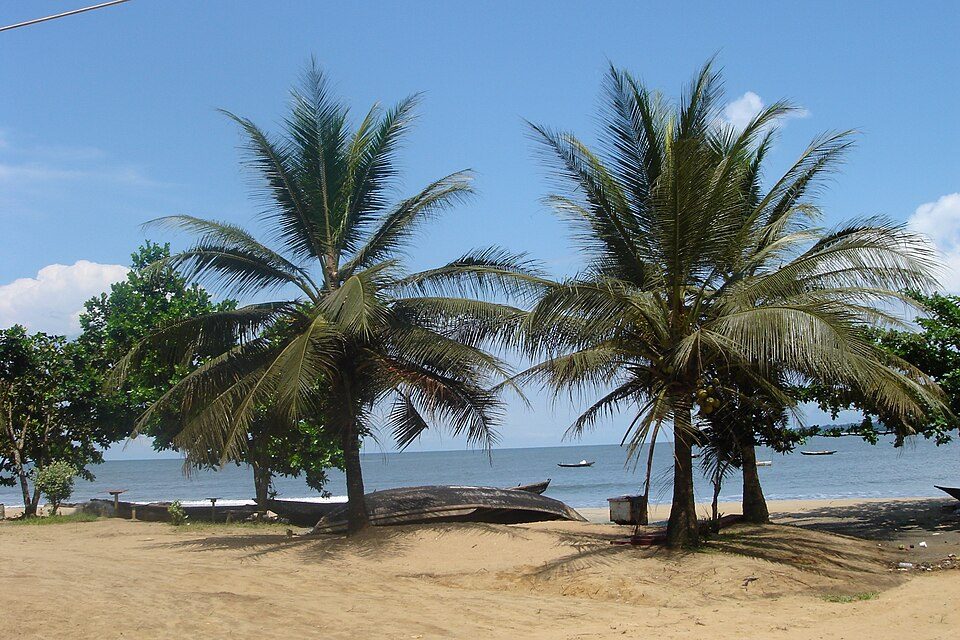
Kribi: A Rising Connectivity Hub in Cameroon
Kribi, a coastal town in southern Cameroon, stands out as the country’s most connected submarine cable landing point, hosting three international cables. This makes it a key node in Cameroon’s growing digital infrastructure, surpassing other landing points like Douala and Limbe, which each host just one cable. Kribi’s strategic position on the Atlantic coast has transformed it into a gateway for data exchange between Cameroon and neighboring countries, as well as intercontinental links.Three Cables, Three Directions
The cables landing in Kribi serve distinct purposes and connect Cameroon to three different regions. The South Atlantic Inter Link (SAIL), operational since 2020, stretches 5800 km across the Atlantic Ocean to Fortaleza, Brazil. This cable provides a direct intercontinental route, linking Cameroon to South America and beyond. The Nigeria Cameroon Submarine Cable System (NCSCS), launched in 2015, connects Kribi to Lagos, Nigeria, over a distance of 1100 km. This regional cable facilitates data exchange between two of West Africa’s largest economies, fostering collaboration and trade. Finally, the Ceiba-2 cable, active since 2017, is a shorter 290 km link connecting Kribi to Bata and Malabo in Equatorial Guinea. This cable strengthens ties with Cameroon’s southern neighbor, ensuring reliable communication across the Gulf of Guinea.Positioning Kribi in Cameroon’s Cable Network
Cameroon hosts five submarine cables across three landing points, with Kribi leading the way as the most connected. Douala and Limbe, the other two landing points, each support a single cable, highlighting Kribi’s prominence in the national network. The average length of cables landing in Cameroon is 7214 km, but Kribi’s cables collectively reflect a mix of regional and intercontinental priorities. Kribi’s location allows it to act as a convergence point for international and regional connectivity. While Douala and Limbe contribute to the country’s digital infrastructure, Kribi’s three cables make it a focal point for data traffic entering and leaving Cameroon.Latency Insights: Fast and Reliable
GeoCables’ monitoring has recorded 223 latency checks from 15 global cities to Kribi, with an average round-trip time of 149 milliseconds. Impressively, the best observed latency was just 1 millisecond, indicating exceptional performance for local and regional connections. These measurements underscore Kribi’s efficiency in handling data traffic, whether for domestic use or international exchange.Why Kribi Matters
Kribi’s connectivity is not just about cables-it’s about enabling economic and social growth in Cameroon. As a port town, Kribi is already a hub for maritime trade, and its role as a digital gateway complements its physical infrastructure. The cables landing here support industries that rely on fast and reliable data transfer, from logistics to communications. Additionally, Kribi’s links to Brazil, Nigeria, and Equatorial Guinea position it as a bridge between continents and regions, fostering collaboration and innovation. Kribi may not yet be a household name in global connectivity, but its three submarine cables make it an essential part of Cameroon’s digital landscape. As data demand grows and intercontinental links become more important, Kribi’s role in connecting Africa to the world will only expand.What next: Kribi, Cameroon in the global directory of cable landing points; see surrounding routes on the interactive submarine cable map or follow live network monitoring.
Incident history
Significant incidents on cables landing here, each with its own report.
- Nigeria Cameroon Submarine Cable System (NCSCS): latency up to 88.6× normal, 6 Oct 2026 (resolved)
- Nigeria Cameroon Submarine Cable System (NCSCS): latency up to 9.2× normal, 5 Aug 2026 (resolved)
Other Landing Points in Cameroon
FAQ
Landing Point
- CountryCM Cameroon
- Coordinates2.9329°N 9.9104°E
- Connected Cables3
See Real Cable Routes
View actual submarine cable routing from Kribi, Cameroon - with backbone nodes, distance calculations, and latency estimates
Open Calculator →
Submarine cables
Land fiber
Live probes