Malabo, Equatorial Guinea
Landing Point · GQ Equatorial Guinea
Connected Cables
| Cable | Status |
|---|---|
| Ceiba-1 | Active |
| Ceiba-2 | Active |
Live Performance
RTT measurements to this landing point from 2026-06-21 through 2026-09-24 - live ICMP round-trip time via our monitoring probes. Recomputed daily. ✓ No anomalies detected in the monitored period.
Measurement sources
| Probe | Location | Samples | Avg |
|---|---|---|---|
| #7050 | control probe | 26 | 191.0 ms |
| #6427 own probe | Sydney AU | 1 | 388.9 ms |
| #6487 | control probe | 1 | 252.8 ms |
| #7062 own probe | Cape Town ZA | 1 | 59.9 ms |
| own probe | Jerusalem IL | 1 | 226.3 ms |
| own probe | Odessa UA | 1 | 241.8 ms |
| own probe | Balancer IL | 1 | 267.2 ms |
About Malabo, Equatorial Guinea
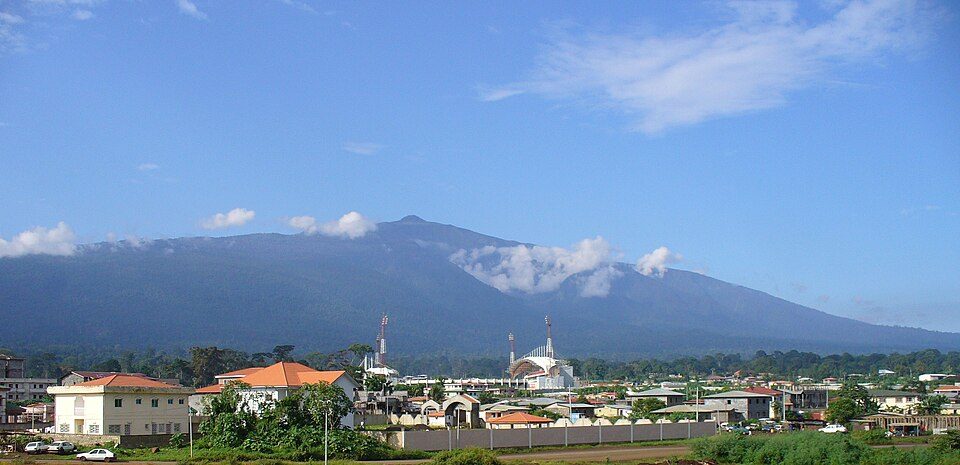
Malabo, Equatorial Guinea: Submarine Cable Landing Point
Malabo is the principal city of Equatorial Guinea, situated on the north coast of Bioko Island in the province of Bioko Norte. As an island city, its connection to submarine cable infrastructure is the defining factor in its external telecommunications links. Two submarine cables land at Malabo, making it one of the more connected landing points within Equatorial Guinea's cable geography.
The two cables serving Malabo - Ceiba-1 and Ceiba-2 - together form a regional corridor linking Bioko Island to mainland Equatorial Guinea and to Cameroon. Both are relatively short systems by submarine cable standards, enabling inter-island and coastal connectivity rather than intercontinental reach. The corridor these cables establish is distinctly regional in character, connecting Malabo to the African mainland across the Gulf of Guinea.
Cables Landing at Malabo
Ceiba-1 is a submarine cable measuring 287 km that reached ready-for-service status in 2011. It connects landing points within Equatorial Guinea, operating as a domestic inter-island link. Ceiba-1 was the first submarine cable to land in Equatorial Guinea, marking the beginning of the country's entry into submarine cable connectivity.
Ceiba-2 is a 290 km submarine cable with a ready-for-service date of 2017. In addition to Equatorial Guinea, Ceiba-2 extends to Cameroon, broadening the external reach of Malabo's cable infrastructure to include a neighbouring mainland African country. Its route closely mirrors that of its predecessor Ceiba-1 while adding cross-border connectivity.
Regional Context
Within Equatorial Guinea, submarine cable infrastructure is distributed across three landing points: Bata, Malabo, and Annobon. Bata, on the mainland coast, hosts three cables and is the most connected landing point in the country. Malabo ranks second with two cables, while Annobon hosts one. Malabo's two-cable configuration places it in the upper tier of Equatorial Guinea's landing points by cable count.
Network Role
Malabo functions as a two-cable landing point serving the island of Bioko, providing both domestic connectivity within Equatorial Guinea via Ceiba-1 and a cross-border link to Cameroon via Ceiba-2. Together these two systems give the city redundancy that a single-cable terminus would not afford, connecting Bioko Island into a small but defined regional submarine cable cluster spanning the Gulf of Guinea coast.
In the broader submarine cable graph of Equatorial Guinea, Malabo's pair of short-haul regional cables positions Bioko Island as a connected node within a national and sub-regional network, distinct from the longer-reach systems that serve other parts of the African continent.
What next: Malabo, Equatorial Guinea in the global directory of cable landing points; see surrounding routes on the interactive submarine cable map or follow live network monitoring.
Other Landing Points in Equatorial Guinea
Landing Point
- CountryGQ Equatorial Guinea
- Coordinates3.7498°N 8.7834°E
- Connected Cables2
See Real Cable Routes
View actual submarine cable routing from Malabo, Equatorial Guinea - with backbone nodes, distance calculations, and latency estimates
Open Calculator →