Huahine, French Polynesia
Landing Point · PF French Polynesia
1
Connected Cables
PF
Country
16.73°
Latitude
151.00°
Longitude
Ctrl + Scroll to zoom
Connected Cables
| Cable | Status |
|---|---|
| Honotua | Active |
Live Performance
29
measurements
12
probes
170
days monitored
291.7
ms avg RTT
0
anomalies
RTT measurements to this landing point from 2026-03-03 through 2026-08-21 - live ICMP round-trip time via our monitoring probes. Recomputed daily. ✓ No anomalies detected in the monitored period.
Measurement sources
| Probe | Location | Samples | Avg |
|---|---|---|---|
| own probe | Minsk BY | 6 | 309.2 ms |
| own probe | Almaty KZ | 6 | 352.5 ms |
| own probe | Tbilisi GE | 6 | 320.3 ms |
| own probe | Jerusalem IL | 3 | 294.2 ms |
| #6410 own probe | Sao Paulo BR | 1 | 267.9 ms |
| #6427 own probe | Sydney AU | 1 | 249.8 ms |
| #6487 | control probe | 1 | 274.0 ms |
| #52614 | control probe | 1 | 6.2 ms |
| #1014350 | control probe | 1 | 4.1 ms |
| own probe | Sevastopol UA | 1 | 320.0 ms |
| own probe | Moscow RU | 1 | 268.6 ms |
| own probe | Balancer IL | 1 | 294.5 ms |
About Huahine, French Polynesia
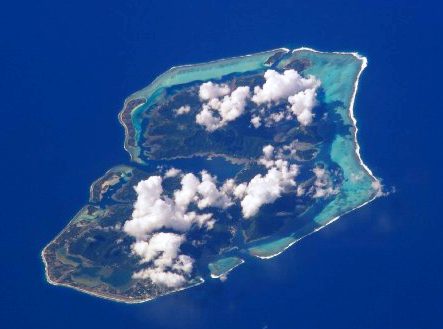
Huahine: A Quiet Link in French Polynesia's Connectivity Chain
Huahine, part of the picturesque Society Islands in French Polynesia, is known for its serene beauty and small population of just over 6,000 residents. While it may not be the most prominent hub in the region, it plays a steady role in the digital connectivity of French Polynesia through the Honotua submarine cable.The Honotua Cable: Connecting Huahine to the World
The Honotua cable, which became operational in 2010, is Huahine's sole submarine cable. Stretching 4,805 kilometers, it links French Polynesia to the United States, with landing points at six locations across the region, including Moorea, Papenoo, Uturoa, Vaitape, and Kawaihae in Hawaii. This cable serves as a critical international gateway for French Polynesia, providing connectivity not only between islands but also to the global internet. Huahine's position in this chain is modest compared to some of its regional peers. For instance, Papenoo hosts four cables, making it a major connectivity hub, while Faratea and Hitia'a each host multiple cables. In contrast, Huahine shares its single-cable status with smaller landing points like Arutua and Fakarava. Despite this, Huahine's inclusion in the Honotua network ensures it is not isolated from the digital world.Latency and Performance
GeoCables' monitoring has recorded an average round-trip latency of 321 milliseconds for connections to Huahine, with the best observed latency at 269 milliseconds. These figures reflect the island's reliance on a long-distance international cable, which must traverse thousands of kilometers to reach Hawaii and beyond. While not the fastest connectivity in the region, it is sufficient to support the island's needs for communication, commerce, and everyday internet usage.Connectivity in Context
French Polynesia's submarine cable network consists of eight cables spread across 23 landing points, with an average cable length of 6,450 kilometers. Huahine, hosting just one cable, ranks in the top 83% of landing points by cable count. This highlights how the Honotua cable has been instrumental in ensuring even smaller islands like Huahine are part of the region's broader connectivity framework.Life on a Connected Island
Huahine's inclusion in the Honotua network is necessary for its residents, who rely on the cable for essential services ranging from banking and healthcare to education and communication. The island's economy, which includes agriculture and tourism, benefits from the ability to connect with markets and visitors worldwide. While Huahine may not be a major industrial or research hub, its connectivity ensures it remains a part of the modern digital landscape.Conclusion
Huahine may be a small player in French Polynesia's submarine cable infrastructure, but its role in the Honotua network underscores the importance of ensuring connectivity for even the most remote locations. As technology continues to evolve, Huahine's link to the global internet will remain a quiet yet essential part of life on this idyllic island.What next: Huahine, French Polynesia in the global directory of cable landing points; see surrounding routes on the interactive submarine cable map or follow live network monitoring.
Other Landing Points in French Polynesia
PF Arutua, French Polynesia
15.2899°S 146.7862°W
PF Fakarava, French Polynesia
16.3103°S 145.6246°W
PF Faratea, French Polynesia
17.7186°S 149.3059°W
PF Hao, French Polynesia
18.2158°S 140.9081°W
PF Hitia'a, French Polynesia
17.7233°S 149.3081°W
PF Hiva Oa, French Polynesia
9.7547°S 139.0211°W
PF Kaukura, French Polynesia
15.7414°S 146.6738°W
PF Makemo, French Polynesia
16.5396°S 143.8672°W
PF Manihi, French Polynesia
14.4029°S 145.9581°W
PF Mitirapa, French Polynesia
17.7341°S 149.3252°W
PF Moorea, French Polynesia
17.5388°S 149.8296°W
PF Nuku Hiva, French Polynesia
8.8605°S 140.1421°W
Landing Point
- CountryPF French Polynesia
- Coordinates16.7301°S 151.0001°W
- Connected Cables1
See Real Cable Routes
View actual submarine cable routing from Huahine, French Polynesia - with backbone nodes, distance calculations, and latency estimates
Open Calculator →
Submarine cables
Land fiber
Live probes