Estepona, Spain
Landing Point · ES Spain
Connected Cables
| Cable | Status |
|---|---|
| Est-Tet | Active |
| FLAG Europe-Asia (FEA) | Active |
Live Performance
RTT measurements to this landing point from 2026-03-12 through 2026-10-16 - live ICMP round-trip time via our monitoring probes. Recomputed daily. ✓ No anomalies detected in the monitored period.
Measurement sources
| Probe | Location | Samples | Avg |
|---|---|---|---|
| #3772 | control probe | 40 | 196.8 ms |
| #14199 | control probe | 19 | 273.5 ms |
| own probe | Minsk BY | 11 | 65.7 ms |
| #6427 own probe | Sydney AU | 7 | 286.2 ms |
| own probe | Odessa UA | 7 | 72.6 ms |
| own probe | Tbilisi GE | 4 | 75.0 ms |
| own probe | Almaty KZ | 3 | 117.2 ms |
| own probe | Jerusalem IL | 3 | 90.5 ms |
| own probe | Moscow RU | 3 | 63.1 ms |
| #6487 | control probe | 2 | 181.9 ms |
| #7062 own probe | Cape Town ZA | 2 | 177.6 ms |
| #26072 | control probe | 2 | 15.6 ms |
| #27388 | control probe | 2 | 21.1 ms |
| #34429 | control probe | 2 | 24.8 ms |
| own probe | Kyiv UA | 2 | 54.7 ms |
| own probe | Sevastopol UA | 1 | 94.7 ms |
About Estepona, Spain
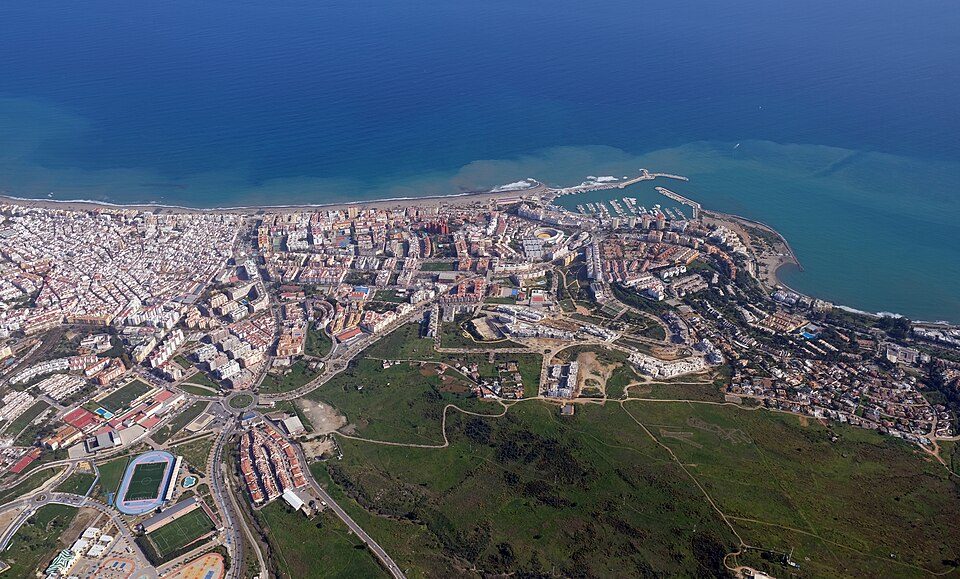
Estepona, Spain: Submarine Cable Landing Point
Estepona is a municipality on the Costa del Sol in the province of Málaga, southern Spain, situated within the autonomous community of Andalusia. Its coastline along the Mediterranean places it at a geographically significant position where transcontinental submarine cable routes converge between Europe, Africa, and Asia. Two submarine cables land at Estepona, connecting Spain to a broad arc of countries spanning North Africa, the Middle East, South Asia, and East Asia.
The most expansive of Estepona's two cables is the FLAG Europe-Asia system, one of the longest submarine cables to land here, which stretches across more than 28,000 kilometres. Alongside it, the shorter Est-Tet cable bridges the narrow strait between Spain and Morocco, enabling a direct cross-strait link. Together, these two systems position Estepona as a landing point that serves both intercontinental and regional connectivity functions.
Cables Landing at Estepona
FLAG Europe-Asia (FEA) is a 28,000-kilometre submarine cable system that became ready for service in 1997. It connects Estepona to a series of countries across multiple continents, including Egypt, Jordan, India, Malaysia, China, and Japan. The cable traces a route eastward from Europe through the Middle East and South Asia into East Asia, making it one of the longest-reach systems to terminate on the Spanish coast.
Est-Tet is a 113-kilometre submarine cable that entered service in 1994. It connects Estepona to Morocco, providing a short but direct link across the Strait of Gibraltar between Spain and the African continent. This relatively compact system forms a regional cross-strait connection supplementing the longer-haul routes accessible from Estepona.
Regional Context
Within Spain's submarine cable infrastructure - which encompasses 34 cables across 46 landing points - Estepona hosts two cables, placing it among the more active individual landing points in the country, ranking in the top 88% by cable count. Several other Spanish landing points, including Barcelona, Bilbao, Valencia, and the Canary Islands sites of Alta Vista, Granadilla de Abona, and Santa Cruz de La Palma, each host three cables, giving them a modestly larger cable portfolio than Estepona.
Network Role
Estepona functions as a dual-role landing point: the FLAG Europe-Asia cable establishes it as a terminus on one of the longest intercontinental submarine routes in the world, connecting Southern Europe with the Middle East, South and Southeast Asia, and East Asia, while the Est-Tet cable anchors it in the regional cross-strait corridor between Spain and Morocco. The combination of an intercontinental long-haul system and a short regional link within the same landing point is relatively uncommon among Spanish coastal nodes.
In the broader submarine cable graph of Spain and the western Mediterranean, Estepona's pairing of a far-reaching Asian route with a direct African short-haul connection gives it a distinct profile, linking the Iberian Peninsula simultaneously to some of the most distant and some of the closest cable endpoints in the regional network.
What next: Estepona, Spain in the global directory of cable landing points; see surrounding routes on the interactive submarine cable map or follow live network monitoring.
Our measurements to Estepona
Traceroutes from our own measurement points over the last 30 days: usual delay and number of network hops on the way to Estepona.
- From RIPE Atlas probes: 249 ms, 24 hops, 14 traces
Last trace: 2026-10-11. Live network map
Other Landing Points in Spain
Landing Point
- CountryES Spain
- Coordinates36.4271°N 5.1459°W
- Connected Cables2
See Real Cable Routes
View actual submarine cable routing from Estepona, Spain - with backbone nodes, distance calculations, and latency estimates
Open Calculator →