Dakhla, Morocco
Landing Point · MA Morocco
Connected Cables
| Cable | Status |
|---|---|
| Maroc Telecom West Africa | Active |
Live Performance
RTT measurements to this landing point from 2026-05-28 through 2026-09-24 - live ICMP round-trip time via our monitoring probes. Recomputed daily. ✓ No anomalies detected in the monitored period.
Measurement sources
| Probe | Location | Samples | Avg |
|---|---|---|---|
| own probe | Minsk BY | 8 | 77.4 ms |
| #6427 own probe | Sydney AU | 7 | 314.6 ms |
| own probe | Odessa UA | 7 | 95.4 ms |
| #6487 | control probe | 5 | 220.6 ms |
| #60135 | control probe | 4 | 58.3 ms |
| #1010265 | control probe | 4 | 78.8 ms |
| #1010282 | control probe | 4 | 63.0 ms |
| own probe | Kyiv UA | 4 | 85.3 ms |
| own probe | Almaty KZ | 3 | 138.4 ms |
| own probe | Moscow RU | 2 | 103.2 ms |
| own probe | Tbilisi GE | 1 | 106.6 ms |
| own probe | Jerusalem IL | 1 | 107.7 ms |
| own probe | Sevastopol UA | 1 | 122.5 ms |
| own probe | Balancer IL | 1 | 102.7 ms |
About Dakhla, Morocco
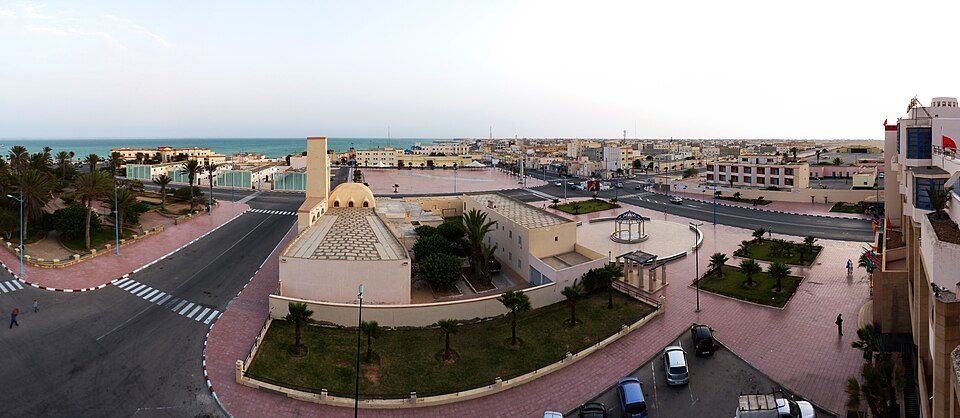
Dakhla, Morocco: Submarine Cable Landing Point
Dakhla is a city situated on the narrow Río de Oro Peninsula along the Atlantic Coast, approximately 550 kilometres south of Laayoune. Administered by Morocco as the capital of the Dakhla-Oued Ed-Dahab region, the city occupies a disputed territory in Western Sahara. Its Atlantic coastal position makes it a viable landing point for submarine cable infrastructure connecting Morocco to West African nations further along the same coastline.
One submarine cable lands at Dakhla: the Maroc Telecom West Africa system. This cable traces a southward corridor from Morocco down the Atlantic seaboard of Africa, reaching Togo, Benin, Côte d'Ivoire, and Gabon. The connection it enables is fundamentally an intercontinental-regional one, linking North Africa with West and Central African nations along a single continuous system. Dakhla's role in this network reflects the southernmost Moroccan presence on that cable's route.
Cables Landing at Dakhla, Morocco
Maroc Telecom West Africa is an 8,600-kilometre submarine cable system that entered service in 2021. In addition to Dakhla, the cable connects to landing points in Benin, Côte d'Ivoire, Gabon, and Togo, as well as elsewhere in Morocco. The system runs along the Atlantic coast of Africa, linking Morocco with four West and Central African countries in a single infrastructure deployment. With a ready-for-service date of 2021, it represents one of the more recently commissioned systems in Morocco's submarine cable history.
Regional Context
Within Morocco's submarine cable geography, Dakhla shares the lower end of the cable-count range alongside Nador, which also hosts a single cable. Landing points such as Asilah, Casablanca, and Tétouan each serve two cables, positioning them as more connected nodes within the country's national cable footprint. Dakhla's single-cable status nonetheless places it within the top 40 percent of Moroccan landing points by cable count, reflecting the concentrated distribution of Morocco's six submarine cables across five landing points.
Network Role
Dakhla functions as a single-cable terminus on the Maroc Telecom West Africa system, anchoring Morocco's southernmost participation in that cable's Atlantic corridor. Through this connection, Dakhla bridges North Africa with four West African nations - Benin, Côte d'Ivoire, Gabon, and Togo - extending Morocco's submarine cable reach well beyond its northern population centres. The cable's 2021 commissioning also makes Dakhla one of Morocco's more recently activated landing points.
As a terminus rather than a multi-cable hub, Dakhla contributes a geographically distinct node to Morocco's submarine cable graph - one positioned at the southern extreme of the country's Atlantic shoreline. Its presence on the Maroc Telecom West Africa system means that the regional cable map between North Africa and the Gulf of Guinea includes a landing point well south of where Morocco's principal communications hubs are concentrated, adding geographic breadth to the country's overall submarine cable footprint.
What next: Dakhla, Morocco in the global directory of cable landing points; see surrounding routes on the interactive submarine cable map or follow live network monitoring.
Other Landing Points in Morocco
Landing Point
- CountryMA Morocco
- Coordinates23.7211°N 15.9344°W
- Connected Cables1
See Real Cable Routes
View actual submarine cable routing from Dakhla, Morocco - with backbone nodes, distance calculations, and latency estimates
Open Calculator →