Cadiz City, Philippines
Landing Point · PH Philippines
Connected Cables
| Cable | Status |
|---|---|
| PLDT Domestic Fiber Optic Network (DFON) | Active |
Live Performance
RTT measurements to this landing point from 2026-05-25 through 2026-10-09 - live ICMP round-trip time via our monitoring probes. Recomputed daily. ✓ No anomalies detected in the monitored period.
Measurement sources
| Probe | Location | Samples | Avg |
|---|---|---|---|
| own probe | Almaty KZ | 8 | 339.1 ms |
| #6410 own probe | Sao Paulo BR | 6 | 324.9 ms |
| #6427 own probe | Sydney AU | 6 | 238.6 ms |
| #7062 own probe | Cape Town ZA | 6 | 307.1 ms |
| #51974 | control probe | 3 | 28.5 ms |
| #1002398 | control probe | 3 | 128.6 ms |
| own probe | Tbilisi GE | 3 | 277.7 ms |
| #6487 | control probe | 2 | 48.2 ms |
| #6568 own probe | Singapore SG | 2 | 58.7 ms |
| #1011902 | control probe | 2 | 71.0 ms |
| own probe | Minsk BY | 2 | 260.2 ms |
| own probe | Jerusalem IL | 2 | 315.5 ms |
| own probe | Sevastopol UA | 2 | 285.1 ms |
| own probe | Moscow RU | 2 | 263.2 ms |
| #1006477 | control probe | 1 | 46.7 ms |
About Cadiz City, Philippines
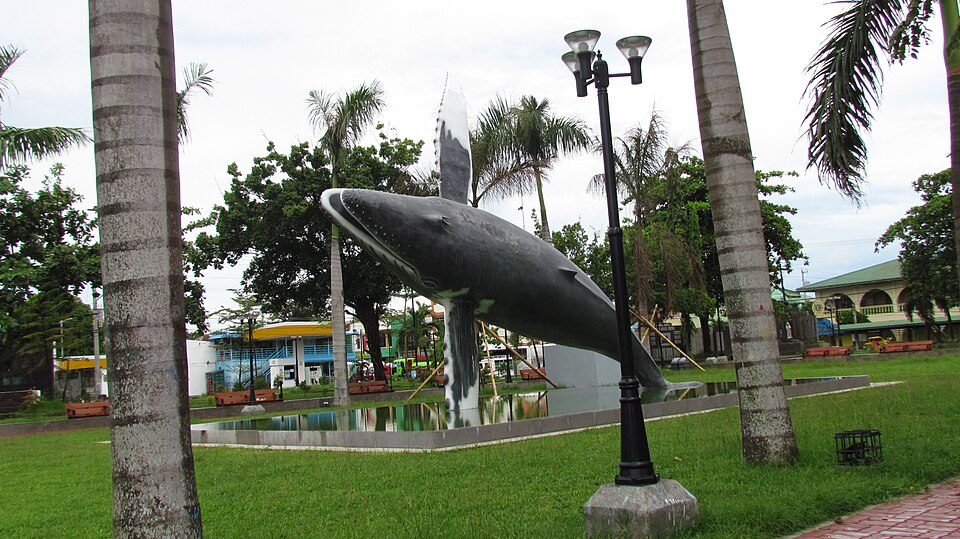
Cadiz City, Philippines: Submarine Cable Landing Point
Cadiz City is a component city in the province of Negros Occidental, in the Philippines. Situated on the northern coast of Negros Island, it serves as a landing point for submarine cable infrastructure connecting it to the broader national network. One submarine cable lands at Cadiz City, linking it directly into the domestic fiber optic framework of the Philippines.
The single cable serving Cadiz City is a domestic system, meaning the connectivity it provides is intra-national rather than intercontinental. This positions Cadiz City as a node within a Philippine inter-island corridor, supporting the distribution of connectivity across the archipelago's many island groups.
Cables Landing at Cadiz City
The PLDT Domestic Fiber Optic Network (DFON) is the sole submarine cable landing at Cadiz City. With a total length of 11,100 km and a ready-for-service date of 1997, DFON is a purely domestic system, with all of its endpoints located within the Philippines. It represents the country's earliest submarine cable deployment, with 1997 marking the first recorded RFS year in Philippine submarine cable history. The network's extensive length reflects the scale of the inter-island routing required to connect the Philippines' dispersed islands through a single integrated cable system.
Regional Context
Within the Philippines, submarine cable infrastructure is distributed across 71 landing points, and Cadiz City, with its single cable, ranks in the top 55 percent of those landing points by cable count. Several other Philippine cities host considerably more cables - Batangas, Cagayan de Oro, Davao, and Taytay each land four cables, while Baler and Boracay each land three. Cadiz City's position reflects its role as a more focused, single-cable terminus rather than a multi-cable hub.
Network Role
Cadiz City functions as a single-cable terminus on the PLDT DFON system, which spans over 11,000 km across the Philippine archipelago. Its role is specifically oriented toward domestic inter-island connectivity, channeling national network capacity to Negros Occidental and the surrounding region of Negros Island. The landing point does not serve intercontinental routes, but instead contributes to the internal stitching together of the Philippines' geographically fragmented island geography.
In the broader Philippine submarine cable graph, Cadiz City represents one of 71 landing points that collectively distribute connectivity across the archipelago. Its inclusion on one of the country's earliest and most extensive domestic cable systems underscores how the DFON network reached beyond major urban centers to serve provincial cities such as Cadiz in the Western Visayas region.
What next: Cadiz City, Philippines in the global directory of cable landing points; see surrounding routes on the interactive submarine cable map or follow live network monitoring.
Other Landing Points in Philippines
Landing Point
- CountryPH Philippines
- Coordinates10.9500°N 123.3000°E
- Connected Cables1
See Real Cable Routes
View actual submarine cable routing from Cadiz City, Philippines - with backbone nodes, distance calculations, and latency estimates
Open Calculator →