Alotau, Papua New Guinea
Landing Point · PG Papua New Guinea
Connected Cables
| Cable | Status |
|---|---|
| Kumul Domestic Submarine Cable System | Active |
Live Performance
RTT measurements to this landing point from 2026-03-16 through 2026-10-12 - live ICMP round-trip time via our monitoring probes. Recomputed daily. ✓ No anomalies detected in the monitored period.
Measurement sources
| Probe | Location | Samples | Avg |
|---|---|---|---|
| own probe | Almaty KZ | 7 | 218.8 ms |
| own probe | Minsk BY | 5 | 181.5 ms |
| own probe | Tbilisi GE | 5 | 251.5 ms |
| own probe | Jerusalem IL | 4 | 269.6 ms |
| #6427 own probe | Sydney AU | 2 | 317.3 ms |
| own probe | Sevastopol UA | 2 | 174.5 ms |
| own probe | Moscow RU | 2 | 181.0 ms |
| own probe | Odessa UA | 2 | 258.2 ms |
| #6410 own probe | Sao Paulo BR | 1 | 324.0 ms |
| #6568 own probe | Singapore SG | 1 | 72.4 ms |
| #50365 | control probe | 1 | 378.1 ms |
About Alotau, Papua New Guinea
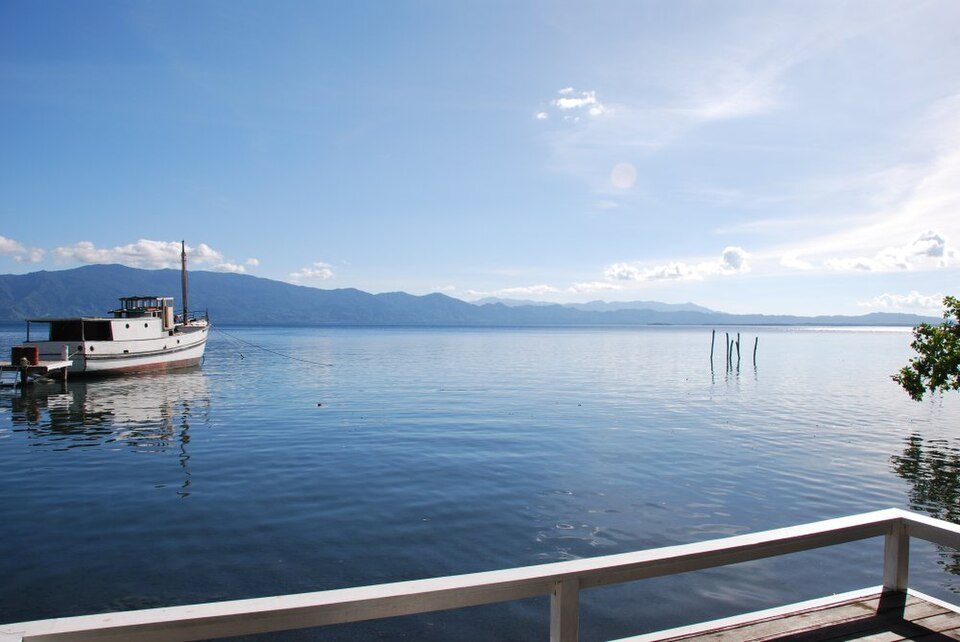
Alotau: Submarine Cable Landing Point
Alotau is the capital of Milne Bay Province, situated on the northern shore of Milne Bay at the far south-eastern tip of Papua New Guinea's Papuan Peninsula. Its coastal position on the edge of the Coral Sea makes it a natural candidate for submarine cable infrastructure, and the town serves as one of fifteen submarine cable landing points across Papua New Guinea. One submarine cable lands at Alotau, connecting the settlement to the broader domestic and regional network that links Papua New Guinea's dispersed communities and islands.
The single cable serving Alotau is the Kumul Domestic Submarine Cable System, a large-scale system that spans 5,457 kilometres and connects multiple points within Papua New Guinea as well as Indonesia. Reaching ready-for-service status in 2019, the system was designed to extend connectivity across Papua New Guinea's geographically challenging terrain, where overland infrastructure is often impractical. For Alotau, the Kumul system provides the primary undersea link that places this south-eastern town within a wider intra-country and cross-border submarine cable corridor.
Cables Landing at Alotau
The Kumul Domestic Submarine Cable System is a 5,457-kilometre cable that reached ready-for-service status in 2019, currently with draft status. The system's endpoints span Papua New Guinea and Indonesia, making it both a domestic Papua New Guinean network and a cross-border connection linking two neighbouring countries across the Coral and Arafura seas. As a segment of this system, Alotau's landing point participates in a cable that serves multiple communities across an exceptionally long route designed to address the connectivity needs of Papua New Guinea's island-fragmented geography.
Regional Context
Among Papua New Guinea's fifteen cable landing points, Alotau sits alongside several other single-cable locations, including Arawa, Daru, Kavieng, and Kerema, each hosting one submarine cable. Port Moresby leads the country with four cables, while Madang hosts two. Alotau's count of one cable places it in the middle tier of Papua New Guinea's landing point hierarchy, ranked within the top 87 percent of all landing points in the country by cable count.
Network Role
Alotau functions as a single-cable terminus on the Kumul Domestic Submarine Cable System, rather than a multi-cable hub. Its position at the south-eastern extremity of the Papuan Peninsula means it serves as a regional access point on a long domestic and cross-border route connecting Papua New Guinea and Indonesia. The Kumul system's design as a domestic network gives Alotau a role in extending undersea connectivity to a part of Papua New Guinea that would otherwise be difficult to reach through terrestrial means.
Within the regional submarine cable graph for Papua New Guinea, Alotau represents one node in a distributed national network built around the Kumul system. While it does not carry the volume of cable connections seen at Port Moresby, its inclusion on a 5,457-kilometre system underscores how Papua New Guinea's submarine cable strategy prioritises broad geographic reach across its many coastal and island communities.
What next: Alotau, Papua New Guinea in the global directory of cable landing points; see surrounding routes on the interactive submarine cable map or follow live network monitoring.
Other Landing Points in Papua New Guinea
Landing Point
- CountryPG Papua New Guinea
- Coordinates10.3157°S 150.4588°E
- Connected Cables1
See Real Cable Routes
View actual submarine cable routing from Alotau, Papua New Guinea - with backbone nodes, distance calculations, and latency estimates
Open Calculator →