Tuas, Singapore
Landing Point · SG Singapore
Connected Cables
| Cable | Status |
|---|---|
| Apricot | Active |
| Asia Direct Cable (ADC) | Active |
| Bifrost | Active |
| I-2SEA | Planned |
| i2i Cable Network (i2icn) | Active |
| India Asia Xpress (IAX) | Active |
| INDIGO-West | Active |
| Indonesia Global Gateway (IGG) System | Active |
| INSICA | Active |
| MIST | Active |
| MViSTA | Planned |
| PEACE Cable | Active |
| SEA-H2X | Active |
| SeaMeWe-4 | Active |
| SeaMeWe-5 | Active |
| SeaMeWe-6 | Active |
| Southeast Asia-Japan Cable (SJC) | Active |
| UMO | Active |
Live Performance
RTT measurements to this landing point from 2026-03-01 through 2026-10-16 - live ICMP round-trip time via our monitoring probes. Recomputed daily.
Measurement sources
| Probe | Location | Samples | Avg |
|---|---|---|---|
| #7269 | control probe | 189 | 73.6 ms |
| #6410 own probe | Sao Paulo BR | 175 | 343.8 ms |
| own probe | Almaty KZ | 174 | 257.5 ms |
| #14843 | control probe | 141 | 104.3 ms |
| #6487 | control probe | 100 | 1.0 ms |
| #6639 | control probe | 87 | 162.0 ms |
| #62122 | control probe | 77 | 51.8 ms |
| #61198 | control probe | 69 | 106.8 ms |
| #6427 own probe | Sydney AU | 45 | 186.4 ms |
| #2501 | control probe | 40 | 170.7 ms |
| #6568 own probe | Singapore SG | 36 | 0.9 ms |
| #2261 | control probe | 35 | 44.9 ms |
| #1263 | control probe | 25 | 300.0 ms |
| #6954 | control probe | 19 | 163.0 ms |
| #65595 | control probe | 12 | 88.9 ms |
| own probe | Tbilisi GE | 6 | 321.4 ms |
| #6982 | control probe | 5 | 31.0 ms |
| own probe | Jerusalem IL | 4 | 277.1 ms |
| #14199 | control probe | 2 | 74.3 ms |
| own probe | Minsk BY | 2 | 290.1 ms |
About Tuas, Singapore
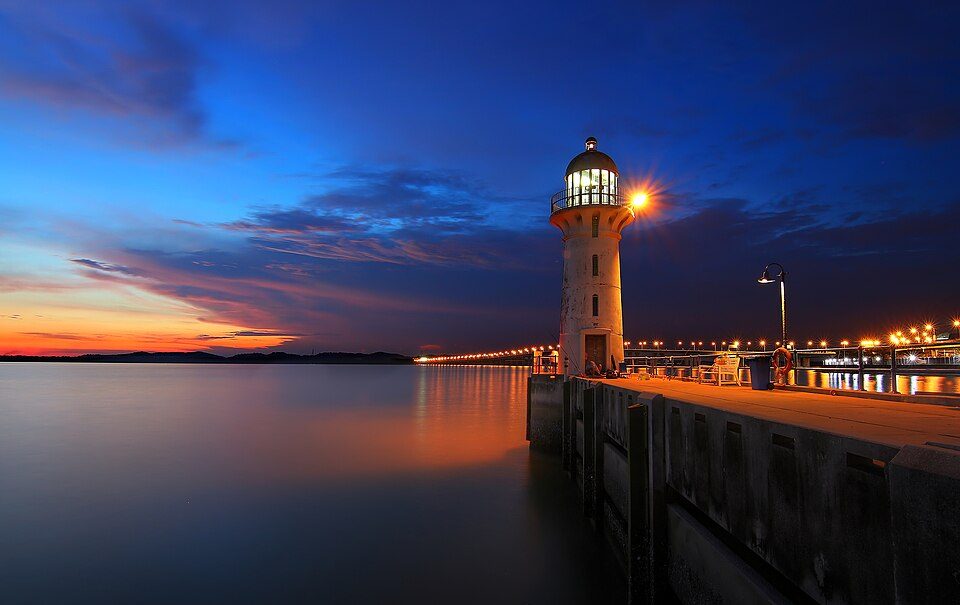
Tuas, Singapore is a submarine cable landing point in Singapore (coordinates 1.3382°, 103.6471°). It serves 16 submarine cable systems, making it a major regional hub in Singapore's international connectivity infrastructure.
Tuas is a planning area located within the West Region of Singapore. It is bounded by the Western Water Catchment to its north, Pioneer to its east and the Straits of Johor to its west. Tuas also shares a maritime boundary with the Western Islands planning area to its east. It has six subzones, Tengeh, Tuas Bay, Tuas North, Tuas Promenade, Tuas View and Tuas View Extension. Wikipedia
Connected submarine cables
| Cable | RFS | Length | Owners |
|---|---|---|---|
| INSICA | 2026 | 100 km | Singtel, Telin |
| SEA-H2X | 2026 | 6,000 km | China Mobile, China Unicom, Converge ICT |
| SeaMeWe-6 | 2026 | 21,700 km | Bahrain Telecommunications Company (Batelco), Bangladesh Submarine Cable Company Limited (BSCCL), Bharti Airtel, … |
| Apricot | 2025 | 11,972 km | Chunghwa Telecom, Google, Meta, … |
| Bifrost | 2025 | 19,888 km | Keppel T&T, Meta, Telin |
| Asia Direct Cable (ADC) | 2024 | 9,988 km | China Telecom, China Unicom, National Telecom, … |
| India Asia Xpress (IAX) | 2024 | 5,791 km | China Mobile, Reliance Jio Infocomm |
| MIST | 2024 | 8,100 km | Orient Link |
| UMO | 2023 | 2,227 km | Campana Group |
| PEACE Cable | 2022 | 25,000 km | Peace Cable International Network Co. Ltd. |
| INDIGO-West | 2019 | 4,600 km | Australia’s Academic and Research Network (AARNET), Google, Indosat Ooredoo, … |
| Indonesia Global Gateway (IGG) System | 2018 | 5,300 km | Telin, Telkom Indonesia |
| SeaMeWe-5 | 2016 | 20,000 km | Bangladesh Submarine Cable Company Limited (BSCCL), China Mobile, China Telecom, … |
| Southeast Asia-Japan Cable (SJC) | 2013 | 8,900 km | China Mobile, China Telecom, Chunghwa Telecom, … |
| SeaMeWe-4 | 2005 | 20,000 km | Algerie Telecom, Bangladesh Submarine Cable Company Limited (BSCCL), Bharti Airtel, … |
| i2i Cable Network (i2icn) | 2002 | 3,200 km | Bharti Airtel |
Operators landing at Tuas, Singapore
Cables landing at Tuas, Singapore are operated by 52 distinct consortium partners and carriers, including Algerie Telecom, Australia’s Academic and Research Network (AARNET), Bahrain Telecommunications Company (Batelco), Bangladesh Submarine Cable Company Limited (BSCCL), Bharti Airtel, Campana Group, China Mobile, China Telecom, China Unicom, Chunghwa Telecom, and 42 others. Each cable is typically jointly owned by a consortium of tier-one carriers and hyperscale operators who share construction costs and capacity; the operator mix reflects both regional incumbents and global players with interest in the routes served by this landing point.
Connectivity profile
From Tuas, Singapore, international traffic can reach 37 countries through 16 cable systems. Destinations include Algeria, Australia, Bahrain, Bangladesh, Brunei, China, Cyprus, Djibouti and 29 more. With multiple redundant paths, traffic at this landing point can reroute through alternative cables if any single system experiences an outage.
Monitoring status
GeoCables recorded 2 monitoring events on cables serving Tuas, Singapore in the past 90 days. Our monitoring network continuously samples latency from external probes to targets reachable via these cables.
About the cables
- INSICA (2026) - INSICA is a point-to-point submarine cable linking Indonesia and Singapore. Landing at Tanjung Bemban, Tuas, it provides a direct fiber-optic path between the two countries, serving as both a primary data route and a redundancy option for neighboring cable systems. Read more →
- SEA-H2X (2026) - SEA-H2X is an intercontinental submarine cable system connecting Southeast Asia and East Asia, with 6 landing points across 5 countries including Kuching, Malaysia, La Union, Philippines, Lingshui, China, Songkhla, Thailand and others. The cable provides cross-continental connectivity, offering an important route for data traffic between Southeast Asia and East Asia. Read more →
- SeaMeWe-6 (2026) - SEA-ME-WE 6 is the sixth submarine cable in a series that has been laying fibre between Southeast Asia, the Middle East, and Western Europe since 1985. The original SEA-ME-WE (just SEA-ME-WE, no number) was commissioned in 1985 as one of the earliest long-haul submarine cables in the modern sense. SEA-ME-WE 2 followed in 1994, SEA-ME-WE 3 in 1999, SEA-ME-WE 4 in 2005, SEA-ME-WE 5 in 2016. Read more →
- Apricot (2025) - APRICOT is a hyperscaler submarine cable lit for service in 2025, connecting eight landings across five countries and one US territory - Minamiboso in Japan, Toucheng in Taiwan, Tuas in Singapore, Batam and Tanjung Pakis in Indonesia, Agat in Guam, Baler and Davao in the Philippines. Read more →
- Bifrost (2025) - BIFROST is the longest submarine cable we monitor. Nineteen thousand eight hundred and eighty-eight kilometres of fibre, stretched from Jakarta across the Indonesian archipelago, through Davao and Manado in the Philippines, via Tuas in Singapore, out to Alupang in Guam, and then across the full width of the Pacific Ocean to three North American landings - Grover Beach in California, Winema in Oreg Read more →
- Asia Direct Cable (ADC) (2024) - Asia Direct Cable (ADC) is a 9,988 km intra-Asian submarine cable ready for service in 2024. It connects seven landings across seven countries and territories: Tuas in Singapore, Sriracha in Thailand, Quy Nhon in Vietnam, Shantou in mainland China, Chung Hom Kok in Hong Kong, Batangas in the Philippines, and Maruyama in Japan. Read more →
- India Asia Xpress (IAX) (2024) - Based on 39 RIPE Atlas measurements from GeoCables monitoring infrastructure, March-April 2026. India Asia Xpress - IAX - is a submarine cable that came into service in 2024 under what is, by 2020s standards, an unusual ownership structure. Two owners: Reliance Jio Infocomm of India and China Mobile International of China. No hyperscaler investor. No consortium of traditional Western telecoms. Read more →
- MIST (2024) - Based on 47 RIPE Atlas measurements from GeoCables monitoring infrastructure, March-April 2026. When you read the technical sheet for the MIST cable - Malaysia-India-Singapore-Thailand, brought into service in 2024 by Orient Link - you'll find an unambiguous number: 8,100 kilometres of fibre, 12 pairs, five landing stations across four countries. Read more →
- UMO (2023) - UMO is a point-to-point submarine cable linking Myanmar and Singapore. Landing at Thanlyin, Tuas, it provides a direct fiber-optic path between the two countries, serving as both a primary data route and a redundancy option for neighboring cable systems. Read more →
- PEACE Cable (2022) - PEACE Cable is a 15,000 km submarine system that entered full service in December 2022, connecting Europe to Asia via Africa. Its acronym stands for "Pakistan and East Africa Connecting Europe" - a literal description of its route. Read more →
- INDIGO-West (2019) - INDIGO-West is a cross-regional submarine cable connecting Indonesia, Australia, Singapore. Its 3 landing points at Jakarta, Perth, Tuas bridge the networks of Southeast Asia, Oceania, providing an important path for international data traffic. Read more →
- Indonesia Global Gateway (IGG) System (2018) - Indonesia Global Gateway (IGG) System is a point-to-point submarine cable linking Indonesia and Singapore. Landing at Bali, Balikpapan, Batam, Dumai, Jakarta, and 5 more, it provides a direct fiber-optic path between the two countries, serving as both a primary data route and a redundancy option for neighboring cable systems. Read more →
- SeaMeWe-5 (2016) - SeaMeWe-5 is a major intercontinental submarine cable system spanning 16 countries across North Africa, Middle East, Europe. With 18 landing points - including Abu Talat, Al Hudaydah, Catania, Dumai, Fujairah, and 13 more - it forms one of the backbone links carrying international internet traffic between continents. Read more →
- Southeast Asia-Japan Cable (SJC) (2013) - Southeast Asia-Japan Cable (SJC) is a cross-regional submarine cable connecting Japan, China, Philippines, Brunei, Singapore. Its 6 landing points at Chikura, Chung Hom Kok, Nasugbu, Shantou, Telisai, and 1 more bridge the networks of East Asia, Southeast Asia, providing an important path for international data traffic. Read more →
- SeaMeWe-4 (2005) - SeaMeWe-4 is a major intercontinental submarine cable system spanning 14 countries across North Africa, South Asia, Middle East. With 16 landing points - including Alexandria, Annaba, Bizerte, Chennai, Colombo, and 11 more - it forms one of the backbone links carrying international internet traffic between continents. Read more →
- i2i Cable Network (i2icn) (2002) - i2i Cable Network (i2icn) is a point-to-point submarine cable linking India and Singapore. Landing at Chennai, Tuas, it provides a direct fiber-optic path between the two countries, serving as both a primary data route and a redundancy option for neighboring cable systems. Read more →
What next: Tuas, Singapore in the global directory of cable landing points; see surrounding routes on the interactive submarine cable map or follow live network monitoring.
Incident history
Significant incidents on cables landing here, each with its own report.
- Indonesia Global Gateway (IGG) System: latency up to 2.4× normal, 5 Sep 2026 (resolved)
- PEACE Cable: latency up to 10.5× normal, 17 Aug 2026 (resolved)
- SeaMeWe-5 cable: latency up to 2.2× normal, 31 Jul 2026 (resolved)
- Apricot cable: latency up to 2.4× normal, 15 Mar 2026 (resolved)
Other Landing Points in Singapore
FAQ
Landing Point
- CountrySG Singapore
- Coordinates1.3382°N 103.6471°E
- Connected Cables18
See Real Cable Routes
View actual submarine cable routing from Tuas, Singapore - with backbone nodes, distance calculations, and latency estimates
Open Calculator →