Tarrafal de Santiago, Cape Verde
Landing Point · CV Cape Verde
Connected Cables
| Cable | Status |
|---|---|
| Cabo Verde Telecom Domestic Submarine Cable Phase 2 | Active |
| Cabo Verde Telecom Domestic Submarine Cable Phase 3 | Active |
Live Performance
RTT measurements to this landing point from 2026-07-08 through 2026-09-26 - live ICMP round-trip time via our monitoring probes. Recomputed daily. ✓ No anomalies detected in the monitored period.
Measurement sources
| Probe | Location | Samples | Avg |
|---|---|---|---|
| #6410 own probe | Sao Paulo BR | 4 | 257.3 ms |
| #6427 own probe | Sydney AU | 4 | 322.8 ms |
| own probe | Odessa UA | 4 | 106.4 ms |
| own probe | Minsk BY | 3 | 117.4 ms |
| #6487 | control probe | 2 | 195.5 ms |
| #60962 | control probe | 1 | 3.6 ms |
| #61506 | control probe | 1 | 3.6 ms |
| own probe | Almaty KZ | 1 | 167.7 ms |
| own probe | Balancer IL | 1 | 131.8 ms |
About Tarrafal de Santiago, Cape Verde
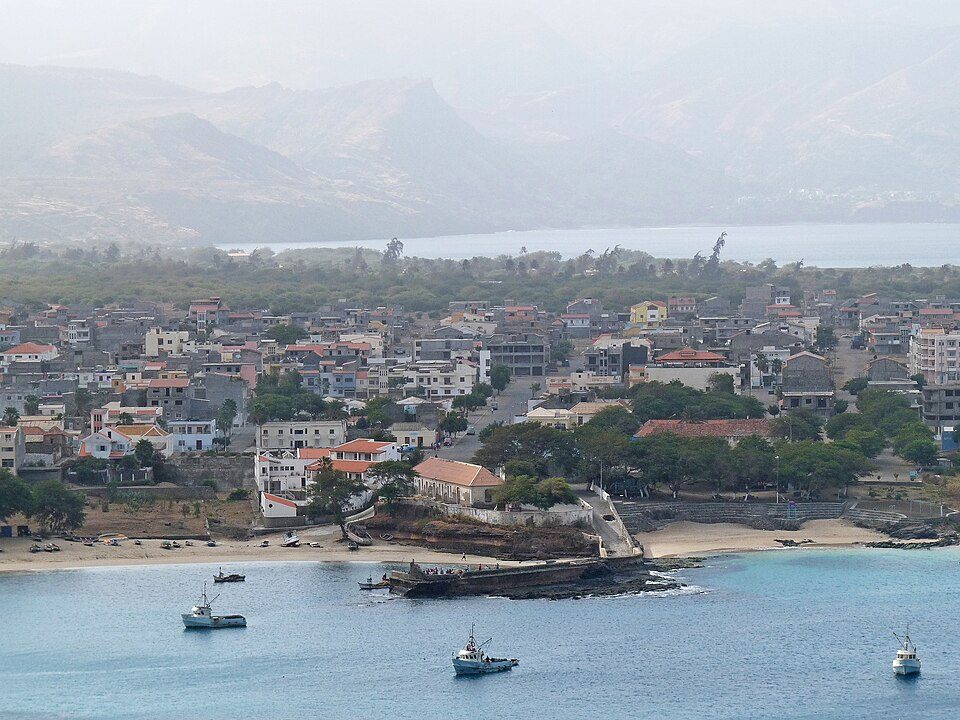
Tarrafal de Santiago, Cape Verde: Submarine Cable Landing Point
Tarrafal de Santiago is a city located on the northwestern coast of the island of Santiago, Cape Verde, where it serves as the seat of the Tarrafal Municipality. As a fishing port on Santiago's northern shore, the city forms part of Cape Verde's broader submarine cable network, which spans ten landing points across the archipelago. Two submarine cables land at Tarrafal de Santiago, both operated as part of Cabo Verde Telecom's domestic cable infrastructure.
Both cables landing here are entirely domestic in scope, connecting islands within Cape Verde rather than bridging the archipelago to other nations. This positions Tarrafal de Santiago as a node within the inter-island connectivity framework that ties together the scattered islands of the Cape Verdean archipelago.
Cables Landing at Tarrafal de Santiago
Cabo Verde Telecom Domestic Submarine Cable Phase 2 reached ready-for-service status in 2002. This cable connects landing points exclusively within Cape Verde, forming part of the first generation of Cabo Verde Telecom's domestic submarine cable build-out to improve inter-island communications across the archipelago.
Cabo Verde Telecom Domestic Submarine Cable Phase 3 entered service in 2011, representing a later expansion of the same domestic programme. Like its predecessor, this cable links points entirely within Cape Verde, extending or reinforcing the inter-island network that connects Santiago and the other islands of the archipelago. The near-decade gap between the two phases reflects the incremental nature of Cape Verde's domestic submarine cable development.
Regional Context
Among Cape Verde's ten submarine cable landing points, Tarrafal de Santiago ranks in the upper portion by cable count, hosting two cables alongside Porto Novo and Sal Rei, which also each serve two cables. The primary hub of the national network is Praia, the capital, which hosts five cables, followed by Sao Pedro with three. Tarrafal de Santiago thus represents a secondary but meaningful node within Cape Verde's domestic submarine cable geography.
Network Role
Tarrafal de Santiago functions as a dedicated domestic landing point, with both of its cables operating entirely within Cape Verde. It is not a terminus for any international or intercontinental route, but instead contributes to the inter-island fabric that connects the dispersed islands of the archipelago. The two Cabo Verde Telecom domestic cable phases arriving here demonstrate that the city has been included across successive rounds of national submarine cable investment, first in 2002 and again in 2011.
As a two-cable landing point within a ten-node national network, Tarrafal de Santiago plays a defined role in ensuring that Santiago's northern coast maintains submarine cable connectivity alongside the more heavily served landing points elsewhere in the country. Its presence in the Cape Verdean submarine cable graph underlines how domestic inter-island routes require multiple landing points distributed across each island's coastline to serve local communities effectively.
What next: Tarrafal de Santiago, Cape Verde in the global directory of cable landing points; see surrounding routes on the interactive submarine cable map or follow live network monitoring.
Other Landing Points in Cape Verde
Landing Point
- CountryCV Cape Verde
- Coordinates15.2768°N 23.7511°W
- Connected Cables2
See Real Cable Routes
View actual submarine cable routing from Tarrafal de Santiago, Cape Verde - with backbone nodes, distance calculations, and latency estimates
Open Calculator →