Tagbilaran, Philippines
Landing Point · PH Philippines
Connected Cables
| Cable | Status |
|---|---|
| Converge Domestic Submarine Cable Network (CDSCN) | Active |
| Philippine Domestic Submarine Cable Network (PDSCN) | Active |
Live Performance
RTT measurements to this landing point from 2026-04-02 through 2026-09-19 - live ICMP round-trip time via our monitoring probes. Recomputed daily. ✓ No anomalies detected in the monitored period.
Measurement sources
| Probe | Location | Samples | Avg |
|---|---|---|---|
| own probe | Almaty KZ | 18 | 305.6 ms |
| #6427 own probe | Sydney AU | 12 | 176.0 ms |
| #6410 own probe | Sao Paulo BR | 11 | 353.0 ms |
| #7062 own probe | Cape Town ZA | 11 | 303.7 ms |
| #6487 | control probe | 9 | 47.5 ms |
| own probe | Tbilisi GE | 9 | 271.1 ms |
| own probe | Minsk BY | 6 | 275.4 ms |
| own probe | Jerusalem IL | 6 | 309.5 ms |
| own probe | Moscow RU | 4 | 245.8 ms |
| #6887 | control probe | 3 | 0.1 ms |
| #62759 | control probe | 3 | 34.8 ms |
| #1011902 | control probe | 2 | 43.8 ms |
| own probe | Sevastopol UA | 2 | 281.4 ms |
| #1006475 | control probe | 1 | 66.8 ms |
| own probe | Saint Petersburg RU | 1 | 235.1 ms |
About Tagbilaran, Philippines
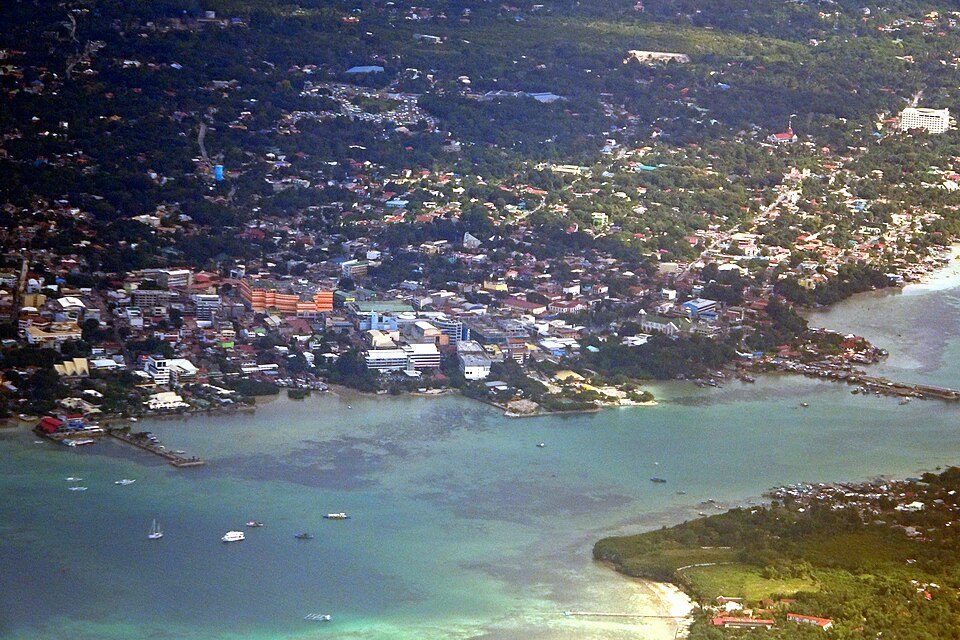
Tagbilaran: Submarine Cable Landing Point
Tagbilaran is the capital city of Bohol province in the Philippines, situated in the Visayas region of the central Philippine archipelago. As a coastal city, it serves as a submarine cable landing point within the country's broader domestic cable network. Two submarine cables come ashore at Tagbilaran, connecting it to other points across the Philippine island chain and supporting domestic connectivity infrastructure.
Both cables landing at Tagbilaran are domestic in nature, linking Philippine locations exclusively to one another rather than reaching international destinations. This positions Tagbilaran as a node within the Philippines' intra-archipelago cable corridor - a network designed to bridge the many islands that make up the country. The two cables reflect investment from distinct operators, underscoring the city's role as a point of domestic interconnection.
Cables Landing at Tagbilaran
The Philippine Domestic Submarine Cable Network (PDSCN) is a 2,500 km domestic submarine cable system with a Ready for Service (RFS) date of 2023, currently at draft status. The cable connects multiple locations within the Philippines, making Tagbilaran one of its landing points along a route that stays entirely within Philippine territory.
The Converge Domestic Submarine Cable Network (CDSCN) spans 1,300 km and reached its RFS date in 2021, also at draft status. Like the PDSCN, this cable operates exclusively between Philippine landing points. Its shorter total length compared to the PDSCN suggests a more concentrated domestic routing, with Tagbilaran serving as one of its designated landing locations.
Regional Context
Within the Philippines, submarine cable infrastructure is distributed across 71 landing points, and Tagbilaran's two cables place it in the top 82% of those locations by cable count. Several other Philippine landing points - including Batangas, Cagayan de Oro, Davao, and Taytay - each host four cables, while Baler and Boracay each host three. Tagbilaran's current count of two cables reflects a more modest but established presence within the national submarine cable landscape.
Network Role
Tagbilaran functions as a domestic-only landing point, with both of its submarine cables operating entirely within the Philippines. This makes it part of the intra-archipelago connectivity layer rather than any international or intercontinental corridor. As a two-cable location served by two different network operators - the PDSCN and CDSCN - Tagbilaran represents a point of moderate redundancy within the domestic cable fabric, with independent systems providing separate routing options.
In the broader Philippine submarine cable graph, which encompasses 26 cables across 71 landing points, Tagbilaran's position as a multi-operator domestic hub for Bohol province gives it a distinct role in ensuring that the Visayas region remains connected through dedicated undersea infrastructure.
What next: Tagbilaran, Philippines in the global directory of cable landing points; see surrounding routes on the interactive submarine cable map or follow live network monitoring.
Other Landing Points in Philippines
FAQ
Landing Point
- CountryPH Philippines
- Coordinates9.6754°N 123.8782°E
- Connected Cables2
See Real Cable Routes
View actual submarine cable routing from Tagbilaran, Philippines - with backbone nodes, distance calculations, and latency estimates
Open Calculator →