Swakopmund, Namibia
Landing Point · NA Namibia
2
Connected Cables
NA
Country
22.68°
Latitude
14.53°
Longitude
Ctrl + Scroll to zoom
Connected Cables
| Cable | Status |
|---|---|
| Equiano | Active |
| West Africa Cable System (WACS) | Active |
Live Performance
12
measurements
6
probes
1
days monitored
237.4
ms avg RTT
0
anomalies
RTT measurements to this landing point from 2026-07-14 through 2026-07-14 - live ICMP round-trip time via our monitoring probes. Recomputed daily. ✓ No anomalies detected in the monitored period.
Measurement sources
| Probe | Location | Samples | Avg |
|---|---|---|---|
| #6410 own probe | Sao Paulo BR | 2 | 316.6 ms |
| #6427 own probe | Sydney AU | 2 | 390.9 ms |
| #6487 | control probe | 2 | 289.4 ms |
| #7062 own probe | Cape Town ZA | 2 | 29.0 ms |
| own probe | Jerusalem IL | 2 | 202.6 ms |
| own probe | Balancer IL | 2 | 196.0 ms |
About Swakopmund, Namibia
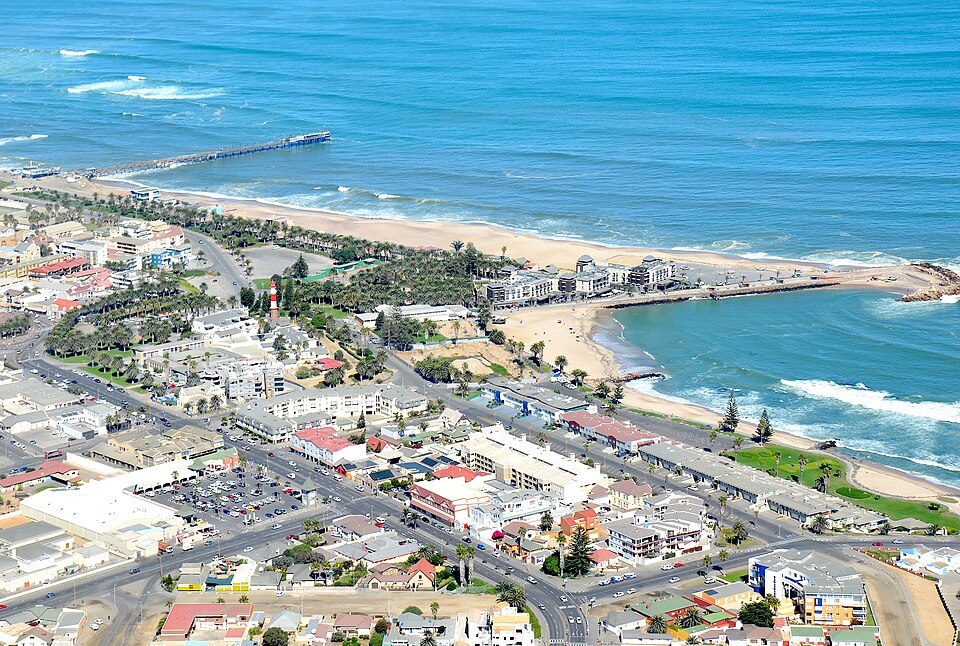
Swakopmund: Namibia's Gateway to Global Connectivity
Swakopmund, a picturesque coastal city in western Namibia, serves as the country's sole submarine cable landing point, connecting Namibia to the global digital ecosystem. Despite its modest size, with a population of just over 25,000, Swakopmund plays a pivotal role in Namibia's international telecommunications infrastructure. Two submarine cables land here: the West Africa Cable System (WACS) and Equiano.Two Cables, One Landing Point
Swakopmund is unique in Namibia's connectivity landscape. The country has only one landing point for submarine cables, and both of its international cables converge here. The WACS cable, operational since 2012, spans 14,530 km and links Namibia to 12 other landing points across West Africa, Europe, and Southern Africa. It connects Swakopmund to locations such as Yzerfontein in South Africa, Praia in Cape Verde, and Seixal in Portugal. This cable was Namibia's first direct connection to the global internet, marking a significant step forward for the country's digital infrastructure. Equiano, the newer cable, became operational in 2023. Stretching an impressive 15,000 km, it links Swakopmund to five other landing points, including Lagos, Nigeria; Sesimbra, Portugal; and Melkbosstrand, South Africa. With its modern design and higher capacity, Equiano enhances Namibia's ability to handle increasing data traffic and supports faster, more reliable connections.Latency and Performance
GeoCables' own latency measurements highlight Swakopmund's performance as a landing point. Across 12 completed checks from six source cities, the average round-trip latency to Swakopmund was 237 ms, with the best observed latency being an impressive 29 ms. These figures demonstrate the efficiency of Namibia's international links, particularly for a country with only one cable landing point.Swakopmund's Role in Namibia's Connectivity
Swakopmund's importance extends beyond its cables. As the capital of the Erongo administrative district, the city is well-connected to the rest of Namibia via the B2 main road, which links it to Windhoek, the nation's capital. This physical connectivity complements its digital role, as data from Swakopmund flows through domestic networks to reach Namibia's inland cities and industries. The city's coastal location also makes it a strategic choice for cable landings. Submarine cables require stable, accessible shorelines, and Swakopmund's geography provides just that. From here, Namibia's digital traffic is routed through regional trunks to reach international hubs, enabling businesses, government institutions, and individuals across the country to access global services.Conclusion
Swakopmund may be a small city, but its role in Namibia's telecommunications infrastructure is anything but minor. As the landing point for both WACS and Equiano, it connects Namibia to the world, supporting everything from everyday internet use to the country's broader economic ambitions. With modern cables and efficient latency performance, Swakopmund ensures that Namibia remains plugged into the global digital network, one connection at a time.What next: Swakopmund, Namibia in the global directory of cable landing points; see surrounding routes on the interactive submarine cable map or follow live network monitoring.
Landing Point
- CountryNA Namibia
- Coordinates22.6783°S 14.5281°E
- Connected Cables2
See Real Cable Routes
View actual submarine cable routing from Swakopmund, Namibia - with backbone nodes, distance calculations, and latency estimates
Open Calculator →
Submarine cables
Land fiber
Live probes