San Carlos, Philippines
Landing Point · PH Philippines
Connected Cables
| Cable | Status |
|---|---|
| Converge Domestic Submarine Cable Network (CDSCN) | Active |
| Philippine Domestic Submarine Cable Network (PDSCN) | Active |
Live Performance
RTT measurements to this landing point from 2026-05-06 through 2026-10-07 - live ICMP round-trip time via our monitoring probes. Recomputed daily. ✓ No anomalies detected in the monitored period.
Measurement sources
| Probe | Location | Samples | Avg |
|---|---|---|---|
| own probe | Almaty KZ | 10 | 310.1 ms |
| #6410 own probe | Sao Paulo BR | 9 | 329.5 ms |
| #6427 own probe | Sydney AU | 9 | 220.2 ms |
| #7062 own probe | Cape Town ZA | 9 | 300.1 ms |
| #1002398 | control probe | 5 | 147.7 ms |
| own probe | Tbilisi GE | 5 | 284.6 ms |
| #6487 | control probe | 4 | 47.6 ms |
| #1006475 | control probe | 4 | 37.6 ms |
| #1011902 | control probe | 3 | 54.9 ms |
| own probe | Minsk BY | 2 | 273.8 ms |
| own probe | Jerusalem IL | 2 | 314.4 ms |
| own probe | Moscow RU | 2 | 237.0 ms |
| #6568 own probe | Singapore SG | 1 | 57.1 ms |
| #6887 | control probe | 1 | 0.2 ms |
| own probe | Saint Petersburg RU | 1 | 235.1 ms |
About San Carlos, Philippines
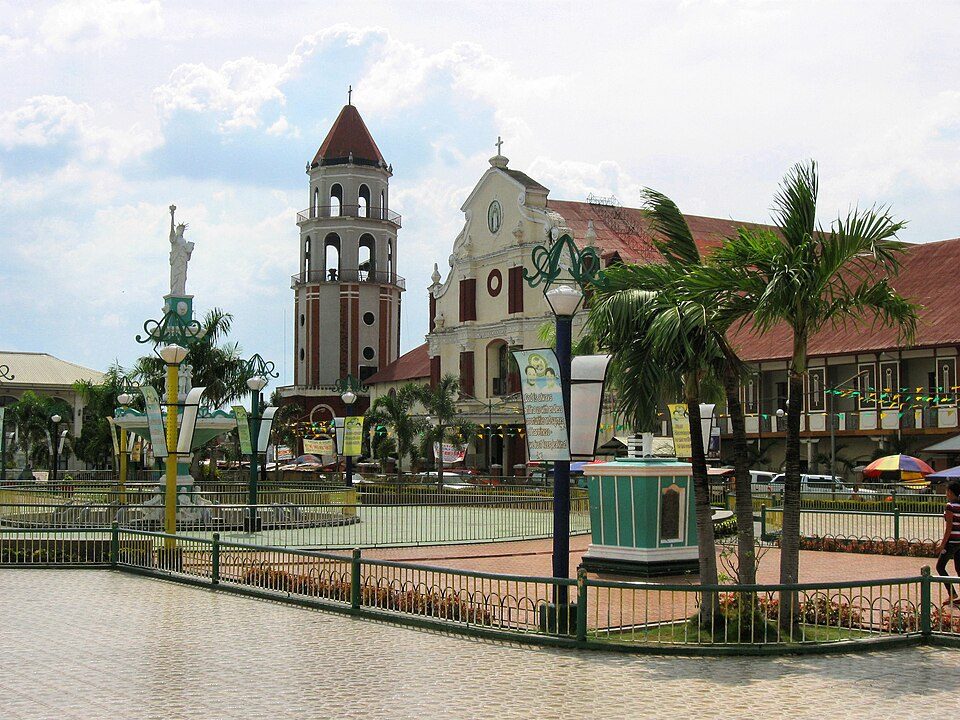
San Carlos, Philippines: Submarine Cable Landing Point
San Carlos is a city in the province of Pangasinan, Philippines, and serves as a submarine cable landing point on the Philippine coast. Two submarine cables come ashore here, both operating as domestic networks connecting multiple points within the Philippine archipelago. The cables landing at San Carlos reflect the country's ongoing investment in internal connectivity across its many islands.
Both cables at San Carlos are entirely domestic in scope, linking Philippine landing points to one another rather than extending to foreign shores. This positions San Carlos as a node within the Philippines' intra-archipelago submarine cable corridor, enabling data transit between regions of the country through undersea fiber routes.
Cables Landing at San Carlos
The Philippine Domestic Submarine Cable Network (PDSCN) is a domestic submarine cable with a total length of 2,500 km. Marked as draft with a ready-for-service year of 2023, this cable connects multiple landing points across the Philippines, with San Carlos serving as one of its termination points. All endpoints of the PDSCN are located within the Philippines.
The Converge Domestic Submarine Cable Network (CDSCN) is a domestic submarine cable spanning 1,300 km, with a ready-for-service year of 2021, also listed as draft. Like the PDSCN, it connects landing points entirely within the Philippines. San Carlos is among the cities where the CDSCN comes ashore, contributing to the domestic fiber ring that this network establishes across the archipelago.
Regional Context
Within the Philippines, San Carlos hosts 2 submarine cables, placing it in the top 82% of the country's 71 landing points by cable count. Several other Philippine landing points carry heavier loads: Batangas, Cagayan de Oro, Davao, and Taytay each host 4 cables, while Baler and Boracay each host 3. San Carlos sits below these busier nodes but remains an active participant in the country's domestic submarine cable infrastructure.
Network Role
San Carlos functions as a domestic submarine cable hub, with both of its cables dedicated entirely to intra-Philippine connectivity. Rather than providing international links, the landing point contributes to the internal data circulation network that knits together the many islands and coastal cities of the archipelago. With the PDSCN at 2,500 km and the CDSCN at 1,300 km, the combined cable length accessible through San Carlos represents a meaningful share of domestic undersea capacity.
As a two-cable landing point in a country with 26 submarine cables spread across 71 landing points, San Carlos represents the distributed nature of the Philippines' approach to domestic submarine connectivity. Its presence in the network ensures that Pangasinan, the Philippines' most populous province in the Ilocos Region, has direct access to undersea fiber routes linking it to other parts of the country.
What next: San Carlos, Philippines in the global directory of cable landing points; see surrounding routes on the interactive submarine cable map or follow live network monitoring.
Other Landing Points in Philippines
Landing Point
- CountryPH Philippines
- Coordinates10.4837°N 123.4129°E
- Connected Cables2
See Real Cable Routes
View actual submarine cable routing from San Carlos, Philippines - with backbone nodes, distance calculations, and latency estimates
Open Calculator →