Roxas, Philippines
Landing Point · PH Philippines
Connected Cables
| Cable | Status |
|---|---|
| Converge Domestic Submarine Cable Network (CDSCN) | Active |
| Submarine Cable in the Philippines (SCiP) | Active |
Live Performance
RTT measurements to this landing point from 2026-04-14 through 2026-09-26 - live ICMP round-trip time via our monitoring probes. Recomputed daily. ✓ No anomalies detected in the monitored period.
Measurement sources
| Probe | Location | Samples | Avg |
|---|---|---|---|
| own probe | Almaty KZ | 11 | 304.4 ms |
| #6427 own probe | Sydney AU | 10 | 196.8 ms |
| #6410 own probe | Sao Paulo BR | 9 | 327.7 ms |
| #7062 own probe | Cape Town ZA | 8 | 299.1 ms |
| #53161 | control probe | 7 | 50.1 ms |
| #62625 | control probe | 7 | 104.6 ms |
| #64843 | control probe | 7 | 35.4 ms |
| own probe | Tbilisi GE | 6 | 280.4 ms |
| #6487 | control probe | 4 | 45.8 ms |
| own probe | Minsk BY | 4 | 248.0 ms |
| own probe | Jerusalem IL | 2 | 309.9 ms |
| own probe | Sevastopol UA | 2 | 277.8 ms |
| own probe | Moscow RU | 2 | 239.4 ms |
| own probe | Rostov RU | 1 | 276.7 ms |
About Roxas, Philippines
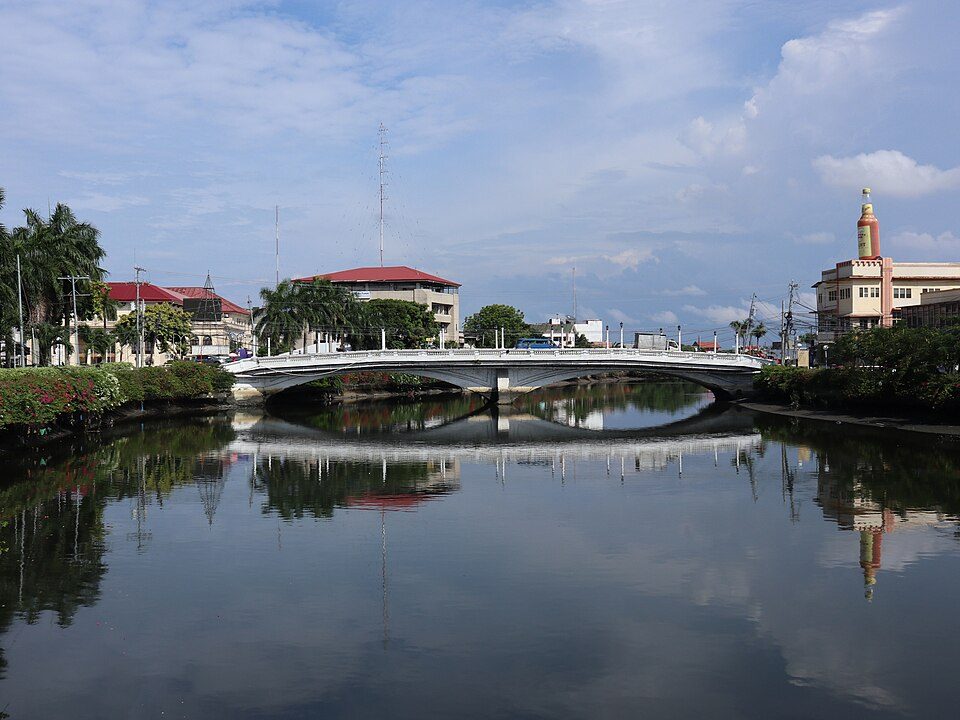
Roxas, Philippines: Submarine Cable Landing Point
Roxas is a city on the island of Panay in the Western Visayas region of the Philippines, serving as the capital of the province of Capiz. As a coastal settlement, it has become a landing point for submarine cable infrastructure connecting it to the broader domestic cable network of the Philippine archipelago. Two submarine cables come ashore at Roxas, both operating within the Philippines as domestic systems designed to improve connectivity across the country's many islands.
Both cables landing at Roxas - the Submarine Cable in the Philippines (SCiP) and the Converge Domestic Submarine Cable Network (CDSCN) - are entirely domestic in scope, linking Filipino cities and provinces to one another rather than extending to international destinations. This makes Roxas a node within an intra-archipelago corridor, supporting inter-island connectivity across the Philippine island groups.
Cables Landing at Roxas
The Submarine Cable in the Philippines (SCiP) is a domestic submarine cable system with a total length of 1,638 kilometres. It reached ready-for-service (RFS) status in 2022 and connects multiple landing points within the Philippines. Roxas is one of its Philippine endpoints, and the cable does not extend beyond Philippine territory.
The Converge Domestic Submarine Cable Network (CDSCN) is a domestic submarine cable with a total length of 1,300 kilometres. It became ready for service in 2021 and likewise connects landing points exclusively within the Philippines. Like SCiP, CDSCN links Roxas to other points in the Philippine archipelago without extending to any foreign country.
Regional Context
Within the Philippines, which hosts 26 submarine cables across 71 landing points, Roxas sits among a number of landing points that serve the domestic network. Several other Philippine cities - including Batangas, Cagayan de Oro, Davao, and Taytay - each host four cables, while Baler and Boracay host three. With two cables, Roxas ranks in the upper 82 percent of Philippine landing points by cable count, placing it in a mid-tier position relative to its regional peers.
Network Role
Roxas functions as a two-cable landing point within the Philippine domestic submarine cable infrastructure. Both cables terminating here - SCiP and CDSCN - are inter-island systems, meaning Roxas serves as a point of connection between Panay and other islands or provinces within the archipelago. The city is not a terminus for any international submarine cable system.
As a landing point served by two separate domestic cable systems from different deployment years (2021 and 2022), Roxas benefits from a degree of route diversity within the national network. In the broader Philippine submarine cable graph, its role is that of a domestic inter-island node, extending organised cable infrastructure into the Western Visayas region.
What next: Roxas, Philippines in the global directory of cable landing points; see surrounding routes on the interactive submarine cable map or follow live network monitoring.
Other Landing Points in Philippines
Landing Point
- CountryPH Philippines
- Coordinates12.5864°N 121.5277°E
- Connected Cables2
See Real Cable Routes
View actual submarine cable routing from Roxas, Philippines - with backbone nodes, distance calculations, and latency estimates
Open Calculator →