Porthcurno, United Kingdom
Landing Point · GB United Kingdom
3
Connected Cables
GB
Country
50.04°
Latitude
5.65°
Longitude
Ctrl + Scroll to zoom
Connected Cables
| Cable | Status |
|---|---|
| FLAG Europe-Asia (FEA) | Active |
| High-capacity Undersea Guernsey Optical-fibre (HUGO) | Active |
| Isles of Scilly Cable | Active |
Live Performance
44
measurements
11
probes
119
days monitored
42.4
ms avg RTT
0
anomalies
RTT measurements to this landing point from 2026-04-10 through 2026-08-07 - live ICMP round-trip time via our monitoring probes. Recomputed daily. ✓ No anomalies detected in the monitored period.
Measurement sources
| Probe | Location | Samples | Avg |
|---|---|---|---|
| #61861 | control probe | 29 | 16.4 ms |
| own probe | Minsk BY | 3 | 40.2 ms |
| own probe | Almaty KZ | 2 | 100.3 ms |
| own probe | Tbilisi GE | 2 | 64.3 ms |
| own probe | Jerusalem IL | 2 | 113.2 ms |
| #6427 own probe | Sydney AU | 1 | 254.5 ms |
| #6487 | control probe | 1 | 235.7 ms |
| own probe | Sevastopol UA | 1 | 82.3 ms |
| own probe | Moscow RU | 1 | 47.1 ms |
| own probe | Saint Petersburg RU | 1 | 42.8 ms |
| own probe | Kyiv UA | 1 | 50.9 ms |
About Porthcurno, United Kingdom
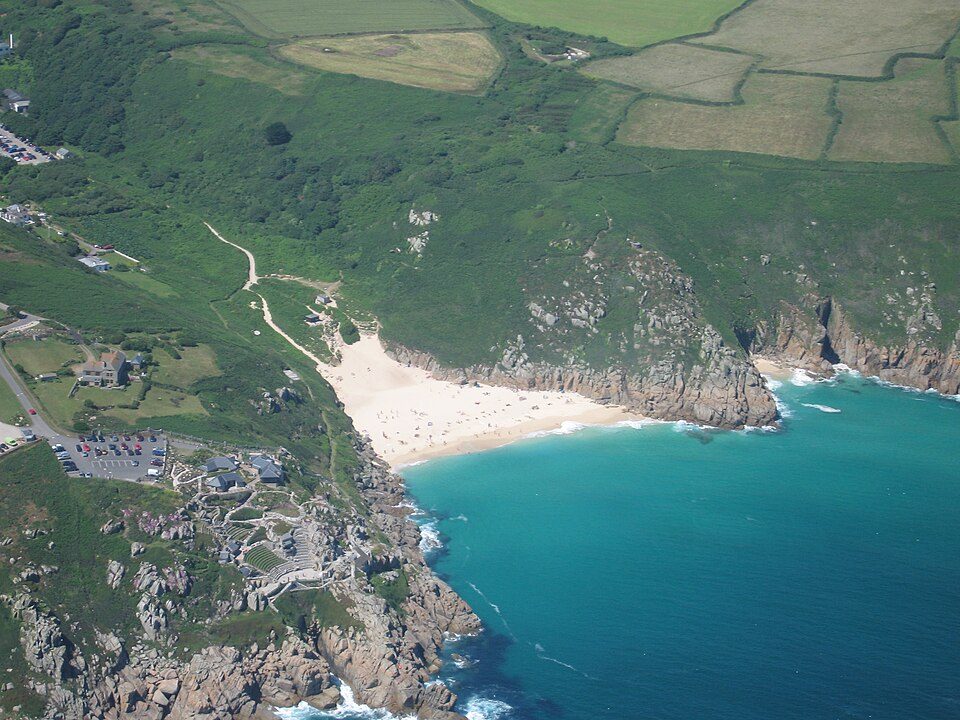
Porthcurno: A Historic Gateway to Global Connectivity
Porthcurno, a small village nestled in a picturesque valley on the south coast of Cornwall, United Kingdom, is more than just a serene beach destination. Despite its modest size, this quiet settlement plays a significant role in global communications, hosting three submarine cables that connect the UK to the world.A Landing Point with Global Reach
Porthcurno is home to three submarine cables, each serving distinct purposes and destinations. The FLAG Europe-Asia (FEA) cable, operational since 1997, is the longest of the three, stretching an impressive 28,000 km. This cable connects Porthcurno to 13 other landing points across the globe, including major hubs like Alexandria in Egypt, Mumbai in India, and Miura in Japan. Through this cable, Porthcurno serves as a gateway to Asia, linking the UK to countries such as China, Malaysia, and Jordan. The High-capacity Undersea Guernsey Optical-fibre (HUGO) cable, established in 2007, is a shorter regional connection at 425 km. It links Porthcurno to France and Guernsey, with additional landing points at Lannion, Pembroke, and Saints Bay. This cable underscores Porthcurno's role in facilitating regional connectivity within Europe. Lastly, the Isles of Scilly Cable, operational since 2014, is a domestic link connecting Porthcurno to Porthcressa Beach on the Isles of Scilly. This cable ensures reliable communication between mainland Cornwall and the remote island community.Positioning Porthcurno Among Regional Peers
While Porthcurno hosts three cables, it stands out for its strategic importance despite being smaller in scale compared to other UK landing points. Nearby Bude, for instance, hosts eight cables, while Lowestoft and Blackpool handle six and four cables, respectively. Even Broadstairs and Southport, each hosting three cables like Porthcurno, serve larger urban areas. What sets Porthcurno apart is its unique blend of global and regional connectivity, combining intercontinental reach with domestic and European links.Latency and Performance
GeoCables' latency measurements reveal impressive performance from Porthcurno. Across 52 completed checks from 11 source cities, the average round-trip latency is just 39 ms, with a best-observed latency of 1 ms. These figures highlight the efficiency and reliability of the cables landing here, ensuring seamless communication for both regional and international data transfers.A Place of Historical Significance
Porthcurno's role in communications is not a recent development. Historically, it was the site of one of the world's largest telegraph stations, connecting Britain to its global empire during the 19th and early 20th centuries. Today, the village continues this legacy, albeit through modern fiber-optic technology, maintaining its place as a key node in global connectivity.Conclusion
Porthcurno may be a small village, but its impact on global communications is outsized. Hosting three submarine cables that link the United Kingdom to Europe, Asia, and its own island communities, Porthcurno exemplifies how even the most tranquil places can play pivotal roles in the digital age. Whether facilitating international data flows or ensuring connectivity for nearby islands, Porthcurno remains a key player in the UK's submarine cable network.What next: Porthcurno, United Kingdom in the global directory of cable landing points; see surrounding routes on the interactive submarine cable map or follow live network monitoring.
Other Landing Points in United Kingdom
GB Aberdeen, United Kingdom
57.1538°N 2.1068°W
GB Achnaba, United Kingdom
56.0194°N 5.3658°W
GB Aikerness Bay, United Kingdom
59.1180°N 3.0951°W
GB Aldeburgh, United Kingdom
52.1578°N 1.5906°E
GB Ardbeg Point, United Kingdom
55.8586°N 5.0636°W
GB Ardgour, United Kingdom
56.7216°N 5.2337°W
GB Ardmair, United Kingdom
57.9341°N 5.1962°W
GB Ardnacross, United Kingdom
55.4765°N 5.5334°W
GB Ardneil Bay, United Kingdom
55.6930°N 4.8894°W
GB Ardvasar, United Kingdom
57.0594°N 5.9065°W
GB Ardyne Point, United Kingdom
55.8694°N 5.0200°W
GB Ayre of Cara, United Kingdom
58.8333°N 2.9001°W
FAQ
Landing Point
- CountryGB United Kingdom
- Coordinates50.0430°N 5.6545°W
- Connected Cables3
See Real Cable Routes
View actual submarine cable routing from Porthcurno, United Kingdom - with backbone nodes, distance calculations, and latency estimates
Open Calculator →
Submarine cables
Land fiber
Live probes