Otter Ferry, United Kingdom
Landing Point · GB United Kingdom
Connected Cables
| Cable | Status |
|---|---|
| BT Highlands and Islands Submarine Cable System | Active |
Live Performance
RTT measurements to this landing point from 2026-04-22 through 2026-10-10 - live ICMP round-trip time via our monitoring probes. Recomputed daily. ✓ No anomalies detected in the monitored period.
Measurement sources
| Probe | Location | Samples | Avg |
|---|---|---|---|
| own probe | Minsk BY | 10 | 43.0 ms |
| own probe | Moscow RU | 8 | 48.5 ms |
| #6427 own probe | Sydney AU | 6 | 265.1 ms |
| #6487 | control probe | 4 | 174.5 ms |
| own probe | Almaty KZ | 4 | 98.3 ms |
| own probe | Tbilisi GE | 4 | 65.7 ms |
| own probe | Jerusalem IL | 4 | 69.2 ms |
| own probe | Kyiv UA | 4 | 48.8 ms |
| own probe | Saint Petersburg RU | 3 | 42.7 ms |
| own probe | Sevastopol UA | 2 | 79.5 ms |
| #6568 own probe | Singapore SG | 1 | 157.8 ms |
| #7062 own probe | Cape Town ZA | 1 | 145.3 ms |
| own probe | Odessa UA | 1 | 53.5 ms |
About Otter Ferry, United Kingdom
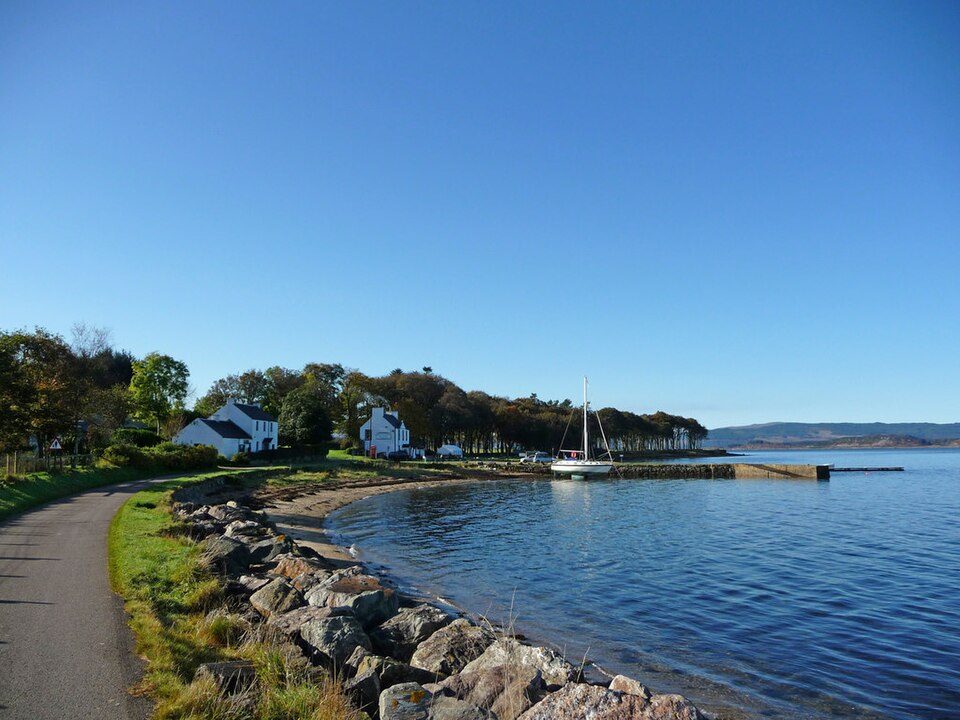
Otter Ferry: Submarine Cable Landing Point
Otter Ferry is a settlement on the Cowal Peninsula in Argyll and Bute, west of Scotland, within the United Kingdom. Situated along the shore of Loch Fyne, this coastal location serves as a landing point for one submarine cable connecting communities across Scotland. The cable landing here forms part of a domestic United Kingdom corridor, linking Scottish territories rather than spanning international boundaries.
The single cable that lands at Otter Ferry is the BT Highlands and Islands Submarine Cable System, a domestically focused system that connects multiple points within the United Kingdom. Its presence at this small west of Scotland settlement reflects the use of submarine cable technology to serve remote and island communities in the Scottish Highlands and Islands region, where overland connectivity can be challenging due to terrain and geography.
Cables Landing at Otter Ferry
The BT Highlands and Islands Submarine Cable System is the sole submarine cable landing at Otter Ferry. Spanning 402 km, this system reached ready-for-service status in 2014 and connects locations entirely within the United Kingdom. The cable is a domestic system, with all of its endpoints situated within the same country, indicating a purpose of bridging geographically separated communities within Scotland and the surrounding islands rather than providing international connectivity.
Regional Context
The United Kingdom hosts 66 submarine cables across 125 landing points, and Otter Ferry, with its single cable, ranks within the top 88% of those landing points by cable count. Compared to prominent UK landing points such as Bude, which hosts eight cables, or Lowestoft with six, Otter Ferry is a modest, single-cable terminus. Its role is clearly distinct from the major international cable hubs found elsewhere on the UK coastline, instead serving a regional domestic function within Scotland.
Network Role
Otter Ferry functions as a single-cable terminus within the United Kingdom's domestic submarine cable network. The BT Highlands and Islands Submarine Cable System, landing here at 402 km in length, enables connectivity between the Cowal Peninsula and other points along the Scottish coast and island communities, all within the United Kingdom. This is not a multi-cable hub nor an international gateway; it is a targeted domestic landing point serving geographically isolated communities.
Within the broader Scottish and UK submarine cable graph, Otter Ferry represents the type of smaller, purpose-built landing point that ensures remote communities along difficult terrain can be reached by subsea infrastructure. Its presence demonstrates that submarine cables serve not only intercontinental routes but also intra-national connectivity needs in regions where land-based alternatives are constrained.
What next: Otter Ferry, United Kingdom in the global directory of cable landing points; see surrounding routes on the interactive submarine cable map or follow live network monitoring.
Other Landing Points in United Kingdom
Landing Point
- CountryGB United Kingdom
- Coordinates56.0083°N 5.3212°W
- Connected Cables1
See Real Cable Routes
View actual submarine cable routing from Otter Ferry, United Kingdom - with backbone nodes, distance calculations, and latency estimates
Open Calculator →