Nesna, Norway
Landing Point · NO Norway
Connected Cables
| Cable | Status |
|---|---|
| Polar Circle Cable | Active |
| Tverrlinken | Active |
Live Performance
RTT measurements to this landing point from 2026-03-20 through 2026-09-04 - live ICMP round-trip time via our monitoring probes. Recomputed daily. ✓ No anomalies detected in the monitored period.
Measurement sources
| Probe | Location | Samples | Avg |
|---|---|---|---|
| own probe | Minsk BY | 11 | 49.2 ms |
| own probe | Moscow RU | 7 | 38.8 ms |
| #6410 own probe | Sao Paulo BR | 6 | 219.9 ms |
| #6427 own probe | Sydney AU | 6 | 269.5 ms |
| own probe | Tbilisi GE | 5 | 72.8 ms |
| own probe | Jerusalem IL | 5 | 77.3 ms |
| own probe | Almaty KZ | 4 | 125.1 ms |
| own probe | Sevastopol UA | 3 | 72.0 ms |
| own probe | Saint Petersburg RU | 2 | 22.4 ms |
| own probe | Odessa UA | 2 | 59.7 ms |
| own probe | Kyiv UA | 1 | 59.8 ms |
About Nesna, Norway
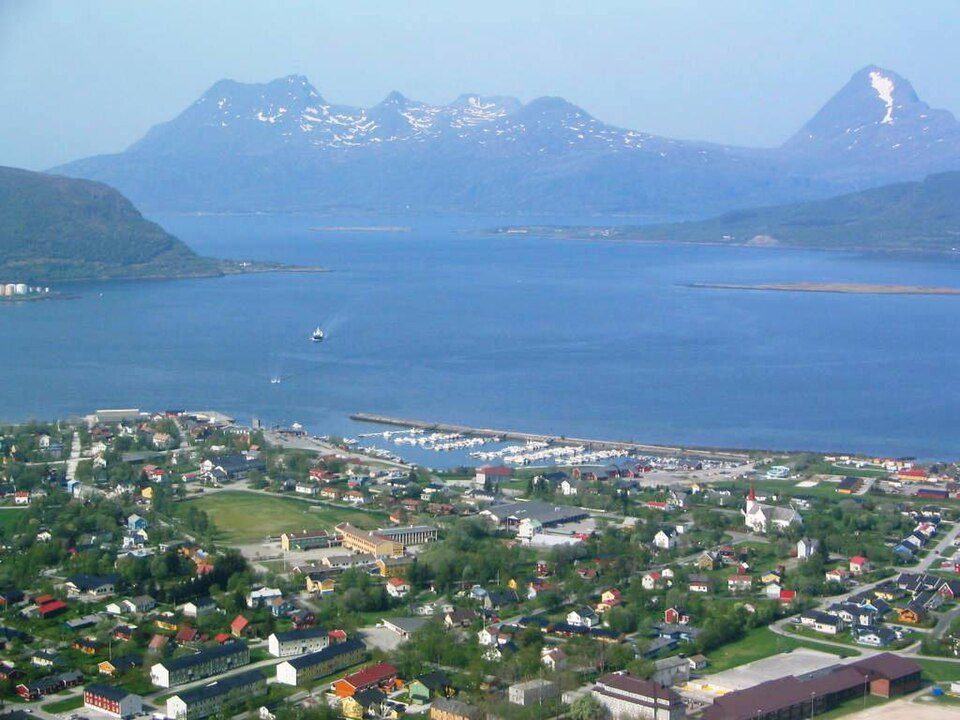
Nesna: Submarine Cable Landing Point
Nesna is a municipality in Nordland county, Norway, situated within the Helgeland traditional region along the Norwegian coast. As a submarine cable landing point, Nesna hosts two cables - the Polar Circle Cable and Tverrlinken - both of which connect points within Norway, establishing it as a node in the country's domestic submarine cable network rather than an international gateway.
Both cables landing at Nesna serve intra-Norwegian connectivity, linking communities and regions along the Norwegian coastline. This positions Nesna as part of the infrastructure that underpins domestic telecommunications along the northern and mid-Norwegian seaboard, a corridor where overland routing can be challenging given the terrain and geography of the region.
Cables Landing at Nesna
The Polar Circle Cable has a length of 1,004 km and reached ready-for-service status in 2007, currently listed at draft status. Its endpoints are confined to Norway, making it a domestic cable running between Norwegian landing points along what its name suggests is a high-latitude corridor near or around the Arctic Circle.
The Tverrlinken cable reached ready-for-service status in 2010 and is also listed at draft status. Like the Polar Circle Cable, its other endpoints are located within Norway, confirming its role as a domestic submarine link. No length information is available for Tverrlinken.
Regional Context
Within Norway's submarine cable landscape, which spans 18 cables across 43 landing points, Nesna's two cables place it in the upper 88 percent of Norwegian landing points by cable count. Major Norwegian hubs such as Kristiansand (7 cables), Stavanger (4 cables), and Bergen (3 cables) host significantly more cables, while Nesna is comparable to Kårstø, which also hosts two cables. Bodø and Longyearbyen, both with three cables each, represent the nearest tier above Nesna in terms of cable count among Norway's northern and Arctic landing points.
Network Role
Nesna functions as a two-cable landing point serving exclusively domestic Norwegian connectivity. Both the Polar Circle Cable and Tverrlinken terminate within Norway, meaning Nesna does not participate in any international or intercontinental submarine cable routes. Its role is therefore that of a regional node supporting intra-Norwegian communications along a northern coastal corridor.
Within the broader Norwegian submarine cable graph, Nesna represents one of several mid-tier domestic landing points that collectively ensure connectivity reaches communities across the country's extended and geographically complex coastline. The presence of two separate cables at Nesna provides a degree of path diversity for the locality it serves.
What next: Nesna, Norway in the global directory of cable landing points; see surrounding routes on the interactive submarine cable map or follow live network monitoring.
Other Landing Points in Norway
Landing Point
- CountryNO Norway
- Coordinates66.1981°N 13.0182°E
- Connected Cables2
See Real Cable Routes
View actual submarine cable routing from Nesna, Norway - with backbone nodes, distance calculations, and latency estimates
Open Calculator →