Longyearbyen, Svalbard, Norway
Landing Point · NO Norway
Connected Cables
| Cable | Status |
|---|---|
| Arctic Way | Planned |
| Longyearbyen-Ny-Ålesund | Active |
| Svalbard Undersea Cable System | Active |
Live Performance
RTT measurements to this landing point from 2026-04-18 through 2026-08-31 - live ICMP round-trip time via our monitoring probes. Recomputed daily. ✓ No anomalies detected in the monitored period.
Measurement sources
| Probe | Location | Samples | Avg |
|---|---|---|---|
| own probe | Minsk BY | 7 | 52.7 ms |
| own probe | Moscow RU | 6 | 35.3 ms |
| #6427 own probe | Sydney AU | 4 | 270.4 ms |
| #7062 own probe | Cape Town ZA | 4 | 187.4 ms |
| own probe | Almaty KZ | 3 | 116.1 ms |
| own probe | Tbilisi GE | 3 | 70.2 ms |
| own probe | Jerusalem IL | 3 | 75.5 ms |
| own probe | Saint Petersburg RU | 3 | 21.7 ms |
| own probe | Sevastopol UA | 2 | 58.4 ms |
| own probe | Kyiv UA | 1 | 48.4 ms |
About Longyearbyen, Svalbard, Norway
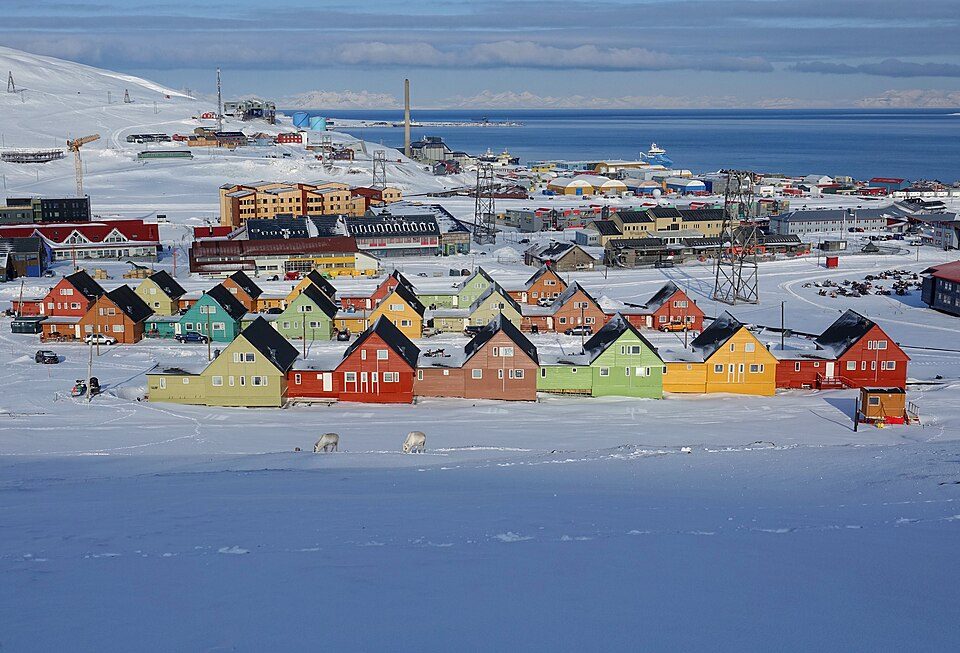
Longyearbyen, Svalbard: Submarine Cable Landing Point
Longyearbyen is the capital and largest settlement of Svalbard, a Norwegian archipelago in the High Arctic located on the west coast of Spitsbergen island, along the shore of Adventfjorden. As the world's northernmost settlement of its size, Longyearbyen sits at one of the most geographically extreme submarine cable landing points on Earth. Three submarine cables land here, making it a notable node in Norway's Arctic cable infrastructure and connecting the archipelago to the Norwegian mainland via dedicated undersea links.
All three cables landing at Longyearbyen connect within Norway, forming an intra-national corridor that links Svalbard to the Norwegian mainland. The cables include the Svalbard Undersea Cable System, the Arctic Way, and the shorter Longyearbyen-Ny-Ålesund system, which connects Longyearbyen to the research settlement of Ny-Ålesund further north on Svalbard itself. Together, these systems reflect the distinct role Longyearbyen plays as a gateway for high-latitude connectivity within Norwegian territory.
Cables Landing at Longyearbyen, Svalbard
The Svalbard Undersea Cable System spans 2,714 km and entered service in 2004. It connects Longyearbyen to the Norwegian mainland, forming one of the primary links between Svalbard and continental Norway. This cable was among the first to bring dedicated undersea connectivity to the archipelago.
The Arctic Way is a 2,568 km cable with a planned ready-for-service date of 2028. Like the Svalbard Undersea Cable System, it connects Longyearbyen to Norway, and its completion will add a further intra-Norwegian undersea route serving the High Arctic region.
The Longyearbyen-Ny-Ålesund cable is a shorter system of 540 km that entered service in 2015. It connects Longyearbyen to Ny-Ålesund, another settlement on Svalbard, making it an inter-settlement cable entirely within the archipelago rather than a link to the mainland. This cable provides dedicated undersea connectivity between two of Svalbard's populated and research-active locations.
Regional Context
Within Norway's submarine cable landscape, Longyearbyen ranks among the more connected landing points, hosting 3 cables and placing it in the top 95% of Norway's 43 landing points by cable count. It sits below larger Norwegian hubs such as Kristiansand, which hosts 7 cables, and Stavanger and Bergen, which host 4 and 3 cables respectively. However, Longyearbyen's significance is shaped less by cable volume and more by its unique Arctic geography, which distinguishes its connectivity profile from mainland Norwegian landing points such as Bodø, Kårstø, and Larvik.
Network Role
Longyearbyen functions as a multi-cable landing point serving exclusively intra-Norwegian routes, linking Svalbard to the Norwegian mainland and connecting settlements within the archipelago itself. With two long-distance cables to the mainland - one operational since 2004 and one due in 2028 - and one inter-settlement cable running to Ny-Ålesund since 2015, the landing point supports both external and internal connectivity for Svalbard's populated areas. The combination of these three systems means Longyearbyen is served by redundant and complementary undersea links within the same national framework.
Longyearbyen's position in the regional submarine cable graph is defined by its role as the primary Arctic entry point for Norwegian domestic undersea routes, anchoring Svalbard's connection to the mainland while also serving as the hub for the archipelago's own internal cable link.
What next: Longyearbyen, Svalbard, Norway in the global directory of cable landing points; see surrounding routes on the interactive submarine cable map or follow live network monitoring.
Other Landing Points in Norway
FAQ
Landing Point
- CountryNO Norway
- Coordinates78.2185°N 15.6488°E
- Connected Cables3
See Real Cable Routes
View actual submarine cable routing from Longyearbyen, Svalbard, Norway - with backbone nodes, distance calculations, and latency estimates
Open Calculator →