Lepe, United Kingdom
Landing Point · GB United Kingdom
1
Connected Cables
GB
Country
50.79°
Latitude
1.37°
Longitude
Ctrl + Scroll to zoom
Connected Cables
| Cable | Status |
|---|---|
| Cowes-Fawley 2 | Active |
Live Performance
15
measurements
6
probes
53
days monitored
142.6
ms avg RTT
0
anomalies
RTT measurements to this landing point from 2026-06-21 through 2026-08-13 - live ICMP round-trip time via our monitoring probes. Recomputed daily. ✓ No anomalies detected in the monitored period.
Measurement sources
| Probe | Location | Samples | Avg |
|---|---|---|---|
| #6427 own probe | Sydney AU | 3 | 400.6 ms |
| #6487 | control probe | 3 | 177.0 ms |
| own probe | Minsk BY | 3 | 40.8 ms |
| own probe | Kyiv UA | 3 | 48.8 ms |
| own probe | Saint Petersburg RU | 2 | 42.9 ms |
| own probe | Odessa UA | 1 | 51.4 ms |
About Lepe, United Kingdom
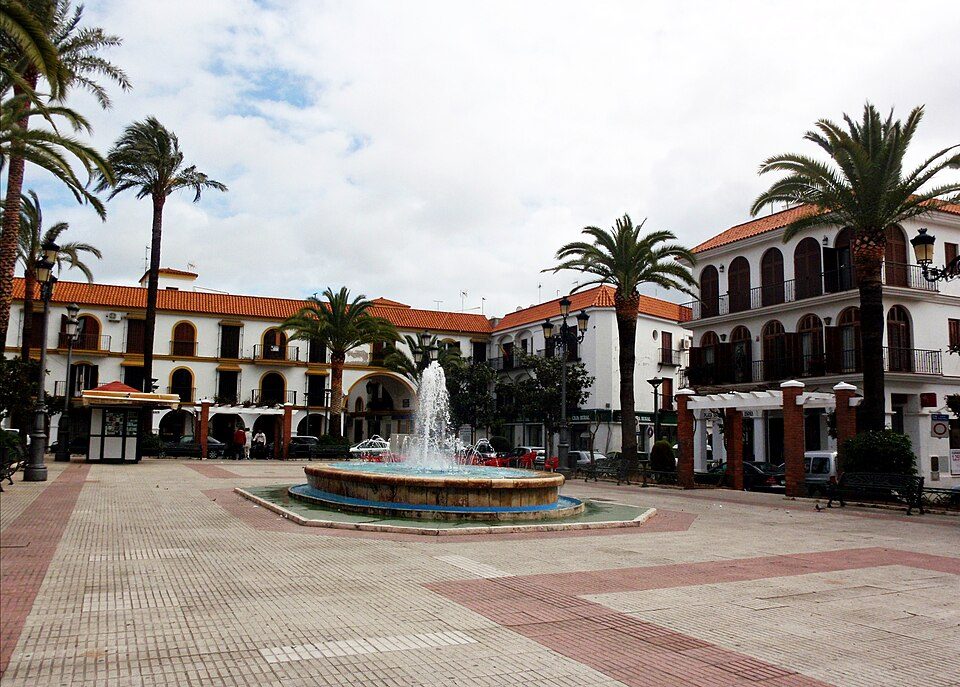
Lepe, United Kingdom: A Quiet Link in Domestic Connectivity
Lepe, United Kingdom, is a small and relatively understated landing point in the country's extensive submarine cable network. Hosting just one cable, the Cowes-Fawley 2, it is part of a domestic chain that connects the Isle of Wight to the mainland. While other landing points in the United Kingdom boast multiple international cables, Lepe serves a more modest but important role in regional connectivity.The Cowes-Fawley 2 Cable
The Cowes-Fawley 2 cable, operational since 2018, is a domestic link that connects Lepe to Gurnard on the Isle of Wight. Unlike major landing points such as Bude or Lowestoft, which host multiple cables and serve as gateways to international networks, Lepe’s cable is purely local. This highlights its role in stitching together the southern coastal infrastructure of the United Kingdom rather than facilitating global communication. The cable's short span reflects its purpose: ensuring reliable connectivity between the Isle of Wight and the mainland. While Lepe is not a hub of activity compared to larger landing points, its inclusion in the chain ensures that even smaller communities benefit from stable digital access.Regional Positioning
Lepe stands in sharp contrast to some of its regional peers. Bude, for instance, hosts eight cables, making it one of the busiest landing points in the United Kingdom. Similarly, Lowestoft and Blackpool each host multiple cables, serving as significant nodes in the country's network. Lepe, with its single cable, ranks in the top 88% of landing points by cable count, underscoring its modest role in the broader infrastructure. Despite its quieter profile, Lepe plays an essential part in ensuring that the Isle of Wight remains connected to mainland networks. This domestic focus is a reminder that not every landing point needs to be a bustling hub; some simply provide reliable links for smaller communities.Latency Observations
GeoCables’ latency measurements for Lepe reveal an average round-trip latency of 159 ms, with the best observed latency at 40 ms. These figures reflect the efficiency of the Cowes-Fawley 2 cable in maintaining fast and reliable communication between its endpoints. While not comparable to the ultra-low latencies of international cables, this performance is more than sufficient for the cable’s domestic role.Conclusion
Lepe, United Kingdom, may not stand out as a major node in the global submarine cable network, but its role in connecting the Isle of Wight to the mainland is significant. As part of the Cowes-Fawley 2 cable chain, it ensures that even smaller communities remain integrated into the digital fabric of the country. In a network dominated by large international landing points, Lepe’s quiet reliability deserves recognition.What next: Lepe, United Kingdom in the global directory of cable landing points; see surrounding routes on the interactive submarine cable map or follow live network monitoring.
Other Landing Points in United Kingdom
GB Aberdeen, United Kingdom
57.1538°N 2.1068°W
GB Achnaba, United Kingdom
56.0194°N 5.3658°W
GB Aikerness Bay, United Kingdom
59.1180°N 3.0951°W
GB Aldeburgh, United Kingdom
52.1578°N 1.5906°E
GB Ardbeg Point, United Kingdom
55.8586°N 5.0636°W
GB Ardgour, United Kingdom
56.7216°N 5.2337°W
GB Ardmair, United Kingdom
57.9341°N 5.1962°W
GB Ardnacross, United Kingdom
55.4765°N 5.5334°W
GB Ardneil Bay, United Kingdom
55.6930°N 4.8894°W
GB Ardvasar, United Kingdom
57.0594°N 5.9065°W
GB Ardyne Point, United Kingdom
55.8694°N 5.0200°W
GB Ayre of Cara, United Kingdom
58.8333°N 2.9001°W
Landing Point
- CountryGB United Kingdom
- Coordinates50.7868°N 1.3675°W
- Connected Cables1
See Real Cable Routes
View actual submarine cable routing from Lepe, United Kingdom - with backbone nodes, distance calculations, and latency estimates
Open Calculator →
Submarine cables
Land fiber
Live probes