Leganes, Philippines
Landing Point · PH Philippines
1
Connected Cables
PH
Country
10.79°
Latitude
122.59°
Longitude
Ctrl + Scroll to zoom
Connected Cables
| Cable | Status |
|---|---|
| Converge Domestic Submarine Cable Network (CDSCN) | Active |
Live Performance
75
measurements
13
probes
163
days monitored
217.7
ms avg RTT
0
anomalies
RTT measurements to this landing point from 2026-04-18 through 2026-09-28 - live ICMP round-trip time via our monitoring probes. Recomputed daily. ✓ No anomalies detected in the monitored period.
Measurement sources
| Probe | Location | Samples | Avg |
|---|---|---|---|
| own probe | Almaty KZ | 12 | 316.6 ms |
| #6427 own probe | Sydney AU | 10 | 212.0 ms |
| #6410 own probe | Sao Paulo BR | 9 | 338.0 ms |
| #7062 own probe | Cape Town ZA | 8 | 305.0 ms |
| #64896 | control probe | 7 | 40.3 ms |
| #1002398 | control probe | 7 | 139.5 ms |
| #1011902 | control probe | 7 | 72.4 ms |
| #6487 | control probe | 4 | 47.2 ms |
| own probe | Tbilisi GE | 4 | 276.5 ms |
| own probe | Minsk BY | 3 | 244.1 ms |
| own probe | Jerusalem IL | 2 | 313.6 ms |
| own probe | Sevastopol UA | 1 | 272.4 ms |
| own probe | Moscow RU | 1 | 231.9 ms |
About Leganes, Philippines
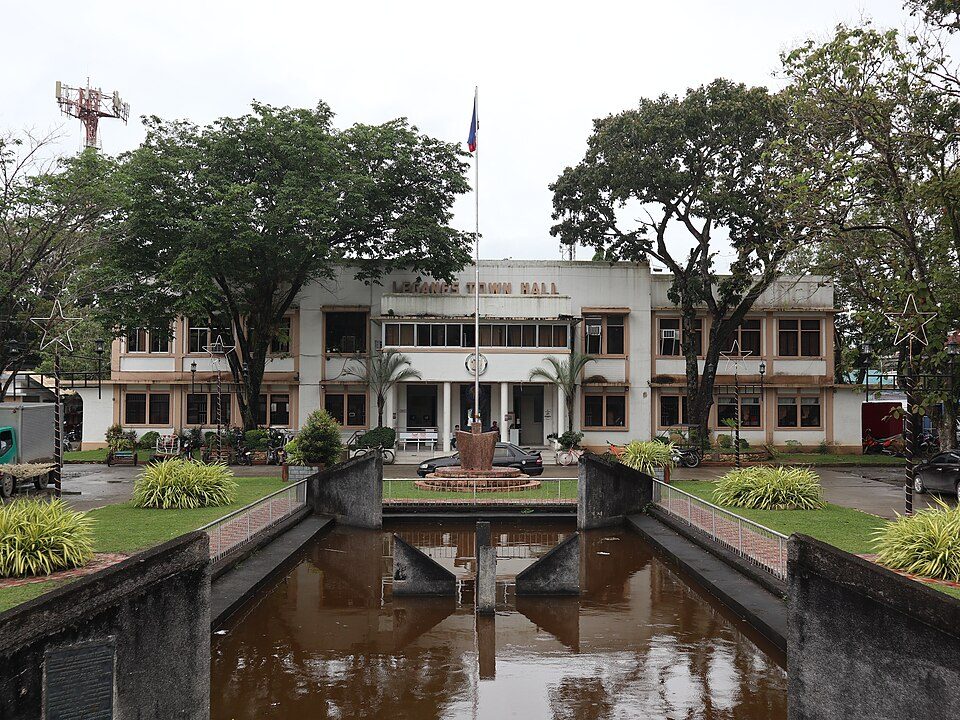
Leganes: A Growing Hub in the Philippines' Domestic Connectivity
Leganes, a municipality in the province of Iloilo, Philippines, plays a modest but meaningful role in the country's submarine cable network. Though it hosts just one cable, the Converge Domestic Submarine Cable Network (CDSCN), this landing point is part of a larger effort to stitch together the Philippines' many islands with reliable domestic connectivity.The Converge Domestic Submarine Cable Network
The CDSCN, which became operational in 2021, spans 1,300 kilometers and connects Leganes to 21 other landing points across the Philippines. These include major hubs like Cagayan de Oro and Boracay, as well as smaller locations such as Buenavista and Milagros. This cable does not extend internationally, focusing instead on domestic links that enable faster and more reliable communication between regions. Leganes is one of 71 landing points in the Philippines, a country with 26 submarine cables overall. While some landing points, such as Batangas and Davao, host multiple cables and serve as major nodes in the network, Leganes holds its own as part of the CDSCN chain. With one cable, it ranks in the top 55% of landing points nationwide by cable count, highlighting its importance in regional connectivity.Connectivity and Latency
GeoCables' own latency measurements reveal that Leganes offers consistent performance for domestic data transfers. Across 13 completed checks from eight source cities, the average round-trip latency to Leganes was 247 milliseconds, with the best observed latency being an impressive 47 milliseconds. These numbers suggest that Leganes is well-integrated into the national network, providing reliable connections for local businesses, residents, and institutions.Leganes in Context
Leganes is a small municipality with a population of 36,542 as of the 2024 census. While it may not have the industrial or technological prominence of larger cities like Davao or Cagayan de Oro, its inclusion in the CDSCN reflects the Philippines' commitment to ensuring that even smaller communities benefit from robust connectivity. This cable enables Leganes to connect seamlessly to other parts of the country, supporting local economic activities and daily communications.Conclusion
The submarine cable landing point in Leganes may not be the largest or most connected in the Philippines, but it plays a key part in the domestic network. As part of the CDSCN chain, Leganes contributes to the broader effort of linking the Philippines' islands, ensuring that even smaller municipalities have access to reliable connectivity. For Leganes, this single cable represents a gateway to the rest of the country, fostering communication and growth in this quiet corner of Iloilo.What next: Leganes, Philippines in the global directory of cable landing points; see surrounding routes on the interactive submarine cable map or follow live network monitoring.
Other Landing Points in Philippines
PH Allen, Philippines
12.5014°N 124.2823°E
PH Baclayon, Philippines
9.6226°N 123.9135°E
PH Bacolod, Philippines
10.6407°N 122.9690°E
PH Bacong, Philippines
9.2463°N 123.2950°E
PH Baler, Philippines
15.7615°N 121.5602°E
PH Ballesteros, Philippines
18.4094°N 121.5140°E
PH Batangas, Philippines
13.7656°N 121.0649°E
PH Bauang, Philippines
16.5140°N 120.3556°E
PH Boac, Philippines
13.4291°N 121.8847°E
PH Bogo, Philippines
11.0459°N 124.0077°E
PH Boracay, Philippines
11.9492°N 121.9448°E
PH Buenavista, Philippines
8.9689°N 125.4207°E
Landing Point
- CountryPH Philippines
- Coordinates10.7866°N 122.5894°E
- Connected Cables1
See Real Cable Routes
View actual submarine cable routing from Leganes, Philippines - with backbone nodes, distance calculations, and latency estimates
Open Calculator →
Submarine cables
Land fiber
Live probes