Kaweni, Mayotte
Landing Point · YT Mayotte
2
Connected Cables
YT
Country
12.82°
Latitude
45.17°
Longitude
Ctrl + Scroll to zoom
Connected Cables
| Cable | Status |
|---|---|
| FLY-LION3 | Active |
| Lower Indian Ocean Network 2 (LION2) | Active |
Live Performance
337
measurements
12
probes
189
days monitored
127.5
ms avg RTT
0
anomalies
RTT measurements to this landing point from 2026-04-10 through 2026-10-16 - live ICMP round-trip time via our monitoring probes. Recomputed daily. ✓ No anomalies detected in the monitored period.
Measurement sources
| Probe | Location | Samples | Avg |
|---|---|---|---|
| #7062 own probe | Cape Town ZA | 111 | 69.0 ms |
| #1005929 | control probe | 89 | 63.6 ms |
| own probe | Jerusalem IL | 75 | 219.2 ms |
| #6427 own probe | Sydney AU | 31 | 414.3 ms |
| #22215 | control probe | 20 | 7.4 ms |
| own probe | Minsk BY | 2 | 9.6 ms |
| own probe | Almaty KZ | 2 | 26.7 ms |
| own probe | Tbilisi GE | 2 | 25.2 ms |
| own probe | Moscow RU | 2 | 19.5 ms |
| #6410 own probe | Sao Paulo BR | 1 | 1.5 ms |
| own probe | Sevastopol UA | 1 | 50.6 ms |
| own probe | Balancer IL | 1 | 2.8 ms |
About Kaweni, Mayotte
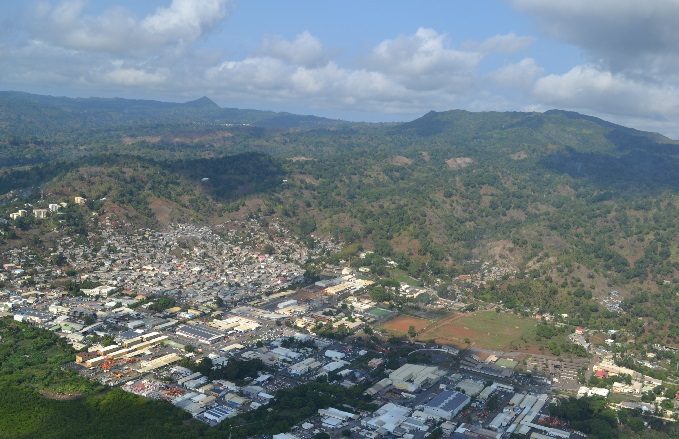
Connectivity at Kaweni, Mayotte: A Dual Gateway
Kaweni, located on the island of Mayotte, is one of two submarine cable landing points in this French overseas territory. With two cables landing here, Kaweni plays a distinct role in connecting Mayotte to the broader Indian Ocean region. The cables landing at Kaweni - Lower Indian Ocean Network 2 (LION2) and FLY-LION3 - are the foundation of Mayotte's international and regional communications.The Cables That Reach Kaweni
The LION2 cable, operational since 2012, connects Kaweni to Nyali in Kenya. Stretching 2,700 km, this cable is Mayotte's longest and provides a direct link to the African mainland. It is a key part of the island's international connectivity, supporting internet traffic and data exchange with East Africa. The FLY-LION3 cable, launched in 2019, is shorter at 400 km but equally significant. It connects Kaweni to Moroni in the Comoros, establishing a regional link between neighboring islands. This cable enhances Mayotte's ability to communicate and collaborate within the Indian Ocean community, complementing the more distant reach of LION2.Regional Context: Kaweni's Role
Mayotte's submarine cable infrastructure consists of three cables spread across two landing points: Kaweni and Mamoudzou. Kaweni is the busier of the two, hosting two cables compared to Mamoudzou's single connection. This makes Kaweni a critical hub for both international and regional traffic, while Mamoudzou plays a more modest role in the island's connectivity landscape. The cables landing at Kaweni also highlight its strategic position. While Mamoudzou connects to one cable, Kaweni bridges Mayotte to both East Africa and the Comoros, ensuring the island remains integrated with its neighbors and the larger global network.Latency: Fast and Reliable
GeoCables' monitoring of Kaweni reveals impressive latency statistics. Across 274 checks from eight source cities, the average round-trip latency is 91 milliseconds, with the best observed latency being an exceptional 1 millisecond. These metrics underscore the efficiency of Kaweni's submarine cable infrastructure, ensuring swift and reliable communication for businesses, institutions, and residents.Why Kaweni Matters
Kaweni's dual-cable setup is integral to Mayotte's connectivity. The LION2 cable provides the island with its primary international link, connecting it to Kenya and, through Kenya, to global networks. Meanwhile, the FLY-LION3 cable strengthens regional ties with the Comoros, fostering collaboration and exchange within the Indian Ocean. Together, these cables ensure that Kaweni serves as a gateway for Mayotte, balancing global reach with regional integration. For an island reliant on external communication for trade, education, and development, Kaweni's role is both practical and essential. Whether facilitating international business or enabling local partnerships, Kaweni's submarine cables are the conduits that keep Mayotte connected to the world.What next: Kaweni, Mayotte in the global directory of cable landing points; see surrounding routes on the interactive submarine cable map or follow live network monitoring.
Other Landing Points in Mayotte
FAQ
Landing Point
- CountryYT Mayotte
- Coordinates12.8171°S 45.1659°E
- Connected Cables2
See Real Cable Routes
View actual submarine cable routing from Kaweni, Mayotte - with backbone nodes, distance calculations, and latency estimates
Open Calculator →
Submarine cables
Land fiber
Live probes