Hawksbill, Bahamas
Landing Point · BS Bahamas
Connected Cables
| Cable | Status |
|---|---|
| Bahamas Domestic Submarine Network (BDSNi) | Active |
| Bahamas Internet Cable System (BICS) | Active |
Live Performance
RTT measurements to this landing point from 2026-06-26 through 2026-09-15 - live ICMP round-trip time via our monitoring probes. Recomputed daily. ✓ No anomalies detected in the monitored period.
Measurement sources
| Probe | Location | Samples | Avg |
|---|---|---|---|
| #1005627 | control probe | 141 | 40.5 ms |
| #6410 own probe | Sao Paulo BR | 3 | 111.0 ms |
| #6427 own probe | Sydney AU | 3 | 208.9 ms |
| own probe | Minsk BY | 3 | 177.1 ms |
| #6487 | control probe | 2 | 233.5 ms |
| own probe | Saint Petersburg RU | 2 | 130.7 ms |
| own probe | Kyiv UA | 2 | 140.9 ms |
About Hawksbill, Bahamas
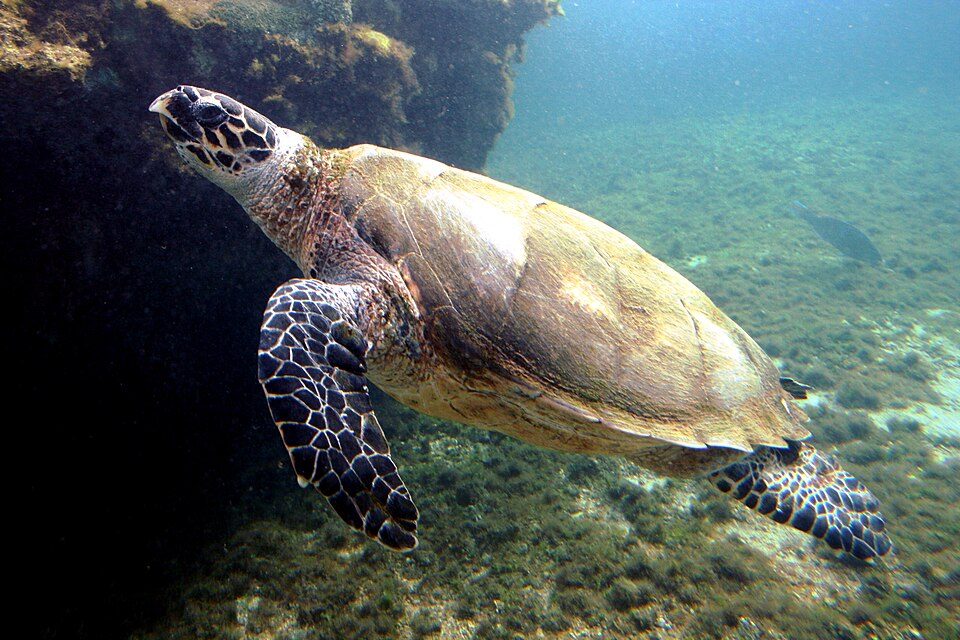
Hawksbill, Bahamas: Submarine Cable Landing Point
Hawksbill is a submarine cable landing point located in the Bahamas, an archipelagic nation in the Atlantic Ocean. Two submarine cables make landfall here: the Bahamas Domestic Submarine Network (BDSNi) and the Bahamas Internet Cable System (BICS). Together, these cables connect Hawksbill to destinations spanning both within the Bahamian archipelago and across to the United States, supporting both inter-island and international connectivity corridors.
The combination of a regionally focused cable and an internationally oriented one gives Hawksbill a dual-purpose role within the Bahamian submarine cable landscape. The BICS cable links the Bahamas to the United States, while the BDSNi cable extends connectivity to Haiti as well as other points within the Bahamas, enabling a regional Caribbean dimension alongside the transatlantic link.
Cables Landing at Hawksbill, Bahamas
The Bahamas Domestic Submarine Network (BDSNi) is a 2,735-kilometre cable that reached ready-for-service status in 2006. It connects landing points in the Bahamas and Haiti, making it a regionally significant cable that links the Bahamian archipelago with a neighbouring Caribbean nation. Hawksbill is one of the Bahamian endpoints on this network.
The Bahamas Internet Cable System (BICS) spans 1,100 kilometres and entered service in 2001, making it the earlier of the two cables at this landing point. BICS connects the Bahamas with the United States, providing a direct international link between the two countries. Its landing at Hawksbill establishes the site as an endpoint on one of the Bahamas' connections to North American cable infrastructure.
Regional Context
Among the 21 submarine cable landing points in the Bahamas, Hawksbill ranks in the top 95 percent by cable count, hosting two cables alongside peers such as Cat Island, Eight-Mile Rock, and Sandy Point, which also each host two cables. Nassau leads the country with three cables, while Alice Town and Caves Point each host a single cable. Hawksbill therefore sits in the middle tier of Bahamian landing points by connectivity volume.
Network Role
Hawksbill functions as a two-cable landing point, distinguishing it from single-cable termini elsewhere in the Bahamas. The BICS cable provides a direct link northward to the United States, while the BDSNi cable extends the landing point's reach southward into Haiti and across the domestic Bahamian island chain. This pairing means Hawksbill participates in both an international corridor connecting the Bahamas to North America and a regional corridor serving intra-Caribbean connectivity.
Within the broader Bahamian submarine cable graph, which comprises five cables distributed across 21 landing points, Hawksbill's hosting of two cables of differing geographic orientations makes it a notable node in the country's distributed cable infrastructure.
What next: Hawksbill, Bahamas in the global directory of cable landing points; see surrounding routes on the interactive submarine cable map or follow live network monitoring.
Other Landing Points in Bahamas
Landing Point
- CountryBS Bahamas
- Coordinates26.5169°N 78.7368°W
- Connected Cables2
See Real Cable Routes
View actual submarine cable routing from Hawksbill, Bahamas - with backbone nodes, distance calculations, and latency estimates
Open Calculator →